
Pre-Summer Sale - Limited Time 65% Discount Offer - Ends in 0d 00h 00m 00s - Coupon code: 65percent

Welcome To DumpsPedia

CPXP Sample Questions Answers

Questions 4

One of the most fundamental factors in making patient experience improvement a top priority in any organization is the inclusion of which of the following?

Options:

A.

Executive champion

B.

Executive coach

C.

Experience educator

D.

External consultant

Buy Now
Questions 5

What is the BEST way to engage physicians in improving the patient experience?

Options:

A.

Create a meaningful physician recognition program.

B.

Review all the negative comments that they receive.

C.

Explain to the physicians about value in health care.

D.

Ensure they understand the goals of the institution.

Buy Now
Questions 6

Which strategy should the patient experience professional employ to help support the successful implementation of a new rewards and recognition program?

Options:

A.

Implement the program immediately and begin providing recognition as quickly as possible.

B.

Create a presentation for staff ahead of the rollout, and send weekly reminders.

C.

Identify champions and ask for feedback throughout the planning and implementation process.

D.

Ask managers to include the program in their daily huddles.

Buy Now
Questions 7

From the perspective of patients, residents, or their family members, who are an organization’s competitors?

Options:

A.

The best-in-class healthcare performers

B.

The best performers inside the organization

C.

Anyone the individual compares the organization to

D.

All other healthcare organizations in the immediate area

Buy Now
Questions 8

Which of the following is a primary reason employees resist change?

Options:

A.

Impact on perception of organization

B.

Impact on organizational performance

C.

Lack of available resources from organization

D.

Lack of awareness of why change is being made

Buy Now
Questions 9

A patient experience professional has received complaints from patients and their families about a lack of communication from the nurses concerning the patients’ care. In an effort to build powerful relationships with the care staff, which of the following is the BEST way to engage the patients and their families in communication?

Options:

A.

Bedside shift report

B.

Hourly rounding

C.

Leadership rounding

D.

Whiteboard use

Buy Now
Questions 10

When engaged in organizational transformation, which of the following is directly proportional to the probability of success?

Options:

A.

Degree to which adequate preparation and planning occurred at the onset

B.

Senior executive ' s commitment and level of personal involvement

C.

Competency and knowledge of management and the front-line staff

D.

Cross functional accountability experienced in the organization

Buy Now
Questions 11

A new patient check-in process was implemented to reduce wait time. What is the BEST approach to examine if the updated process is meeting its intended goal?

Options:

A.

Direct observation

B.

Quantitative survey

C.

Role play scenario

D.

Patient focus group

Buy Now
Questions 12

Which is the MOST effective use of real-time data collection?

Options:

A.

Shaping organizational strategy

B.

Providing opportunity for immediate recognition

C.

Identifying patterns and trends for organizational change

D.

Revealing needed facility-wide improvements

Buy Now
Questions 13

When individualizing care to advance a culture of patient, long-term care resident, and family partnership, what is the MOST important thing to consider?

Options:

A.

Integrating the patient ' s or resident ' s personal goals and ensuring engagement in their care

B.

Developing the plan of care and letting the patient know what to expect

C.

Encouraging the family to participate in the patient or resident experience

D.

Adjusting the level of staffing in order to allow time for patient, resident, and family connections

Buy Now
Questions 14

What is the PRIMARY action that must be done consistently to enhance patient safety and eliminate errors?

Options:

A.

Effective communication

B.

Immediate response to call lights

C.

Clear explanation of treatment plan

D.

Purposeful hourly rounding

Buy Now
Questions 15

Which steps are contained in the first phase of experience mapping?

Options:

A.

Prioritize and create storyboards.

B.

Tell and sketch the story.

C.

Conduct data gathering.

D.

Identify moments of truth.

Buy Now
Questions 16

Some important topics to consider in building effective cultural competence learning opportunities include all of the following EXCEPT:

Options:

A.

Full knowledge of cultural practices and beliefs.

B.

Effective cross-cultural communication.

C.

Supervising a multicultural workforce.

D.

Working effectively in diverse teams.

Buy Now
Questions 17

When is the BEST time to do service recovery follow-up?

Options:

A.

Immediately after the issue arises

B.

24 hours after the issue arises

C.

After fully researching and validating concerns

D.

After discharge/appointment ends

Buy Now
Questions 18

Which of the following is a core element to facilitating a focus group?

Options:

A.

The group has a trained moderator.

B.

The group discusses multiple topics.

C.

The group generates quantitative information.

D.

The group includes a minimum of 25 people.

Buy Now
Questions 19

Which qualitative research method helps provide the BEST understanding of patients’ experiences when a design thinking approach is used?

Options:

A.

Focus groups

B.

Case studies

C.

Research articles

D.

Organizational policy

Buy Now
Questions 20

Which is the BEST approach to obtaining employee commitment to a new process or initiative designed to improve the patient experience?

Options:

A.

Have managers monitor and measure the process.

B.

Provide incentives to managers for implementation success.

C.

Explain at the start of implementation why the change is occurring.

D.

Involve staff in the design and development of the process.

Buy Now
Questions 21

When redesigning the discharge process to incorporate teach-back, which is the BEST way to establish a sense of urgency to facilitate the change?

Options:

A.

Train staff on the use of teach-back.

B.

Include teach-back in performance appraisals.

C.

Demonstrate the positive impact on patient outcomes.

D.

Create a timeline for implementation.

Buy Now
Questions 22

Which of the following is a method of qualitative analysis?

Options:

A.

Constructive analysis

B.

Connective analysis

C.

Comparative analysis

D.

Comprehensive analysis

Buy Now
Questions 23

Which of the following BEST illustrates that a process change has worked?

Options:

A.

Data showing significant change

B.

Process flowcharts of the after process

C.

Process flowcharts of the before process

D.

Interviews with staff

Buy Now
Questions 24

A nurse is tasked with looking into a patient grievance and reporting the findings to the patient advocacy department. What is the BEST way to get detailed information about what occurred?

Options:

A.

Go to the Gemba.

B.

Conduct a Kaizen event.

C.

Read the patient’s grievance.

D.

Interview the patient advocate.

Buy Now
Questions 25

Focusing on which departments is a strategy to move overall organizational performance for patient perception of care?

Options:

A.

Departments that receive the highest number of survey returns

B.

Departments that receive the lowest amount of survey returns

C.

Departments that focus on medical patients

D.

Departments that focus on ICU patients

Buy Now
Questions 26

Which strategy is MOST important to ensure successful improvement outcomes?

Options:

A.

Develop communication boards with updated performance metrics on all units throughout the organization.

B.

Develop an organizational performance dashboard with all goals and associated metrics updated on a regular basis.

C.

Develop patient advisory councils to ensure that the patient and family voices are part of the organization ' s culture.

D.

Develop and communicate clear goals supporting the organization ' s mission and values, combined with consistent measurement and aligned behaviors.

Buy Now
Questions 27

How can patient experience survey results BEST be used to influence organizational efforts?

Options:

A.

Analyze organizational and unit-level performance to monitor and follow up on performance.

B.

Align behaviors to survey results throughout the organization to drive desired outcomes.

C.

Recognize and reward outstanding behaviors that drive desired results.

D.

Establish clear goals, align behaviors, and consistently review performance.

Buy Now
Questions 28

What measures the dispersion of the data set?

Options:

A.

Median

B.

Distance

C.

Mode

D.

Variance

Buy Now
Questions 29

What is the meaning of “validity” in the context of a patient experience survey?

Options:

A.

The degree to which the measurement made by a survey corresponds to a true value

B.

The degree to which the results of a Likert scale survey correspond to equal quantitative intervals

C.

The degree to which an individual responding to a survey understands how the survey results will be used

D.

The degree to which a survey applied to the same object yields the same results each time

Buy Now
Questions 30

What is Gemba when used within the Lean process methodology?

Options:

A.

Collaboration to improve

B.

Continuous improvement designs

C.

Location where value is created

D.

Reduced waste in future mapping

Buy Now
Questions 31

Administrators voice concern that physicians in a medical practice group seem stuck at the same scores on patient experience surveys. What is the BEST next step for the patient experience professional to build engagement and move forward with improvement actions?

Options:

A.

Meet with medical practice leaders to learn their expectations and identify physician leaders within the practice.

B.

Publicly share individual physician patient experience scores and percentile rankings.

C.

Share improvement tips focused on communicating with patients.

D.

Work with the front-line team and survey vendor to improve survey response rates.

Buy Now
Questions 32

When reviewing patient experience survey data, a hospital unit ranks at the 67th percentile when compared to peers. How would this be explained to the team?

Options:

A.

The unit needs to improve by 67 percentile points.

B.

The unit is performing better than 67 percent of its peers.

C.

The unit is the 67th best performing unit in its peer group.

D.

The unit has 67 percent of patients reporting they are satisfied.

Buy Now
Questions 33

A manager overseeing a renovation project would like to ensure the project meets the overall needs and objectives for which it is being designed. Who is the MOST important member of the design team?

Options:

A.

Unit medical director

B.

Chief financial officer

C.

Patient family advisor

D.

Project manager

Buy Now
Questions 34

Which of the following BEST describes four core concepts of patient- and family-centered care?

Options:

A.

Safe care, high quality care, optimal experience/satisfaction, and value

B.

Dignity and respect, information sharing, collaboration, and participation

C.

Patient experience, population health, cost reduction, and employee engagement

D.

Patient engagement, family support, relationship-based care, and efficiency

Buy Now
Questions 35

Which of the following two stakeholder groups should a patient experience professional organize when using an experience-based co-design (EBCD) approach to initiate a system-level quality improvement effort in expanding culturally diverse service efforts?

Options:

A.

Focus Group 1: Representative sample of health system board members

Focus Group 2: Representative sample of health system leaders

B.

Focus Group 1: Quality improvement leadership

Focus Group 2: EBCD task force and individual contributors

C.

Focus Group 1: Community leaders within the health system ' s service area footprint

Focus Group 2: Union representatives of health system employees

D.

Focus Group 1: Representative sample population of patient and family members

Focus Group 2: Representative sample population of healthcare providers

Buy Now
Questions 36

Referencing the Change Model graph below, where in these zones does “The Point of Decision” usually occur?
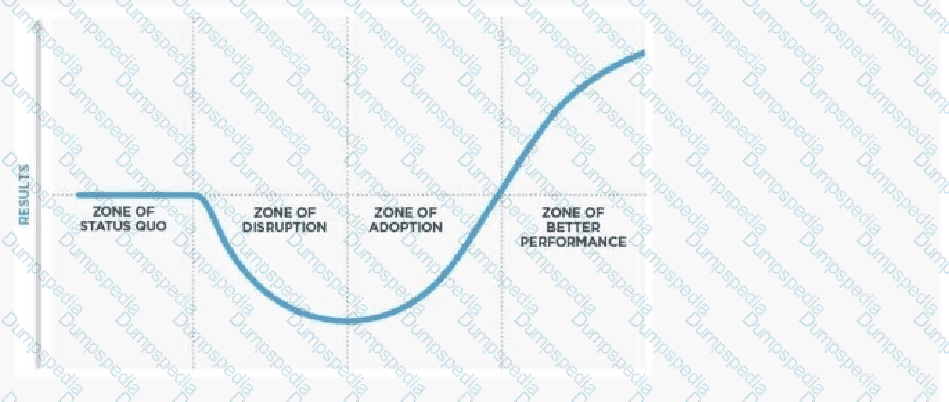
Options:

A.

At the midpoint of the “Zone of Status Quo”

B.

In between the “Zone of Status Quo” and “Zone of Disruption”

C.

In between the “Zone of Disruption” and “Zone of Adoption”

D.

In between the “Zone of Adoption” and “Zone of Better Performance”

Buy Now
Questions 37

A non-English-speaking patient is asking questions that indicate a lack of understanding of the procedure that the patient is about to undergo. Which component of the patient ' s rights has been neglected?

Options:

A.

Respect for cultural diversity

B.

Confidentiality of personal health information

C.

Informed consent

D.

Patient’s right to file a complaint

Buy Now
Questions 38

Which is the BEST method to motivate staff to make patient-centered changes?

Options:

A.

Read a patient complaint letter.

B.

Invite a former patient to share his or her story.

C.

Post department and unit scores in the breakroom.

D.

Post organizational scores in the lobby.

Buy Now
Questions 39

Which term is described as the free flow of relevant information during crucial conversations?

Options:

A.

Debate

B.

Description

C.

Dialogue

D.

Discussion

Buy Now
Questions 40

Which approach is MOST consistent with Design and Innovation when improving the discharge experience?

Options:

A.

Standardizing discharge instructions without any patient or family input

B.

Mapping the discharge process with staff only and implementing one-time changes

C.

Including patients and families in co-design, testing prototypes, and refining discharge processes based on feedback and results

D.

Focusing primarily on reducing printing costs for discharge materials

Buy Now
Questions 41

Which information has the GREATEST impact on staff regarding the need and impact for changes to improve the care experience for patients and families?

Options:

A.

Trended data over time

B.

Control charts with annotations

C.

Run charts targeting specific improvement efforts

D.

Targeted performance metrics coupled with patient and/or staff stories

Buy Now
Questions 42

Which strategy BEST demonstrates an effective integration of patient and family advisors?

Options:

A.

Hosting a reception for patient and family advisors to meet hospital executive leadership

B.

Utilizing patient and family advisors as members of interview panels for hospital key leadership positions

C.

Inviting families in the hospital or hospital board members who have been patients to join the patient and family advisory council

D.

Presenting completed plans for newly designed patient rooms to the patient and family advisory council

Buy Now
Questions 43

Which are the MOST utilized data sources for evaluating service?

Options:

A.

Compliment data and focus groups

B.

Service recovery logs and community advisory committees

C.

Post-visit phone call feedback

D.

Patient (or family) complaints and patient satisfaction data

Buy Now
Questions 44

An increasing number of patients and family members believe that their treatment plans are wrong. Unit leaders report high census, staffing challenges, and difficult patient behaviors. What is the FIRST step a patient experience professional should take to address this situation?

Options:

A.

Create communications training for front-line staff and physicians.

B.

Seek additional information by reaching out to patients and families to ask about their involvement in the care process.

C.

Work with unit leaders to develop and add a custom question to the patient experience survey.

D.

Seek additional information by reaching out to friends and colleagues who have been patients and ask whether they have had similar experiences.

Buy Now
Questions 45

Which is the BEST practice for conducting post-visit phone calls?

Options:

A.

A nurse who personally cared for the patient calls the patient within 1–2 days of discharge to inquire how he or she is doing, clarify discharge instructions as needed, and answer any other questions the patient might have.

B.

The nurse manager (or other nurse leader on the unit where the patient received care) calls the patient within 1–2 days of discharge to inquire how he or she is doing, clarify discharge instructions as needed, and answer any other questions the patient might have.

C.

The discharge nurse calls the immediate caregiver of the patient within 1–2 days of discharge to inquire how the patient is doing, review the discharge instructions, and answer any other questions the caregiver might have.

D.

A third party with whom the organization has contracted calls the patient within 7–14 days of discharge to inquire how the patient is doing, review the discharge instructions, and answer any other questions the caregiver might have.

Buy Now
Exam Code: CPXP
Exam Name: Certified Patient Experience Professional
Last Update: May 23, 2026
Questions: 152
$64.4  $183.99
$49.35  $140.99
$44.8  $127.99
buy now CPXP