dumpspedia logo

You have an Azure Cosmos DB database named databaset contains a container named container1. The container1 container store product data and has the following indexing policy.
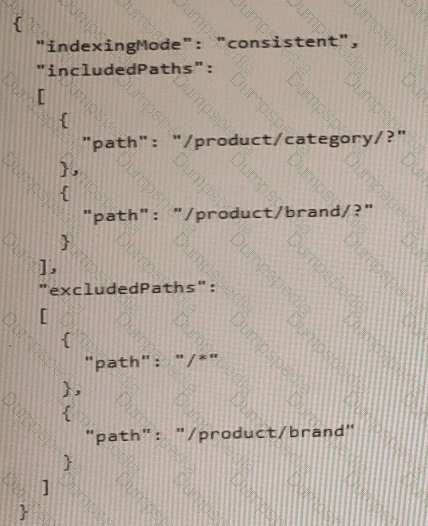
Which path will be indexed?
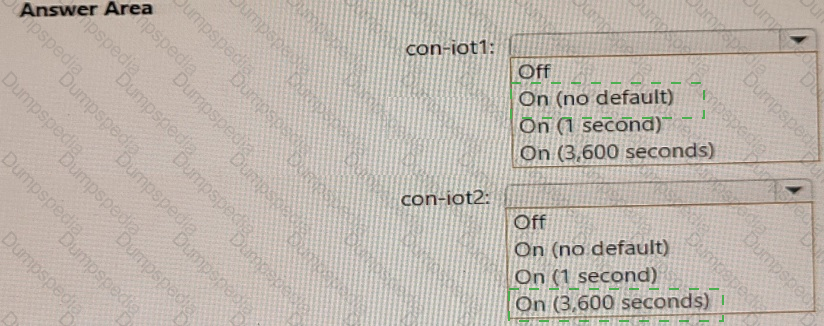
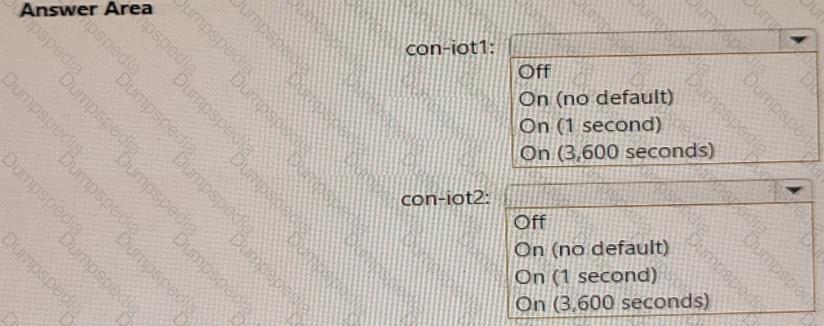
You plan to implement con-iot1 and con-iot2.
You need to configure the default Time to Live setting for each container. The solution must meet the loT telemetry requirements.
What should you configure? To answer, select the appropriate options in the answer NOTE: Each correct selection is worth one point.
The settings for a container in an Azure Cosmos DB Core (SQL) API account are configured as shown in the following exhibit.
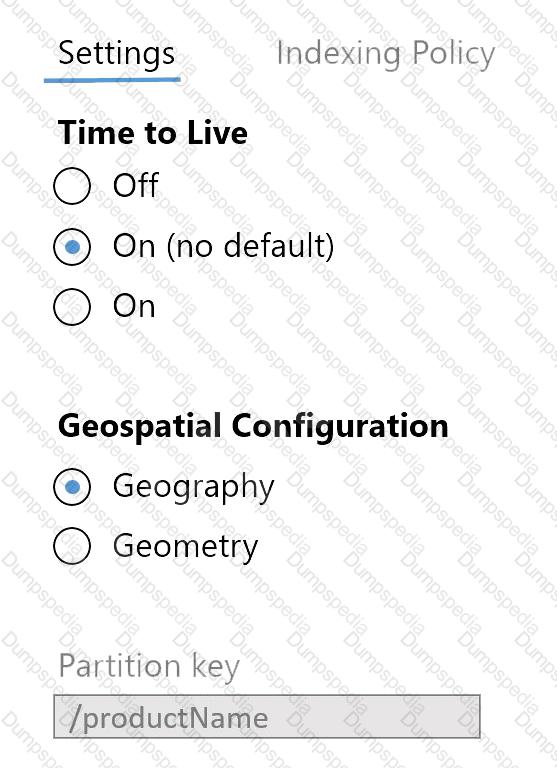
Which statement describes the configuration of the container?
You have an Azure subscription that contains an Azure Cosmos DB for NoSQL account named account1.
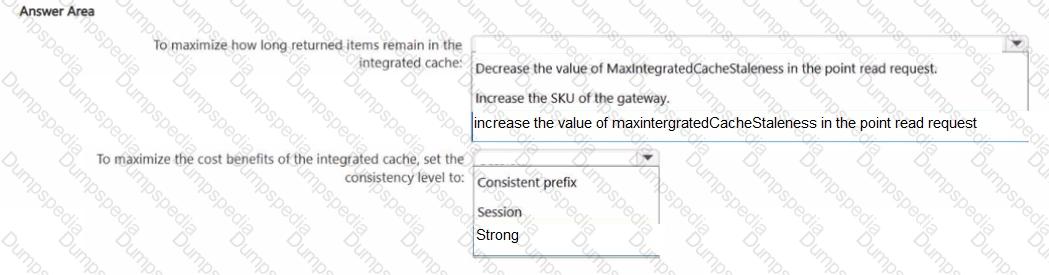
For account 1, you plan to implement an integrated gateway that will use the D4s SKU.
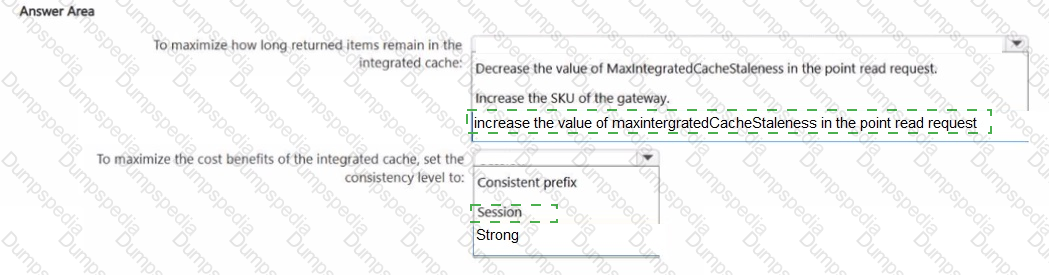
You need to optimize integrated gateway performance for point reads from account1. The solution must meet the following requirements:
• For new point reads, maximize how long returned items remain in the integrated cache.
• For new and repeati ng point reads, maximize the cost benefits of the integrated cache.
What should you do for each requirement? To answer, select the appropriate options in the answer area.
NOTE: Each correct selection is worth one point.
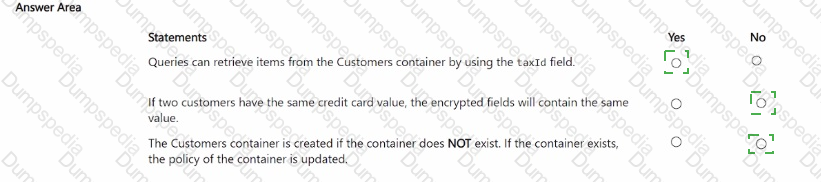
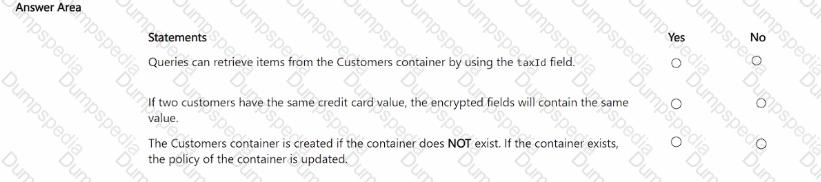
You have an Azure subscription that contains an Azure Cosmos DB for NoSQL account. You define and implement an encryption policy by using the following C# code.
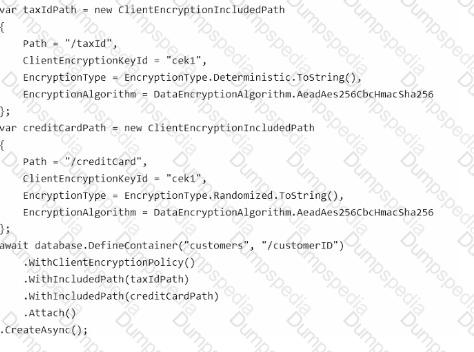
For each of the following statements, select Yes if the statement is true, otherwise select No.
NOTE: Each correct selection is worth one point.
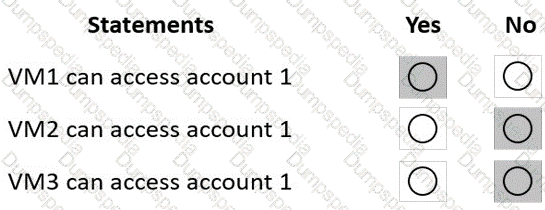
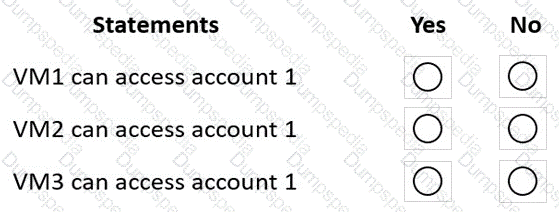
You have an Azure Cosmos DB Core (SQL) API account named account1.
You have the Azure virtual networks and subnets shown in the following table.

The vnet1 and vnet2 networks are connected by using a virtual network peer.
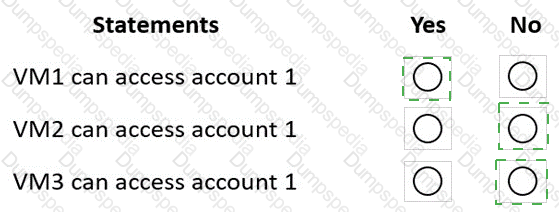
The Firewall and virtual network settings for account1 are configured as shown in the exhibit.
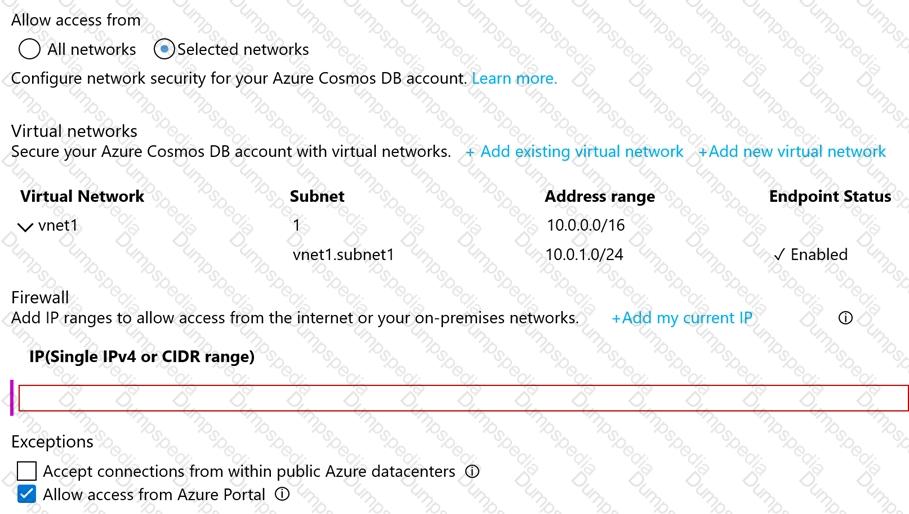
For each of the following statements, select Yes if the statement is true. Otherwise, select No.
NOTE: Each correct selection is worth one point.
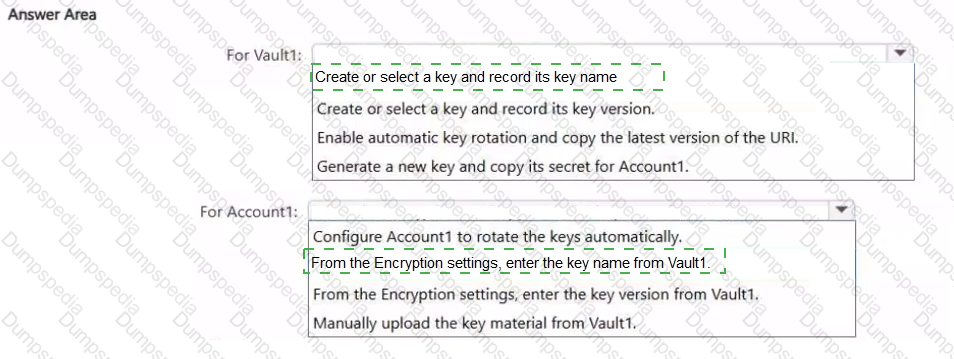
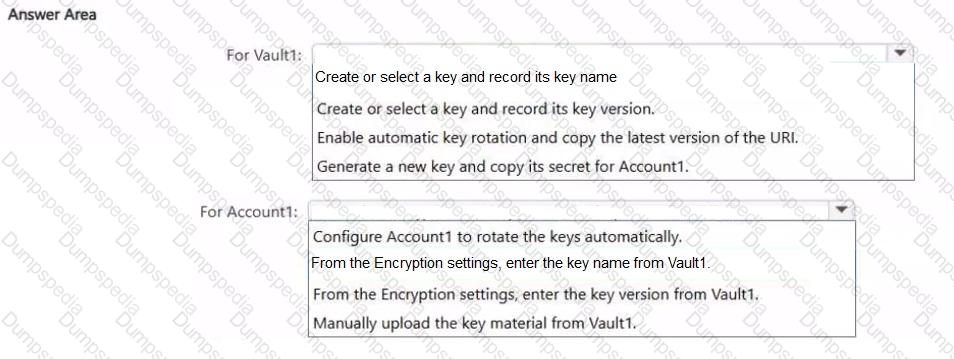
You have an Azure subscription that contains an Azure Cosmos DB for NoSQL account named Account1 and an Azure key vault named Vault1.
You plan to enable customer-managed keys and use an encryption key stored in Vault1 to encrypt data at rest.
You need to configure Account1 to use the key from Vault1. The solution must ensure that Account1 continues to operate if the key is rotated in Vault1.
What should you do? To answer, select the appropriate options in the answer area.
NOTE: Each correct selection is worth one point.
You need to create a database in an Azure Cosmos DB for NoSQL account. The database will contain three containers named coll1, coll2 and coll3. The coll1 container will have unpredictable read and write volumes. The col!2 and coll3 containers will have predictable read and write volumes. The expected maximum throughput for coll1 and coll2 is 50,000 request units per second (RU/s) each.
How should you provision the collection while minimizing costs?
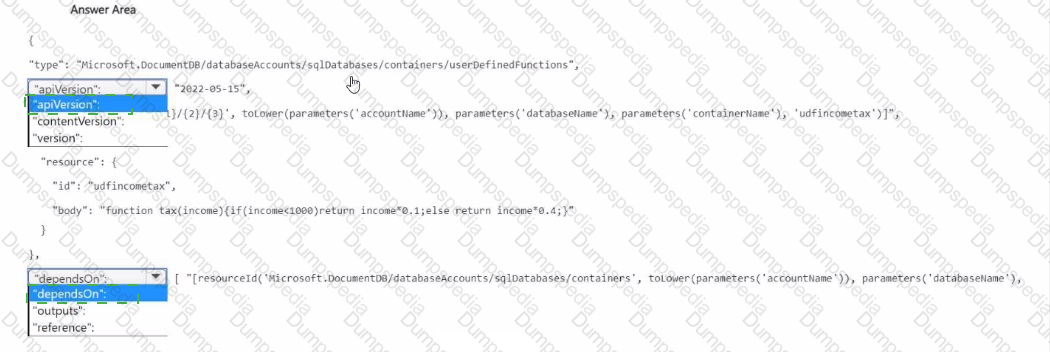
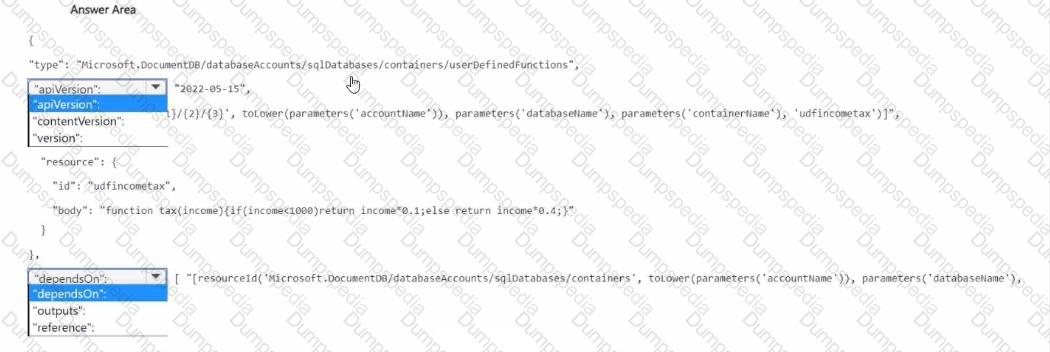
You have an Azure subscription.
You need to deploy the following resources to an Azure Cosmos DB for NoSQL account:
• A container
• A user-defined function (UDF)
The solution must minimize the possibility of the deployment failing.
How should you complete the template? To answer, select the appropriate options in the answer area.
NOTE: Each correct selection is worth one point.
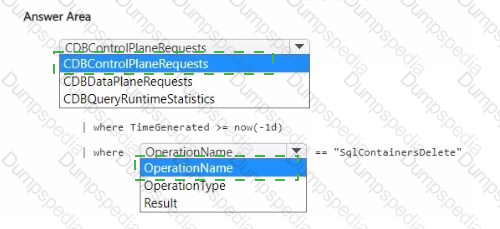
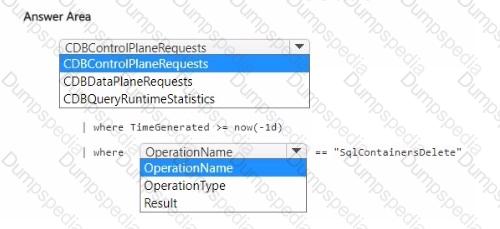
You have an Azure subscription that contains an Azure Cosmos DB for NoSQL account named accounts
You configure account! to send resource logs to Log Analytics.
You need to identify any containers in account1 that were deleted during the past 24 hours.
How should you complete the query? To answer, select the appropriate options in the answer area.
NOTE: Each correct selection is worth one point.
You provision an Azure Cosmos DB for NoSQL container. You set the throughput to Autoscale, and the maximum request units per second {RU/s) to 20,000.
For how many RU/s will you be charged when the actual RU/s usage is zero?
Your company develops an application named App1 that uses the Azure Cosmos DB SDK and the Eventual consistency level.
App1 queries an Azure Cosmos DB for NoSQL account named account!
You need to identify which consistency level to assign to App1 to meet the following requirements:
• Maximize the throughput of the queries generated by App1 without increasing the number of request units currently used by the queries.
• Provide the highest consistency guarantees.
Which consistency level should you identify?
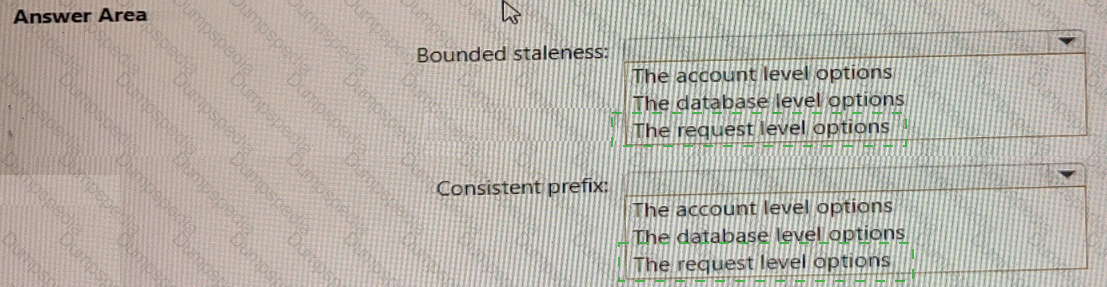
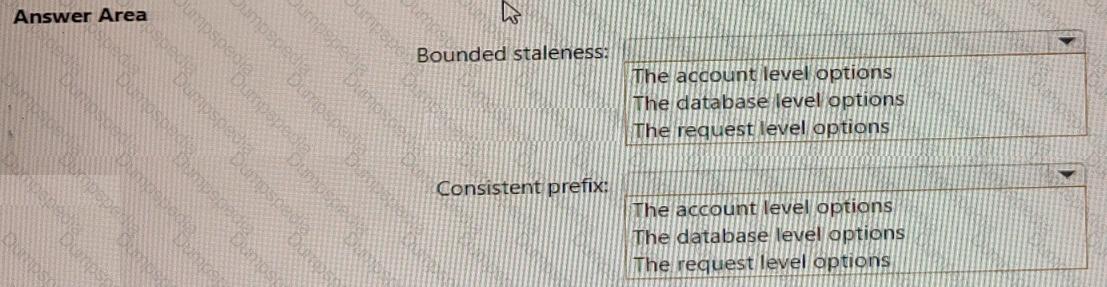
You have an Azure Cosmos DB account named account1 that has a default consistency level of session.
You have an app named App1.
You need to ensure that the read operations of App1 can request either bounded staleness or consistent prefix consistency.
What should you modify for each consistency level? To answer, select the appropriate options in the answer area.
NOTE: Each correct selection is worth one point.
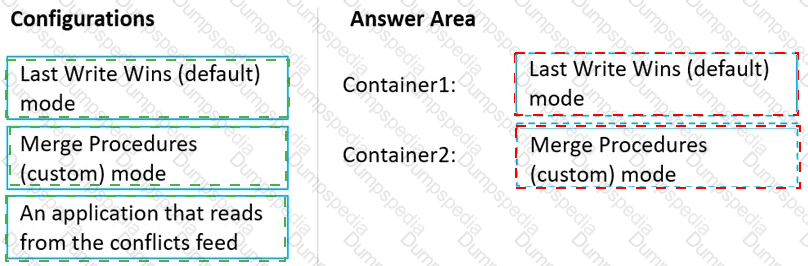
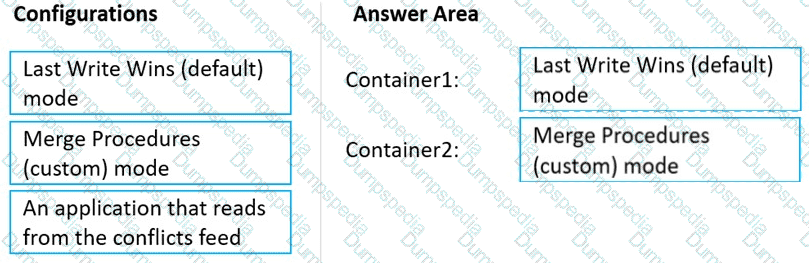
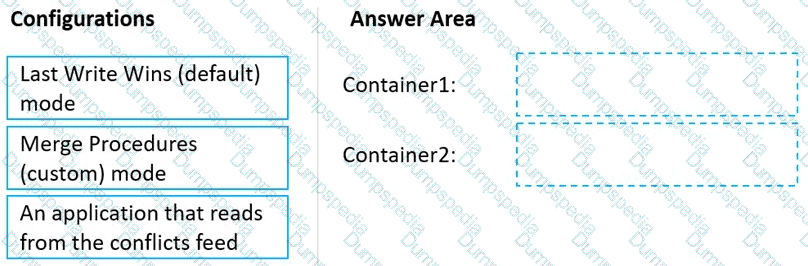
You have an Azure Cosmos DB Core (SQL) API account that is configured for multi-region writes. The account contains a database that has two containers named container1 and container2.
The following is a sample of a document in container1:
{
" customerId " : 1234,
" firstName " : " John " ,
" lastName " : " Smith " ,
" policyYear " : 2021
}
The following is a sample of a document in container2:
{
" gpsId " : 1234,
" latitude " : 38.8951,
" longitude " : -77.0364
}
You need to configure conflict resolution to meet the following requirements:
For container1 you must resolve conflicts by using the highest value for policyYear.
For container2 you must resolve conflicts by accepting the distance closest to latitude: 40.730610 and longitude: -73.935242.
Administrative effort must be minimized to implement the solution.
What should you configure for each container? To answer, drag the appropriate configurations to the correct containers. Each configuration may be used once, more than once, or not at all. You may need to drag the split bar between panes or scroll to view content.
NOTE: Each correct selection is worth one point.
You have a database named db1 in an Azure Cosmos DB for NoSQL
You are designing an application that will use dbl.
In db1, you are creating a new container named coll1 that will store in coll1.
The following is a sample of a document that will be stored in coll1.
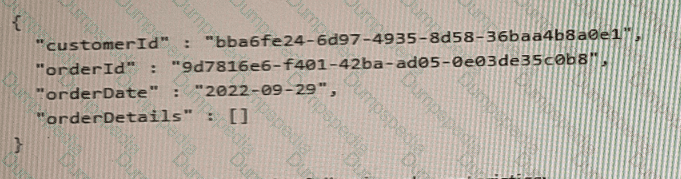
The application will have the following characteristics:
• New orders will be created frequently by different customers.
• Customers will often view their past order history.
You need to select the partition key value for coll1 to support the application. The solution must minimize costs.
To what should you set the partition key?
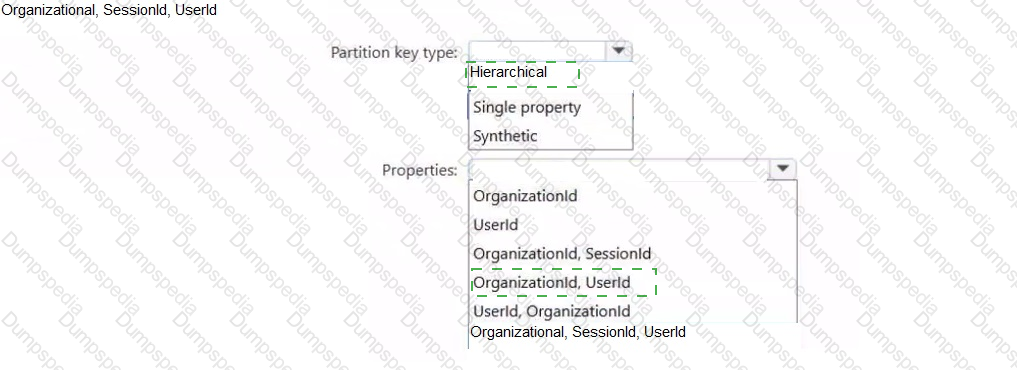
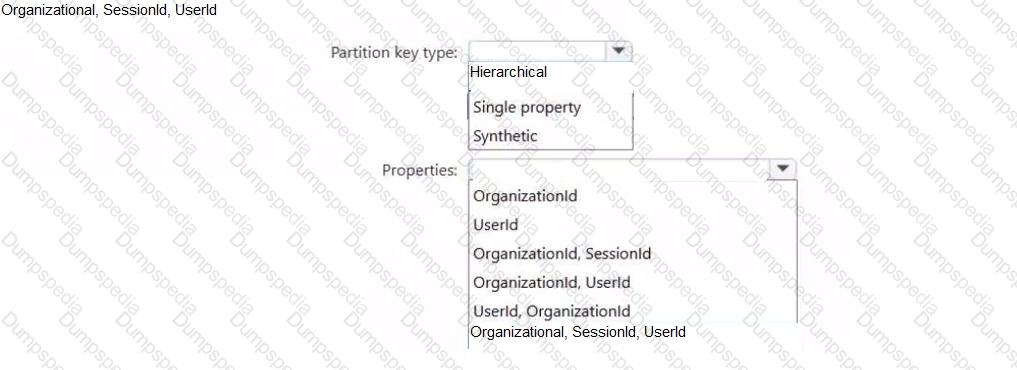
You plan to create a container named Container1 in an Azure Cosmos DB for NoSQL account Container! will store items that contain user sign-in session data from multiple organizations. Each user is assigned to a single organization.
Contained will include the following properties:
• Userld
• Sessionld
• SessionStart
• Organizationld
The following are common queries served by Container1.
SELECT SessionID,SessionStart,UserID FROM c WHERE Organizationld = 6 AND Userld = 50143
SELECT SessionID,SessionStart,UserID FROM c WHERE Organizationld - 6
You need to recommend a partitioning scheme for Container! that meets the following requirements:
You need to recommend a partitioning scheme for Container! that meets the following requirements:
• Maximizes performance
• Minimizes the cost of read queries
• Minimizes the possibility of reaching the partition size limits
Which type of partition key and which partition key properties should you include in the recommendation? To answer, select the appropriate options in the answer area.
NOTE: Each correct selection is worth one point.
Note: This question is part of a series of questions that present the same scenario. Each question in the series contains a unique solution that might meet the stated goals. Some question sets might have more than one correct solution, while others might not have a correct solution.
After you answer a question in this section, you will NOT be able to return to it. As a result, these questions will not appear in the review screen.
You have a container named container1 in an Azure Cosmos DB Core (SQL) API account.
You need to make the contents of container1 available as reference data for an Azure Stream Analytics job.
Solution: You create an Azure Synapse pipeline that uses Azure Cosmos DB Core (SQL) API as the input and Azure Blob Storage as the output.
Does this meet the goal?
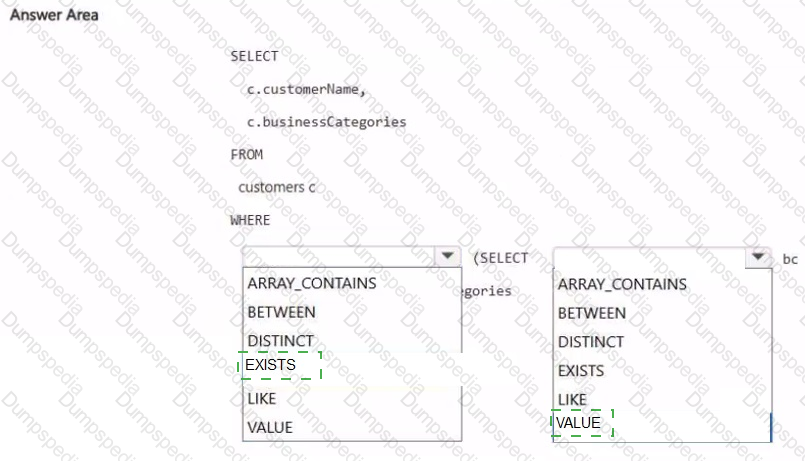
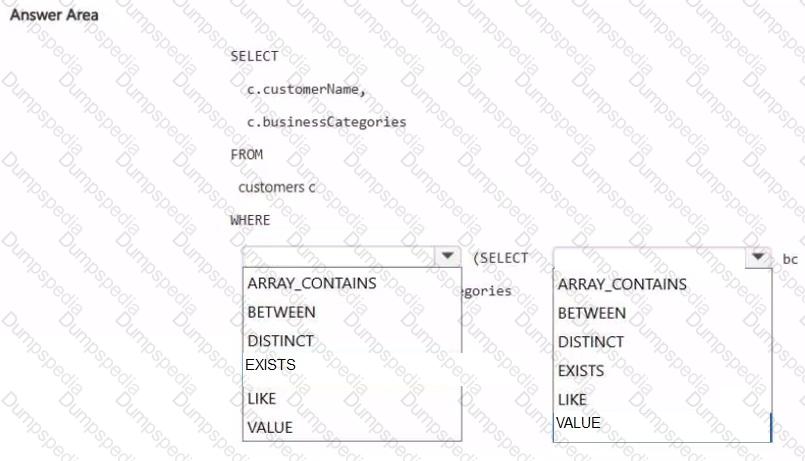
You have an Azure subscription that contains an Azure Cosmos DB for NoSQL account. The account hosts a container named Container1 that stores customer data. Each customer data item includes the customer ' s name and zero or more related business categories in an array.
You need identify customers that have one of their business categories set to " retail " . The solution must return the customerName and businessCategories fields.
How should you complete the query? To answer, select the appropriate options in the answer area.
NOTE: Each correct selection is worth one point.
You are building an application that will store data in an Azure Cosmos DB for NoSQL account. The account uses the session default consistency level. The account is used by five other applications. The account has a single read-write region and 10 additional read regions.
Approximately 20 percent of the items stored in the account are updated hourly.
Several users will access the new application from multiple devices.
You need to ensure that the users see the same item values consistently when they browse from the different devices. The solution must not affect the other applications.
Which two actions should you perform? Each correct answer presents part of the solution.
NOTE: Each correct selection is worth one point.
You have an Apache Spark pool in Azure Synapse Analytics that runs the following Python code in a notebook.
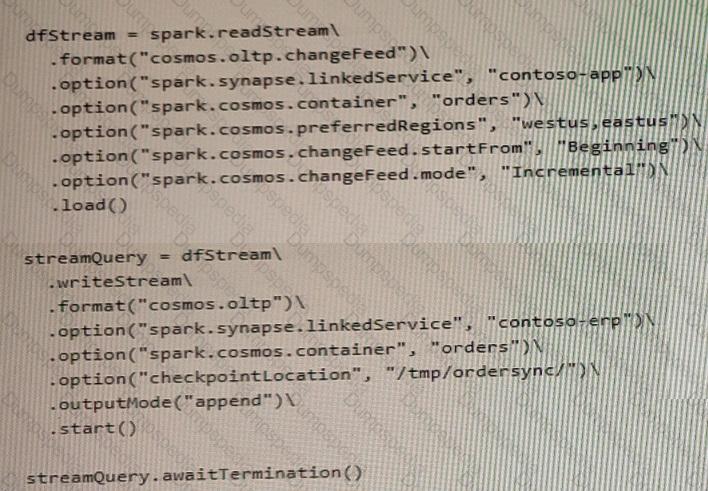
For each of the following statements, select Yes if the statement is true. Otherwise, select No.
NOTE: Each correct selection is worth one point.

You need to implement a solution to meet the product catalog requirements.
What should you do to implement the conflict resolution policy.
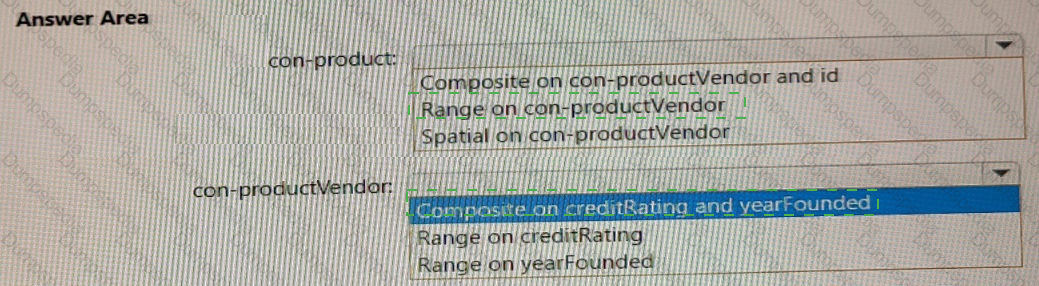
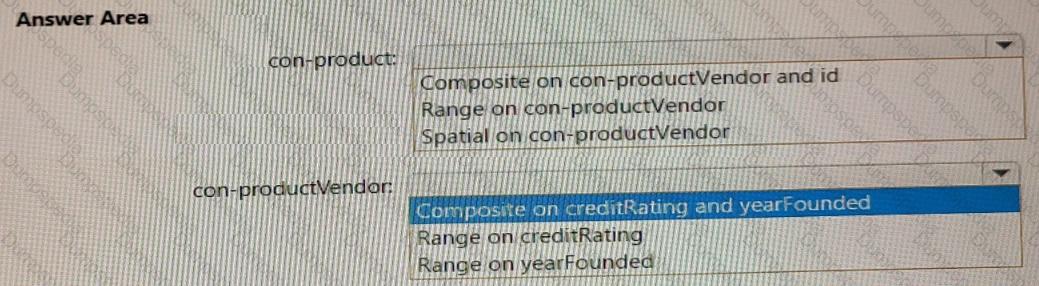
You need to recommend indexes for con-product and con-productVendor. The solution must meet the product catalog requirements and the business requirements.
Which type of index should you recommend for each container? To answer, select the appropriate options in the answer area.
NOTE: Each correct selection is worth one point.
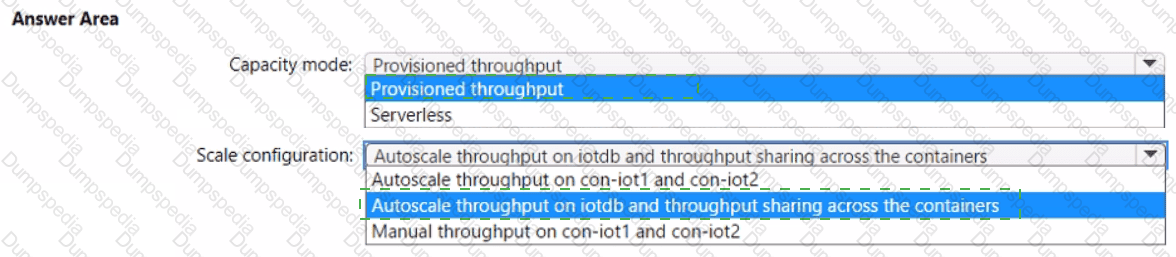
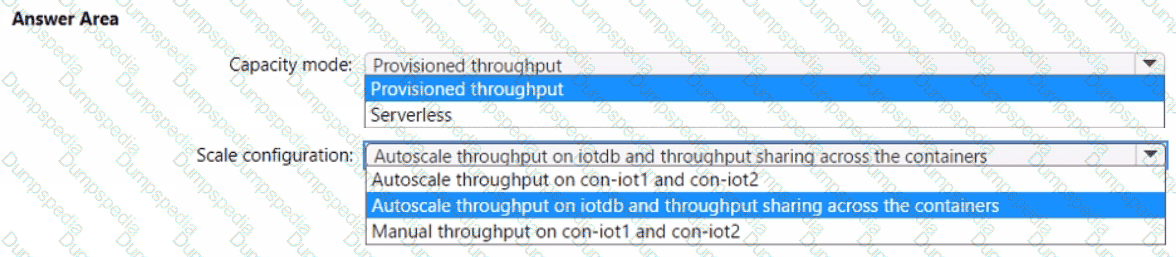
You need to select the capacity mode and scale configuration for account2 to support the planned changes and meet the business requirements. What should you select? To answer, select the appropriate options in the answer area. NOTE: Each correct selection is worth one point.
You need to select the partition key for con-iot1. The solution must meet the IoT telemetry requirements.
What should you select?
You need to identify which connectivity mode to use when implementing App2. The solution must support the planned changes and meet the business requirements.
Which connectivity mode should you identify?
You configure multi-region writes for account1.
You need to ensure that App1 supports the new configuration for account1. The solution must meet the business requirements and the product catalog requirements.
What should you do?
You need to provide a solution for the Azure Functions notifications following updates to con-product. The solution must meet the business requirements and the product catalog requirements.
Which two actions should you perform? Each correct answer presents part of the solution.
NOTE: Each correct selection is worth one point.
You are troubleshooting the current issues caused by the application updates.
Which action can address the application updates issue without affecting the functionality of the application?

TESTED 29 Nov 2026