dumpspedia logo

A 44-year-old patient is unresponsive, and an EMT checks for a pulse prior to applying an AED. Which of the following shockable rhythms, ventricular fibrillation or ventricular tachycardia, if either, may still produce a pulse in this patient?
A 1-year-old patient has meningitis. Which of the following signs and symptoms should the EMT expect to find? Select the three answer options that are correct.
A 24-year-old patient is in respiratory distress after being stung by a bee. What initial management action should the EMT take for this patient?
A 3-year-old patient has drooling and stridor. The vital signs are BP 82/40, P 132, R 34, SpO₂ 94%, and T 102.4°F (39.1°C). Which of the following interventions should the EMT perform?
Which of the following actions are steps for inserting a nasopharyngeal airway? Select the two answer options that are correct.
An 86-year-old patient involved in a motor vehicle collision struck a knee on the dashboard. What injuries are most associated with the knee impacting the dashboard? Select the two answer options that are correct.
A 67-year-old patient is unresponsive, and an EMT checks for a pulse prior to applying an AED. Which of the following screenable rhythms, ventricular fibrillation or ventricular tachycardia, if either, may still produce a pulse in this patient?
What are the proper procedures for performing CPR on a 9-month-old patient? Select the three answer options that are correct.
A 23-year-old patient reports loss of appetite, vomiting, fatigue, and joint pain. The patient has yellow sclera and right upper quadrant pain. Which of the following conditions is most likely the cause of the signs and symptoms?
A 4-year-old female has trouble breathing. Her respiratory rate is 40 and you hear grunting. She has a weak pulse and only responds to painful stimuli. You should suspect:
A 26-year-old patient is 26 weeks pregnant and has severe abdominal pain after being involved in a motor vehicle collision. There is minimal vaginal bleeding, and uterine contractions are present. What condition should the EMT suspect as the most likely cause of the patient ' s signs and symptoms?
A 30-year-old patient is injured in a motor vehicle collision. The patient cannot move their diaphragm, and they are apneic. In which of the following locations should the EMT suspect the spinal injury occurred?
A 9-month-old patient is unresponsive in a crib. The patient is not breathing. Which of the following actions should the EMT perform first?
What is the most effective way an EMT can protect themselves from spreading infectious diseases?
A 24-year-old patient was involved in an MVC. The EMT is completing the patient care report. Which of the following statements indicate pertinent negatives? Select the two correct options.
You are called to a small hotel where it is reported by the manager that several persons, in separate rooms, are unresponsive. Your first actions should be to
A 48-year-old patient was shot in their left shoulder. The EMT observes bright red blood pulsating from the wound. Which of the following actions should the EMT perform first?
Who is ultimately responsible for maintaining certification requirements and ensuring continuing education requirements are met?
When using the SALT method for triage, which of the following interventions should the EMT perform during the individual assessment step?
Which of the following bones is most likely to cause external leg rotation when fractured?
Which of the following types of shock is pericardial tamponade associated with?
Ice crystals are found in several medications during a daily check. What should the EMT do next?
A 32-year-old patient fell 10 feet off of an embankment. The patient is unresponsive with non-purposeful extension of the extremities. The vital signs are BP 220/106, P 54, and R 16 and irregular. Which of the following conditions should the EMT most strongly suspect?
A 24-year-old patient is in respiratory distress after being stung by a bee. What initial management action should the EMT take for this patient?
A 22-year-old patient fell and had pain in their right arm. The EMT began transporting the patient without splinting the arm. During transport, the patient ' s pain increased, and a deformity formed. The patient required surgical intervention for a displaced fracture. Based on this example, which of the following elements of negligence could be applied?
The police have placed a 20-year-old patient into custody. The patient is in handcuffs, is agitated, and is angry. The skin is hot and diaphoretic. The vital signs are BP 180/98, P 150, R 28, and SpO₂ 97% on room air. Which of the following actions would be appropriate for the EMT to take while transporting this patient? Select the two answer options that are correct.
A 34-year-old patient has a possible midshaft fracture to their right femur. The EMT is considering what the best time to assess distal neurological function would be:
• Time 1: Before the splint has been applied
• Time 2: After the splint has been applied
At which of these times, if either, should the EMT assess distal neurological function?
A 56-year-old patient has substernal chest discomfort radiating to the left arm and shoulder. The patient is nauseous, weak, and diaphoretic. The vital signs are BP 118/68, P 88, R 16, and SpO₂ 95% on room air. Which of the following interventions would be appropriate for this patient? Select the two answer options that are correct.
An infectious disease spread by the fecal-oral route that is considered an acute infection with a currently available vaccine is
A 96-year-old patient is apneic and pulseless. The family is attempting to cope with the perceived hopelessness of the situation. Which stage of grief should the EMT suspect the family has reached?
A 45-year-old patient has chest pain, shortness of breath, and skin that is cool and diaphoretic. The patient states they have a feeling of impending doom. Which of the following conditions should the EMT most strongly suspect?
What should be the EMT ' s immediate actions when arriving at a scene? Select the two answer options that are correct.
A 32-year-old female has a history of dysmenorrhea, abdominopelvic pain, and pain when having a bowel movement. She has not been sexually active in 8 months. Her symptoms are most likely caused by
A program whose efforts are to limit the effects of an injury or illness that you cannot completely prevent is called:
A 23-year-old patient with asthma is short of breath with cool, clammy skin. The patient is breathing 28 times per minute with accessory muscle use. Which of the following interventions is most appropriate?
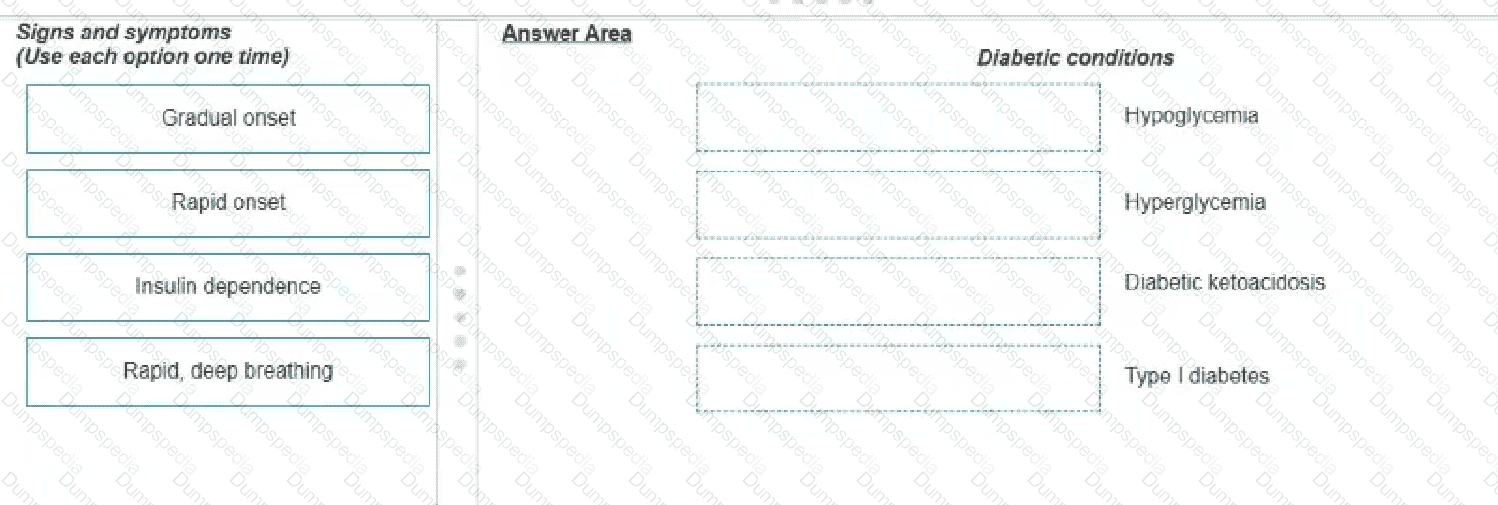
Which of the following signs or symptoms would be most closely associated with each of these diabetic conditions? Move each sign or symptom into the Answer Area one time to indicate the most closely associated diabetic condition.
A 10-year-old patient is in hypovolemic shock. Which of the following signs would be early indicators of shock for this patient? Select the three correct options.
Defusing sessions should do which of the following in order to be successful? Select the two answer options that are correct.
An 83-year-old patient is unresponsive and lying on the floor. The patient has a large bruise and laceration on the forehead. The patient’s vital signs are BP 90/60, P 126, and R 0. Which of the following conditions should the EMT most suspect?
A 67-year-old patient reports crushing chest pressure. The vital signs are BP 156/98, P 64, R 14, and SpO2 94%. What treatments should the EMT provide first? Select the two correct options.
A 3-year-old patient ingested laundry detergent. The patient is drowsy and has crackles in all lung fields. What should most concern the EMT at this time? Select the three answer options that are correct.
What components are necessary to maintain adequate perfusion? Select the three correct options.
A 6-year-old female rode her bicycle into a parked car. She is in moderate respiratory distress and you palpate subcutaneous emphysema. Of the following, what is the most important management for her?
An 84-year-old patient becomes dyspneic, feels faint, and develops blurred vision when going from sitting to standing. When at rest, the patient ' s symptoms resolve. The vital signs are BP 188/90, P 78, R 20, and SpO₂ 93% on room air. Which of the following causes is the patient ' s most likely presentation?
A 25-year-old patient had ingested an unknown quantity of a household cleaner one hour earlier. The patient has swelling around the mouth and stridor. Which of the following actions should the EMT prioritize? Select the two answer options that are correct.
A 12-year-old patient has uncontrollable jerking movement of the left arm. The patient answers the EMT ' s questions appropriately. What type of seizure is the patient most likely experiencing?
A 7-year-old patient has severe difficulty breathing. Which of the following characteristics indicate that the patient is in respiratory failure? Select the two answer options that are correct.
The most common finding in a patient who is experiencing a sickle cell crisis is
A 3-year-old patient has a sore throat and fever. They are drooling. Which of the following actions should the EMT take?
A 7-year-old patient is confused and disoriented. What should the EMT assess to rapidly determine the patient ' s condition? Select the three answer options that are correct.
A patient has heart failure with pulmonary edema. They have shortness of breath, and crackles are present in both lungs. The patient is nauseated and has vomited once. The vital signs are BP 90/40, P 110, R 10, and SpO₂ 89% on room air. Which of the following signs or symptoms prevent the EMT from using CPAP? Select the three correct options.
An 84-year-old patient has a sudden onset of weakness to one side of the body. The patient has a history of hypertension and high cholesterol. The vital signs are BP 176/94 mmHg, P 108/min, R 18/min, and SpO₂ 97% on room air. For which of the following additional symptoms should the EMT assess? Select the three correct options.
A 67-year-old patient has a sudden onset of weakness and dizziness after feeling a tearing pain in their chest. The patient has a history of diabetes, myocardial infarction, and hypertension. Lung sounds are clear. The skin is pale and cool to the touch. The vital signs are BP 88/52, P 128, and R 24. Which of the following types of shock should the EMT most strongly suspect?
An EMT is ventilating a 27-year-old patient who is unresponsive. There is a decrease in airway compliance. Which of the following factors is the most likely cause?
A 67-year-old patient is sitting in the tripod position. What general impression should the EMT most strongly suspect from this patient ' s position?
Witnesses state a patient is unresponsive and not breathing after a vehicle collision. What action should the EMT perform first?
You have consulted with on-line medical direction to terminate resuscitation of a 74-year-old female. How should you inform her family of this decision?
What patient conditions have an indication for the use of a CPAP device? Select the three answer options that are correct.
The crew is requested to respond by law enforcement to a riot scene in a large downtown area. Upon arrival, the EMT notices the police are in full riot gear, with multiple persons lying on the ground under arrest. There is a strong odor of chemicals in the air. What actions should the EMT prioritize during the scene survey? Select the two answer options that are correct.
A 24-year-old male was injured in an explosion at a large factory. He is breathing shallowly at a rate of 40 and his capillary refill is 3 seconds. What color should you assign him for triage?
Which of the following patient presentations at a mass casualty incident would indicate a red triage priority? Select the two answer options that are correct.
A 65-year-old patient with a history of angina reports chest pain and shortness of breath after playing golf. The patient stated the pain began one hour ago and has not stopped with rest. The vital signs are BP 86/64, P 112, R 22, and SpO₂ 89% on room air. Which of the following actions should the EMT do next?
Which of the following adverse conditions typically occurs during hemodialysis treatment?
A 28-year-old patient was in a physical altercation. Which of the following signs or symptoms would most likely indicate this patient has a significant brain injury? Select the two answer options that are correct.
Which of the following is a potential complication of positive pressure ventilation?
A 6-year-old patient has difficulty breathing. Lung sounds reveal wheezing. The patient ' s skin is cool and clammy. The respiratory rate is 32/min, and SpO2 88% on room air. Which of the following actions should the EMT administer to this patient first, and why?
Which of the following sections are designated by command at an MCI? Select the three correct options.
If a deep vein thrombosis breaks free and enters the lungs, will it likely lodge in the pulmonary artery or the pulmonary vein, and what pathology would occur?
When communicating with a patient, what are the best methods for showing respect and concern for the patient? Select the three answer options that are correct.
Which of the following findings are indicative of increasing intracranial pressure? Select the two answer options that are correct.
An 8-year-old patient has abdominal pain, tearing, drooling, and a runny nose after being found in the family tool shed. The patient’s signs and symptoms are most likely caused by which of the following chemicals?
At which of the following anatomic locations can wound packing be performed to stop bleeding? Select the three answer options that are correct.

TESTED 14 Oct 2026