dumpspedia logo

A 35-year-old woman presents to your clinic with double vision and a gritty sensation in her eyes for the past several weeks. On examination, you notice her eyes are bulging. There is inflammation of her conjunctivae and swelling around her eyes. Which one of the following is the most likely diagnosis?
You are a physician working at a university campus health centre. Staff at the centre are thinking about initiating a campus-wide education campaign on stimulant medication use and misuse. From a physician ' s perspective, which one of the following is the key message to include in this campaign?
A 31-year-old nulligravid woman presents to your office after 5 months of attempting to get pregnant without success. Her menses are regular, and she is otherwise healthy. Her husband is healthy and has never fathered any children before. Which one of the following is the best next step?
An 80-year-old man is admitted to hospital with what turns out to be tuberculosis. The attending physician informs all staff at the hospital of the patient ' s identity and diagnosis. Which one of the following best describes privacy concerns in this situation?
You are providing antenatal consultation to a primiparous woman of 37 weeks’ gestation who was admitted for labour induction. Repeat prenatal ultrasounds confirm a chronically small fetus who has never demonstrated easily detectable fetal movement. Maternal health has been normal throughout the pregnancy and she has received all antenatal serum screening. This fetus is at significant risk for which one of the following?
A 39-year-old woman comes to see you for her periodic health examination. Her father died at 55 of colon cancer, and she is concerned about the possible risk of her developing bowel cancer. Which one of the following would you advise her in terms of screening for colorectal cancer?
You are counselling the wife of a 75-year-old man admitted under your care after a fall. The patient is confused, disoriented, barely sleeps at night and has complex visual hallucinations of animals running through his room. Given his state, which one of the following is the best advice for the wife?
A 56-year-old woman with a 4-year history of fibromyalgia presents for follow-up. She reports that she is struggling with her health and daily life. She is unhappy with her lack of progress and says she feels tired all the time and stays in bed all day. When asked why, she states she is confused about why she is not getting better. Physical exam and investigations are unchanged from baseline. Which one of the following is the best next step?
A 51-year-old man comes to your clinic for follow-up regarding his type 1 diabetes. His hemoglobin A1c is 12.5% (normal 4–6%). He has never had such high blood sugar results. He drinks 2 beers per night to help with sleep. He is not well rested because he has been sleeping on a friend’s couch since losing his job last year. Which one of the following is the best next step?
A 38-year-old woman has progressive renal failure despite optimal medical treatment for her glomerulonephritis. Her ex-husband asks if he might be considered as a kidney donor. They have joint custody of their 10-year-old son. Which one of the following is the best response to the ex-husband’s request?
An otherwise healthy 21-year-old college student is brought to the Emergency Department after falling from the rooftop terrace of a night club. A grade III splenic laceration measuring 3 cm is identified on computed tomography scan. You elect to manage the patient non-operatively with close monitoring, repeat examinations and hemoglobin levels. A repeat computed tomography at 48 hours shows no deterioration. Diet is resumed and over the next few days, the patient resumes ambulation. Which one of the following do you discuss with your patient prior to discharge?
A 56-year-old man is admitted to hospital with pyelonephritis and started on intravenous antibiotics. On day 2 of his hospitalization, he continues to report right flank pain, but he is able to walk. His vital signs are as follows:
Temperature: 38.5°C
Blood pressure: 90/60 mm Hg
Heart rate: 105/min
The patient is mentating well but is concerned about his dog that is home alone due to his unexpected hospitalization. He requests to be released from hospital as he needs to make arrangements for his dog. Which one of the following is the best next step?
A 32-year-old woman, gravida 0, comes to your office for contraception counselling, specifically about insertion of a levonorgestrel-releasing intrauterine device. She has a past history of breast cancer and is presently on tamoxifen. Which one of the following is the best advice for your patient?
You are asked to see a 30-year-old woman, gravida 8, para 4, aborta 1, for symptoms of postpartum depression. She immigrated to Canada 8 months ago. She has been reluctant to speak to members of the medical team without her family members, even when an interpreter is present. Which one of the following is the best next step?
A 33-year-old man with severe bacterial meningitis is intubated and unresponsive in the Intensive Care Unit. If he receives immediate treatment, his prognosis is excellent. If he does not, he will likely die. Three years ago, the patient had Huntington disease diagnosed, but he has been asymptomatic since then. His advance directive, which was made before this hospitalization, states that he should be allowed to die if he contracts a life-threatening illness. His parents demand that he be treated for the meningitis. Which one of the following is the best next step?
A 78-year-old woman is brought to the Emergency Department by her son because she has a sodium level of 124 mmol/L (136–146). The sodium was checked as part of a blood work panel ordered by her primary health care provider to investigate symptoms of urinary frequency, fatigue, and thirst. Today, she has a blood glucose level of 44.0 mmol/L (4.0–11.0). The original blood work done by her primary health care provider did not include glucose. The patient is treated for hyperglycemia and dehydration and begins insulin. The patient and her son repeatedly express their frustration that their primary health care provider missed the diagnosis. Which one of the following is the best next step?
A 28-year-old woman presents to the office in great distress because she has no money for groceries or rent. She is a single mother of a 7-year-old girl. She has a history of gambling disorder. She has felt unable to cope for the last 3 months and has started gambling again. Today, she is crying, and she shares that her boyfriend became violent with her yesterday. Which one of the following is the highest priority for assessment?
You are examining a full-term baby girl in the nursery. You notice that her left forefoot is adducted and supinated relative to the contralateral foot, which makes her left foot appear C-shaped. Which one of the following findings is most instrumental in deciding on the management of this issue?
You perform a literature search of journal articles on the effectiveness of a new antihypertensive for first-line treatment of people aged 35 to 50. You find reports of 4 good quality studies. Three of them show that statistically, the new drug is significantly more effective than the standard treatment, and one shows no difference. Before you conclude that the new antihypertensive is more effective in this group of patients, which one of the following concepts must be given consideration?
A 26-year-old man presents to your office with fever, chills, and malaise. Aside from an episode of dysuria 8 weeks ago, which spontaneously resolved, he has been healthy. On examination, his left wrist and right ankle are tender. There is a cluster of vesiculopustular lesions on his right hand. Which one of the following is the most likely diagnosis?
You are counselling a couple that is concerned about the risk that their second child could be affected by the same X-linked recessive disorder (hemophilia A) as their last child, a boy. Neither parent has this disorder. What is the probability that their second child will be affected?
A 30-year-old woman presents to your office with a 6-week history of left lower quadrant pain and dyspareunia. A pelvic ultrasound is normal. Which one of the following is the most important immediate investigation?
You are taking over a practice from a retiring family physician. The practice has paper records of patients dating back many years, including records of former patients. Which one of the following organizations is the most appropriate to contact regarding medical record retention requirements?
A 12-year-old boy is brought by his mother to your clinic with a history of attention-deficit/hyperactivity disorder. His mother reports that he has been taking immediate-release methylphenidate for 2 years. Although the medication was initially effective, it no longer seems to work. The teachers say he is disorganized and fidgety, verbally interrupts class, and does not complete his work. His mother tells you that he does listen at home. Which one of the following is the most important next step in management?
A 69-year-old man presents with a 4-day history of a painful right knee. On history, he denies any trauma or similar previous episodes. Examination reveals effusion of the right knee that is warm to the touch. Which one of the following is the best next step?
You are providing medical care to a 78-year-old man and notice a skin lesion which you suspect is malignant melanoma. He has been living in a long-term care facility for 2 years because of incontinence, mobility and vision problems. He is well-liked by facility staff and residents, manages his own affairs and communicates clearly. He has designated his daughter to be his substitute decision-maker and has signed a Do Not Resuscitate (DNR) order. Which one of the following is the best next step in providing care to this patient for his skin lesion?
A 6-year-old boy is brought to the Emergency Department with a 2-day history of a limp. On examination, he looks well, has a temperature of 38 °C and is able to weight-bear. His hip examination reveals mild decreased range of motion. Radiographs of his hip and pelvis show no abnormality. His C-reactive protein level is 8 mg/L ( < 6). Which one of the following is the most likely diagnosis?
A mother brings her 13-year-old daughter to the office. The girl has had intermittent lower abdominal pain, constipation, and difficulty voiding for 3 months. She says that she is not sexually active. She looks well. She has reached age-specific developmental milestones, and her vital signs are within normal range. On abdominal examination, she is found to have a palpable suprapubic mass that persists after voiding. The girl says that her older sister started having menstrual periods at this age. The patient is surprised that hers have not started. Which one of the following is the best next step?
A 62-year-old woman is referred to your clinic for evaluation of hypercalcemia. She has a history of hypertension and vitamin D deficiency. Her medications include hydrochlorothiazide and vitamin D supplements. Laboratory investigations are as follows:
Calcium: 2.72 mmol/L (↑)
Phosphate: 0.9 mmol/L (↓)
Parathyroid hormone (PTH): 0.9 pmol/L (↓)
25-hydroxy vitamin D: 80 nmol/L (normal)
Which one of the following is the best next step?
A 58-year-old woman presents with a 1-year history of functional decline. She reports seeing rodents and little children invading her bedroom. Her partner tells you she has a slow, unsteady gait and tends to fall. On examination, she cannot sustain her attention during cognitive testing. Which one of the following is most likely to be found on brain imaging?
A 4-year-old girl is brought to the family practice by her father. The child has a 2-week history of low-grade fever, fatigue, and sore throat. She has also developed several small, round, mildly tender lumps bilaterally in her neck. She was previously well. Which one of the following is most likely to be found on abdominal examination?
A 63-year-old woman presents to your office with a history of progressive abdominal discomfort over the past five months. She reports bloating and difficult digestion with constipation. She has no urinary symptoms and denies vaginal or rectal bleeding. An abdominal ultrasound shows a large complex pelvic mass with internal multiloculation and moderate ascites. The cancer antigen 125 (CA 125) is elevated at 1023 U/mL ( < 35 U/mL). Which one of the following is the most likely diagnosis?
A 45-year-old woman presents to your clinic for follow-up regarding her asthma. She is planning to attend a cultural event that includes ceremonial burning of tobacco. Which one of the following is the best next step?
A 24-year-old man presents to your clinic with a 6-month history of fatigue. On examination, he is pale. His BMI is 16, and his blood pressure is 92/58 mm Hg. Initial laboratory work shows the following:
Creatinine: 64 µmol/L (49–93)
Potassium: 3.0 mmol/L (3.5–5.1)
Sodium: 138 mmol/L (136–146)
TSH: 2.40 mIU/L (0.34–5.60)
CBC: Normal
Which one of the following is the best next step?
A 79-year-old woman is brought by a long-term care (LTC) facility staff member to your clinic with concerning behaviours. On history, she was admitted to an LTC facility 6 months ago with vascular dementia. Three days ago, she became very aggressive towards her caregivers. There is no clear pattern to her aggression. Some staff members report that she is quieter than usual, whereas others report that she is agitated, talks to herself, and picks at her clothes. On examination, she appears very confused. She does not finish her answers and seems to “drift off” during conversation. Which one of the following is the most likely diagnosis?
A 42-year-old man comes to your family practice. He has started seeing a reflexologist to help manage his chronic back pain. He presents to you a letter from the reflexologist outlining the weekly necessary treatments, each costing $300, and a list of blood tests for the patient to have done. The patient asks you to order the laboratory testing and send the results to his “other doctor.” Which one of the following is the best next step?
A 12-year-old girl presents to your office in late November with an exacerbation of asthma which has been well controlled since her diagnosis at age 5. The family has had cats for 3 years. Last June, they moved to a basement apartment. Which one of the following is the most likely cause of her asthma exacerbation?
A 60-year-old man is admitted to hospital, and lung cancer is diagnosed. When his family physician reviews the discharge summary, she reviews the patient’s chart and finds a chest radiograph report from 1 year ago that mentions a suspicious nodule and recommends a computed tomography scan. The family physician recalls seeing this report and did not order the scan. Which one of the following is the family physician’s best next step?
A 67-year-old farmer presents with a 6-month history of progressive weakness in both arms. He now has difficulty in climbing but says he can still drive his tractor. Examination shows slight but definite atrophy of muscles of pectoral girdle, especially over his scapula. Fasciculations are visible. There is hyperreflexia of most tendon reflexes of arms and legs, left ankle clonus and left Babinski reflex. Which one of the following is the most likely diagnosis?
A 17-year-old boy is brought by his 2 roommates to the emergency department (ED) after a party where he had been drinking and smoking cannabis. He reportedly was having a good time when he suddenly wanted to jump out of a window. His roommates describe him as “normal prior to a breakup with his girlfriend a week ago.” He has since become anxious and unable to sleep. On examination, he is somnolent and appears intoxicated. Which one of the following is the most appropriate initial management?
During an office visit, your 14-year-old patient requests a prescription for oral contraceptives. The province where you are working does not have a statutory age of consent. Which one of the following is the best next step?
A 26-year-old man presents to the office with a tender mass in his right neck. He was recently treated for a dental infection but is otherwise well. On examination, there is a 2-cm tender, mobile lymph node in the right anterior cervical chain. No other lymphadenopathy or abnormalities are found on physical examination. Which one of the following is the best next step?
A 9-year-old girl is brought to the Emergency Department because she has generalized urticaria, abdominal cramping, and postural dizziness 30 minutes after eating at a friend’s birthday party. Which one of the following is the most appropriate route of administration for epinephrine?
A 39-year-old woman, gravida 2, para 1, aborta 0, presents with concerns that a friend has recently suffered from postpartum psychosis. She wonders if she is likely to suffer this disorder following delivery of her 2nd child. Which one of the following is most likely to increase your patient ' s risk?
You are undertaking the retrospective analysis of a laboratory-confirmed influenza A virus outbreak that occurred in a long-term care facility last year. Among the 163 residents in the facility during the outbreak, 101 residents had new-onset fever, cough, myalgias, and congestion. Of these, 37 residents were transferred to acute care. Of these, 17 residents died. Which one of the following is the best estimate of the attack rate in residents at the facility?
A 26-year-old woman, gravida 2, para 2, aborta 0, has just delivered a full-term newborn via spontaneous vaginal delivery after 4 hours of labor. Following oxytocin administration and placental expulsion, there continues to be a steady trickle of bright red blood from her vagina. On examination, the placenta is intact and the fundus feels firm. Her vital signs are within normal range.
Which one of the following is the most likely diagnosis?
A 3-year-old boy is brought to your office because his daycare teachers are concerned about his language development. His parents speak both English and French at home, and he can say around 15 words combined in both languages. His history reveals that he has minimal interest in playing with other children. Which one of the following is most appropriate?
A 60-year-old man has a strong family history of aortic aneurysms. Screening abdominal ultrasonography reveals an incidental < 1 cm mass in his left kidney. Computed tomography confirms that the mass is consistent with renal adenocarcinoma. Which one of the following is the most appropriate step in management?
A 65-year-old woman presents to the office for follow-up regarding vaginal bleeding. Her last visit was 2 months ago. At that visit, the results of a pelvic examination and a Papanicolaou test were normal. She also had an endometrial biopsy but there was " insufficient material for diagnosis. " She reports that she is still losing small amounts of blood almost every day. On history, she has been taking continuous combined hormone replacement therapy for 10 years because of vasomotor symptoms. Which one of the following is the most appropriate next step in management?
A 26-year-old woman, gravida 3, para 2, presents for her 1st antenatal visit. She states she is at 26 weeks ' gestation and is healthy. On abdominal examination, her fundus is palpated at the umbilicus. Which one of the following is the most likely explanation for this finding?
A 31-year-old woman, gravida 4, para 3, aborta 0, presents at 8 weeks’ gestation with scant vaginal bleeding and no abdominal pain. Her heart rate is 90/min and blood pressure is 100/70 mm Hg. A speculum examination reveals a closed cervix. The beta–human chorionic gonadotropin level is 300,000 IU/L. Which one of the following is the most likely diagnosis?
A 16-year-old boy is brought to the office for examination, which reveals the lesion in the attached image and similar lesions on other parts of his body. You also notice multiple scattered subcutaneous tumors that he says have been there for a long time. Which one of the following is the most likely diagnosis?
You are 1 of 3 physicians on an interdisciplinary brain injury team at a hospital. The team ' s physiotherapist has concerns regarding a patient ' s medication. Which one of the following is the most appropriate course of action for communicating with the physiotherapist?
A 47-year-old man presents to the office with a 1-month history of passing blood in his stool 2 to 3 times per week. He is otherwise healthy and denies any systemic symptoms. Other than a small lateral skin tag on digital rectal examination, the physical examination findings are unremarkable. Which one of the following is the best next step?
A 16-year-old girl presents to the clinic with concerns about her toenails. The lesions, as shown in the attached image, have been present for 2 to 3 months. She is otherwise healthy and is in training for a triathlon. Which one of the following is the best next step?
In a research study, it is found that people who smoke tobacco cigarettes drink more coffee and have higher rates of lung cancer than people who do not smoke. However, the consumption of coffee alone is not associated with lung cancer. Which one of the following best describes the contribution of drinking coffee in the study?
A 24-year-old woman has had several episodes of left lower lobe pneumonia. She has a chronic productive cough with occasional blood-streaked sputum. Physical examination is normal except for rales at the left base. Chest radiograph shows a linear infiltrate in this area. Which one of the following is the most likely diagnosis?
A 3.5-year-old girl has developed a stutter in the last 3 months. She repeats whole words several times before finishing a sentence. Her paternal uncle had a severe stuttering issue as a child. She has reached the developmental milestones for her age. Her new sibling was born 4 months ago. Which one of the following is the best next step?
A 38-year-old woman, gravida 3, para 2, aborta 0, presents to the labour and delivery unit for induction of labour. Her pregnancy is at 42 weeks’ gestation and has been uncomplicated to date. Which one of the following is the most appropriate information to provide to the patient?
A 45-year-old man presents to the office and reports difficulty understanding conversations that happen in a noisy environment. Ear examination findings are normal. You request audiography, from which results show bilateral high-frequency sensorineural hearing loss with a notch at 4000 Hz. Which one of the following is the most likely cause of this patient’s hearing loss?
A 53-year-old man with a history of bipolar I disorder is brought to the office by his family. Recently, he has been sleeping for 4 to 5 hours per night, has been fidgety, and is increasingly preoccupied with his granddaughter ' s safety. Five days ago, he consulted with your physician colleague and was instructed to exercise and meditate. Last night, he was found running in the street and attempted to hit a relative who was trying to calm him down. His son is dissatisfied with your physician colleague ' s management. Which one of the following is the most appropriate response?
A 70-year-old woman had a total abdominal hysterectomy with bilateral salpingo-oophorectomy 2 days ago. On examination today, her vital signs are as follows: She has been immobile since her operation. She is fatigued but is tolerating a full diet. Which one of the following is the most likely cause of this patient ' s fever?
A 25-year-old woman, gravida 1, para 1, aborta 0, gave birth to a newborn who is hypotonic with a large protruding tongue and brachycephaly. The newborn has a single palmar crease bilaterally and short, broad hands with a curved fifth digit. These features best support a clinical diagnosis of which one of the following?
You receive a note from a pharmacist about your 82-year-old patient who is taking oxycodone extended-release 20 mg 3 times daily for spinal stenosis. The pharmacist suggests that you consider tapering the medication. Your patient has been taking his current dosage for 1 year. When you saw him a month ago, he was functioning well with no adverse effects from the medication. Which one of the following is the best next step?
A 22-year-old woman, gravida 1, para 0, aborta 0, comes to the office at 10 weeks ' gestation for her first prenatal visit. When you ask how she is doing, she becomes tearful and says she has had severe nausea and vomiting. She is not taking her prenatal vitamins regularly and feels very guilty about it. She is worried that she is harming the fetus. Which one of the following is the most appropriate management of this patient ' s case?
A 78-year-old man presents to the office with urinary hesitancy, straining to void his bladder, and a sensation of incomplete bladder emptying. On history, he has a BMI of 36 and type 2 diabetes. Which one of the following medications would most likely help the patient’s symptoms?
A 38-year-old man is brought by his wife to the Emergency Department with fatigue, dizziness, and nausea after completing a hiking tour on a hot, humid day. His wife became worried after he had collapsed. He has been sweating heavily and vomited twice on the drive in. His medical history is unremarkable, and he takes no medications. His vital signs on arrival are as follows:
Blood pressure
85/57 mm Hg
Heart rate
120/min
Respiratory rate
18/min
Temperature
40.1 °C
Oxygen saturation
95%, room air
—
On physical examination, the patient ' s skin is dry, flushed, and warm to the touch. He has a diffuse erythematous papular rash. Findings of a thorough physical examination are otherwise unremarkable. An electrocardiogram shows sinus tachycardia. Which one of the following is the best next step?
A mother brings her 1-month-old infant for routine health examination. The infant was born at term with no complications. He is exclusively breastfed every 3–4 hours and growth parameters are normal. His mother tells you that feedings are difficult (the baby cries any time she tries to put him down) and that she is exhausted. Her husband has been on a military mission since the infant was 2-weeks-old. Which one of the following is the most appropriate next step in management?
A surgical clinic would like to respond to the Truth and Reconciliation Commission of Canada: Calls to Action report. The clinic has implemented a mandatory cultural safety course for all employees and ongoing faculty development that includes teachings from Elders and Knowledge Keepers and teaching sessions about harm reduction, trauma-informed care, and antiracism. Which one of the following steps would further the clinic ' s goal of responding to this report?
An 80-year-old woman presents to your office with weight loss and generalized weakness. Her husband calls you after the appointment and asks that his wife not be told if she is diagnosed with cancer as hearing this will likely " kill her. " Investigations subsequently show that she has metastatic lung cancer. Which one of the following is the best next step?
A previously well 4-year-old boy is brought to your office by his mother. She is concerned by his behaviour. Shortly after falling asleep, he awakens, screams loudly and cries. He appears frightened and does not respond to his mother’s efforts to calm him. During these episodes, he appears agitated and flushed. After 15–20 minutes, he settles back to sleep. Physical examination is unremarkable. Which one of the following is the most likely diagnosis?
A 28-year-old woman presents because of spotting mid-menstrual cycle. Speculum examination reveals an ulcerated endocervical polyp. Which one of the following is the most appropriate management?
A 45-year-old woman presents to the emergency department after being involved in a motor vehicle collision. She reports severe right hip pain. On examination, the right hip is flexed and adducted. A radiograph shows a posterior dislocation. Which one of the following is the most appropriate management?
A 39-year-old man presents to a psychiatrist. He says, " It often seems to me that I am not part of this world. My voice sounds strange to me, and other people seem like figures in a dream. " He has had these feelings intermittently for about 2 years. There is no history of hallucinations, and there are no current indications of disorganized thinking. Which one of the following is the most likely diagnosis?
A 24-year-old man is brought to the Emergency Department by ambulance with a severe pelvic fracture from a motor vehicle collision. After resuscitation and stabilization, he is noted to have a bloody penile discharge. Which one of the following is the best next step?
A 30-year-old woman presents to your office for a follow-up assessment of a sports-related musculoskeletal injury to her right leg. She requests a letter for her employer regarding her return to work. You feel she should be able to manage some aspects of her factory work. Which one of the following is most appropriate to include in your medical note to this patient ' s employer?
A 16-year-old boy presents to the emergency department with a 12-hour history of fever and rigors. He has sickle cell anemia. On examination, his vital signs include the following:
Heart rate
110/min (60–100)
Respiratory rate
20/min (12–18)
Temperature
38.8 °C, oral (36.5–37.5)
Which one of the following places this patient at risk for sepsis?
A mumps outbreak is occurring in your community, with higher attack rates among post-secondary students. Which one of the following is the most effective intervention?
A 79-year-old woman presents to the Emergency Department with sudden-onset severe chest and back pain that started 1 hour ago. She has a history of hypertension and looks unwell. Her vital signs are as follows: blood pressure 168/108 mm Hg, heart rate 110/min, respiratory rate 22/min, temperature 36.7°C. Findings of a physical examination of the chest and abdomen are normal. An urgent computed tomography (CT) scan of the chest and abdomen shows an aortic dissection extending from the descending thoracic aorta to the upper abdominal aorta. The branches of the abdominal aorta are patent. Following initial resuscitation, which one of the following is the best next step?
A 40-year-old woman presents to the Emergency Department with confusion and fever (38.5°C). She has a history of hypothyroidism managed with levothyroxine. Key findings include:
Blood pressure
114/78 mm Hg
Heart rate
85/min
Temperature
38.5°C
Hemoglobin
90 g/L 123-157 g/L
Platelet count
25 × 10⁹/L 130-400 × 10⁹/L
Peripheral blood film
Schistocytes present
Creatinine
200 μmol/L 50-90 μmol/L
One of your patients presents to your clinic for a consultation regarding their recurrent hemoptysis. On review of their chart, you realize that although you had ordered chest radiography 2 months ago, the result cannot be found in the chart. You call the radiology department and are relieved to find that the chest radiography was done and that it did not reveal any pathology. After informing the patient of this lapse in reporting, which one of the following is the best next step?
An intoxicated 28-year-old man is brought to the Emergency Department after being found in the snow. His vital signs are as follows:
Temperature: 33°C
Respiratory rate: 22/min
Heart rate: 123/min
The patient is shivering and displays some dysarthria and ataxia. After his wet clothing is removed, he is provided with a warm blanket. The results of the subsequent physical examination are unremarkable, except for frostbite of the ears and fingers. Which one of the following is the best next step?
You have been asked to develop a program in your hospital for people who are at the highest risk of death by suicide. The hospital administrator asks you to describe the types of patients they should expect in the program. Which one of the following groups is the most likely prominent demographic?
A 47-year-old man has been training for a marathon. After a long run, he develops mild pain and swelling in his left knee. Examination shows a mild joint effusion and a soft tissue mass in the popliteal fossa. The knee radiograph is normal. Which one of the following is the best method of confirming the diagnosis?
An investigator interested in the etiology of neonatal jaundice conducted a study where he selected 150 children diagnosed with this condition and 150 children born in the same time period and in the same hospital who did not have a diagnosis of neonatal jaundice. He then reviewed the delivery records of their mothers to determine various prenatal and perinatal exposures. This is an example of which one of the following?
A 73-year-old woman is seen in the office 2 weeks after a coronary bypass surgical procedure. The site of saphenous vein removal in the left thigh shows an area of tenderness and a 3 × 5 cm palpable mass. The skin is intact. Her temperature is 37.7 °C, hemoglobin is 110 g/L (125–167), and white blood cell count is 8 × 10⁹/L (4–10). Which one of the following is the most likely diagnosis?
A 32-year-old woman presents to the office with questions related to the mRNA vaccines that are approved for COVID-19. She is a health care worker. She gave birth to a healthy child 2 months ago. Before being immunized, which one of the following is the most important detail to elicit from the patient ' s history?
You are seeing a 5-month-old infant who has had intermittent stridor since age 2 months. He is otherwise healthy. He has been drinking well and has been reaching all the age-specific developmental milestones. Which one of the following is the most likely diagnosis?
A 42-year-old woman presents to your clinic requesting an increase in her stimulant dosage for the treatment of her adult attention-deficit/hyperactivity disorder. Her medical history includes hypertension and type 1 diabetes with associated nephropathy. She has been taking methylphenidate daily for 15 years. Which one of the following would need to be addressed before the dosage can be increased?
You are an attending physician at a palliative care unit and are asked to see an 80-year-old woman who is dying of lung cancer. She has been unresponsive for the last 2 days and had her last dose of morphine 4 hours ago. Her son just arrived in town this afternoon and pleads with you to wake her up so she can sign her will. Which one of the following is the best next step?
A 65-year-old man presents to your clinic with a 2-month history of persistent erectile dysfunction. He reports having difficulties maintaining an erection. His last hemoglobin A1c level result was 6.4% (4.8–6.0). He had a negative result on his cardiac stress test 1 month ago. He has been taking stable dosages of citalopram, metformin, and ramipril for the past 2 years. His physical examination findings are normal, and his mood appears euthymic. Which one of the following investigations should be ordered before initiating treatment with sildenafil?
A 26-year-old man presents with pain, numbness, and weakness in his right upper extremity. He works as a computer programmer, and his BMI is 32. Symptoms have worsened since he started spending more time on the keyboard. He reports that his right hand feels clumsier while he is typing. Physical examination reveals mild weakness in the intrinsic muscles of that hand, with a positive Tinel sign at the ulnar nerve. Which one of the following is the best next step?
A couple is diagnosed with primary infertility secondary to azoospermia. They are not interested in in vitro fertilization techniques, so you recommend insemination with a sperm donor. The male partner is hesitant. He thinks he might have difficulty accepting raising a child who is not biologically his. Which one of the following is the best next step?
A 38-year-old marathon runner presents to your office with a 6-month history of increasing right hip pain. The pain is worse with acclivity and has prevented him from running for the last 4 months. He denies fever or chills. His wife adds that she is concerned because he is increasingly disengaged with the family and not interested in other activities he usually enjoys, including sex. Which one of the following is the best next step in management?
A 24-year-old woman with chronic anorexia nervosa presents to the Emergency Department with diarrhea, chest pain and palpitations. She is noted to have a BMI of 13, a heart rate of 48/min, significant orthostatic hypotension and a temperature of 35.9 °C. Her electrocardiogram shows frequent premature ventricular contractions. Her blood work indicates elevated liver transaminases and evidence of acute kidney injury from dehydration. She agrees to admission for medical stabilization only if she does not receive fluids either orally or intravenously, as they will cause her to gain weight and to feel bloated. Which one of the following is the best next step?
A 34-year-old woman, gravida 3, para 2, aborta 0, presents at 38 weeks ' gestation. She is in early labor with ruptured membranes. Her previous pregnancy was complicated by fever during labor. Which one of the following would increase the risk of fever recurrence?
You performed a surgical procedure on a 32-year-old woman for a herniated disk that was causing neurologic impairment. At the 8-month follow-up visit, she has healed well; however, she requests a prescription renewal of her narcotic analgesics (hydromorphone). Her pharmacy confirms that the patient adheres to the dosage you prescribed, that she has not consulted other physicians, and that her behavior has always been respectful. You think that she no longer requires narcotic analgesics. Which one of the following approaches is most helpful to the patient?
A 32-year-old woman presents to your outpatient clinic with concerns regarding a 6-month history of both a pulsatile buzzing sound in her ears and headaches. There is no history of hearing loss, vertigo, ear pain, or discharge from the ears. There is a long-standing history of prolonged exposure to occupational noise. She has a BMI of 32. Otoscopic examination is unremarkable, and there are no neck masses present. You determine that the buzzing sound is synchronous with her radial pulse. Which of the following investigations should be ordered next?
A 26-year-old woman, gravida 1, para 0, aborta 0, presents to your office at 10 weeks’ gestation to review the results of her antenatal blood work. She tested positive for hepatitis C. Which one of the following is most advisable to share with her regarding the risks to her and her unborn child?
A 56-year-old woman comes to your office because she has not been herself since her husband died in a car crash 6 weeks ago. She has no prior psychiatric history. Her son is concerned because she cries frequently, has a poor appetite, rarely leaves home and is distraught. Her sadness fluctuates and increases when she thinks of her husband. She often thinks about death, and she wishes she could join her deceased husband. Which one of the following is the best next step?
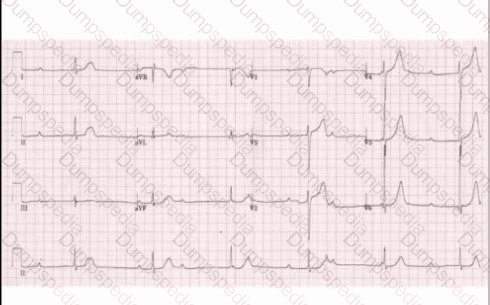
An 80-year-old woman presents to the Emergency Department with dizziness. She has a medical history of coronary artery disease. On examination, she is alert and oriented. Her vital signs are as follows:
Her electrocardiogram is shown in the image.
Which one of the following is the most likely diagnosis?
Blood pressure
80/60 mm Hg
Heart rate
40/min
Respiratory rate
12/min
Her electrocardiogram is shown in the attached image. Which one of the following is the most likely diagnosis?

TESTED 14 Oct 2026