New Year Sale - Limited Time 65% Discount Offer - Ends in 0d 00h 00m 00s - Coupon code: 65percent

Welcome To DumpsPedia

MuleSoft-Platform-Architect-I Sample Questions Answers

Questions 4

The application network is recomposable: it is built for change because it "bends but does not break"

Options:

A.

TRUE

B.

FALSE

Buy Now
Questions 5

A system API is deployed to a primary environment as well as to a disaster recovery (DR) environment, with different DNS names in each environment. A process API is a client to the system API and is being rate limited by the system API, with different limits in each of the environments. The system API's DR environment provides only 20% of the rate limiting offered by the primary environment. What is the best API fault-tolerant invocation strategy to reduce overall errors in the process API, given these conditions and constraints?

Options:

A.

Invoke the system API deployed to the primary environment; add timeout and retry logic to the process API to avoid intermittent failures; if it still fails, invoke the system API deployed to the DR environment

B.

Invoke the system API deployed to the primary environment; add retry logic to the process API to handle intermittent failures by invoking the system API deployed to the DR environment

C.

In parallel, invoke the system API deployed to the primary environment and the system API deployed to the DR environment; add timeout and retry logic to the process API to avoid intermittent failures; add logic to the process API to combine the results

D.

Invoke the system API deployed to the primary environment; add timeout and retry logic to the process API to avoid intermittent failures; if it still fails, invoke a copy of the process API deployed to the DR environment

Buy Now
Questions 6

What is a key requirement when using an external Identity Provider for Client Management in Anypoint Platform?

Options:

A.

Single sign-on is required to sign in to Anypoint Platform

B.

The application network must include System APIs that interact with the Identity Provider

C.

To invoke OAuth 2.0-protected APIs managed by Anypoint Platform, API clients must submit access tokens issued by that same Identity Provider

D.

APIs managed by Anypoint Platform must be protected by SAML 2.0 policies

Buy Now
Questions 7

An organization requires several APIs to be secured with OAuth 2.0, and PingFederate has been identified as the identity provider for API client authorization, The

PingFederate Client Provider is configured in access management, and the PingFederate OAuth 2.0 Token Enforcement policy is configured for the API instances required by the

organization. The API instances reside in two business groups (Group A and Group B) within the Master Organization (Master Org).

What should be done to allow API consumers to access the API instances?

Options:

A.

The API administrator should configure the correct client discovery URL in both child business groups, and the API consumer should request access to the API in Ping Identity

B.

The API administrator should grant access to the API consumers by creating contracts in the relevant API instances in API Manager

C.

The APL consumer should create a client application and request access to the APT in Anypoint Exchange, and the API administrator should approve the request

D.

The APT consumer should create a client application and request access to the API in Ping Identity, and the organization's Ping Identity workflow will grant access

Buy Now
Questions 8

An IT Security Compliance Auditor is assessing which nonfunctional requirements (NFRs) are already being implemented to meet security measures.

* The Web API has Rate-Limiting SLA

* Basic Authentication - LDAP

* JSON Threat Protection

* TP Allowlist policies applied

Which two NFRs-are enforced?

Options:

A.

The API invocations are coming from a known subnet range

B.

Username/password supported to validate login credentials

C.

Sensitive data is masked to prevent compromising critical information

D.

The API is protected against XML invocation attacks

E.

Performance expectations are to be allowed up to 1,000 requests per second

Buy Now
Questions 9

An organization is deploying their new implementation of the OrderStatus System API to multiple workers in CloudHub. This API fronts the organization's on-premises Order Management System, which is accessed by the API implementation over an IPsec tunnel.

What type of error typically does NOT result in a service outage of the OrderStatus System API?

Options:

A.

A CloudHub worker fails with an out-of-memory exception

B.

API Manager has an extended outage during the initial deployment of the API implementation

C.

The AWS region goes offline with a major network failure to the relevant AWS data centers

D.

The Order Management System is Inaccessible due to a network outage in the organization's on-premises data center

Buy Now
Questions 10

A System API is designed to retrieve data from a backend system that has scalability challenges. What API policy can best safeguard the backend system?

Options:

A.

IPwhitelist

B.

SLA-based rate limiting

C.

Auth 2 token enforcement

D.

Client ID enforcement

Buy Now
Questions 11

A retail company is using an Order API to accept new orders. The Order API uses a JMS queue to submit orders to a backend order management service. The normal load for orders is being handled using two (2) CloudHub workers, each configured with 0.2 vCore. The CPU load of each CloudHub worker normally runs well below 70%. However, several times during the year the Order API gets four times (4x) the average number of orders. This causes the CloudHub worker CPU load to exceed 90% and the order submission time to exceed 30 seconds. The cause, however, is NOT the backend order management service, which still responds fast enough to meet the response SLA for the Order API. What is the MOST resource-efficient way to configure the Mule application's CloudHub deployment to help the company cope with this performance challenge?

Options:

A.

Permanently increase the size of each of the two (2) CloudHub workers by at least four times (4x) to one (1) vCore

B.

Use a vertical CloudHub autoscaling policy that triggers on CPU utilization greater than 70%

C.

Permanently increase the number of CloudHub workers by four times (4x) to eight (8) CloudHub workers

D.

Use a horizontal CloudHub autoscaling policy that triggers on CPU utilization greater than 70%

Buy Now
Questions 12

How are an API implementation, API client, and API consumer combined to invoke and process an API?

Options:

A.

The API consumer creates an API implementation, which receives API invocations from an API such that they are processed for an API client

B.

The API client creates an API consumer, which receives API invocations from an API such that they are processed for an API implementation

C.

The ApI consumer creates an API client, which sends API invocations to an API such that they are processed by an API implementation

D.

The ApI client creates an API consumer, which sends API invocations to an API such that they are processed by an API implementation

Buy Now
Questions 13

An existing Quoting API is defined in RAML and used by REST clients for interacting with the quoting engine. Currently there is a resource defined in the RAML that allows the creation of quotes; however, a new requirement was just received to allow for the updating of existing quotes.

Which two actions need to be taken to facilitate this change so it can be processed?

Choose 2 answers

Options:

A.

Update the API implementation to accommodate the new update request

B.

Remove the old client applications and create new client applications to account for the changes

C.

Update the RAML with new method details for the update request

D.

Deprecate existing versions of the API in Exchange

E.

Add a new API policy to API Manager to allow access to the updated endpoint

Buy Now
Questions 14

An auto manufacturer has a mature CI/CD practice and wants to automate packaging and deployment of any Mule applications to various deployment targets, including CloudHub workers/replicas, customer-hosted Mule runtimes, and Anypoint Runtime Fabric.

Which MuleSoft-provided tool or component facilitates automating the packaging and deployment of Mule applications to various deployment targets as part of the company's

CI/CD practice?

Options:

A.

Anypoint Runtime Manager

B.

Mule Maven plugin

C.

Anypoint Platform CLI

D.

Anypoint Platform REST APIs

Buy Now
Questions 15

An Anypoint Platform organization has been configured with an external identity provider (IdP) for identity management and client management. What credentials or token must be provided to Anypoint CLI to execute commands against the Anypoint Platform APIs?

Options:

A.

The credentials provided by the IdP for identity management

B.

The credentials provided by the IdP for client management

C.

An OAuth 2.0 token generated using the credentials provided by the IdP for client management

D.

An OAuth 2.0 token generated using the credentials provided by the IdP for identity management

Buy Now
Questions 16

A European company has customers all across Europe, and the IT department is migrating from an older platform to MuleSoft. The main requirements are that the

new platform should allow redeployments with zero downtime and deployment of applications to multiple runtime versions, provide security and speed, and utilize Anypoint MQ

as the message service.

Which runtime plane should the company select based on the requirements without additional network configuration?

Options:

A.

Runtime Fabric on VMs / Bare Metal for the runtime plane

B.

Customer-hosted runtime plane

C.

MuleSoft-hosted runtime plane (CloudHub)

D.

Anypoint Runtime Fabric on Self-Managed Kubernetes for the runtime plane

Buy Now
Questions 17

A Mule application exposes an HTTPS endpoint and is deployed to three CloudHub workers that do not use static IP addresses. The Mule application expects a high volume of client requests in short time periods. What is the most cost-effective infrastructure component that should be used to serve the high volume of client requests?

Options:

A.

A customer-hosted load balancer

B.

The CloudHub shared load balancer

C.

An API proxy

D.

Runtime Manager autoscaling

Buy Now
Questions 18

What is a best practice when building System APIs?

Options:

A.

Document the API using an easily consumable asset like a RAML definition

B.

Model all API resources and methods to closely mimic the operations of the backend system

C.

Build an Enterprise Data Model (Canonical Data Model) for each backend system and apply it to System APIs

D.

Expose to API clients all technical details of the API implementation's interaction wifch the backend system

Buy Now
Questions 19

An API client calls one method from an existing API implementation. The API implementation is later updated. What change to the API implementation would require the API client's invocation logic to also be updated?

Options:

A.

When the data type of the response is changed for the method called by the API client

B.

When a new method is added to the resource used by the API client

C.

When a new required field is added to the method called by the API client

D.

When a child method is added to the method called by the API client

Buy Now
Questions 20

An application updates an inventory running only one process at any given time to keep the inventory consistent. This process takes 200 milliseconds (.2 seconds) to

execute; therefore, the scalability threshold of the application is five requests per second.

What is the impact on the application if horizontal scaling is applied, thereby increasing the number of Mule workers?

Options:

A.

The application scalability threshold is five requests per second regardless of the horizontal scaling

B.

The total process execution time is now 100 milliseconds (.1 seconds)

C.

The application scalability threshold is now 10 requests per second

D.

Horizontal scaling cannot be applied to an already-running application

Buy Now
Questions 21

What should be ensured before sharing an API through a public Anypoint Exchange portal?

Options:

A.

The visibility level of the API instances of that API that need to be publicly accessible should be set to public visibility

B.

The users needing access to the API should be added to the appropriate role in Anypoint Platform

C.

The API should be functional with at least an initial implementation deployed and accessible for users to interact with

D.

The API should be secured using one of the supported authentication/authorization mechanisms to ensure that data is not compromised

Buy Now
Questions 22

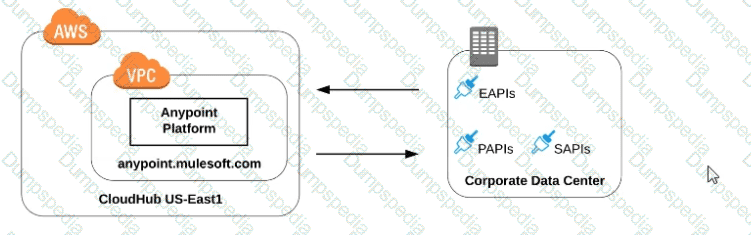
Refer to the exhibit.

what is true when using customer-hosted Mule runtimes with the MuleSoft-hosted Anypoint Platform control plane (hybrid deployment)?

Options:

A.

Anypoint Runtime Manager initiates a network connection to a Mule runtime in order to deploy Mule applications

B.

The MuleSoft-hosted Shared Load Balancer can be used to load balance API invocations to the Mule runtimes

C.

API implementations can run successfully in customer-hosted Mule runtimes, even when they are unable to communicate with the control plane

D.

Anypoint Runtime Manager automatically ensures HA in the control plane by creating a new Mule runtime instance in case of a node failure

Buy Now
Questions 23

A company deploys Mule applications with default configurations through Runtime Manager to customer-hosted Mule runtimes. Each Mule application is an API

implementation that exposes RESTful interfaces to API clients. The Mule runtimes are managed by the MuleSoft-hosted control plane. The payload is never used by any Logger

components.

When an API client sends an HTTP request to a customer-hosted Mule application, which metadata or data (payload) is pushed to the MuleSoft-hosted control plane?

Options:

A.

Only the data

B.

No data

C.

The data and metadata

D.

Only the metadata

Buy Now
Questions 24

4A developer for a transportation organization is implementing exactly one processing functionality in a Reservation Mule application to process and store passenger

records. This Reservation application will be deployed to multiple CloudHub workers/replicas. It is possible that several external systems could send duplicate passenger records

to the Reservation application.

An appropriate storage mechanism must be selected to help the Reservation application process each passenger record exactly once as much as possible. The selected storage

mechanism must be shared by all the CloudHub workers/replicas in order to synchronize the state information to assist attempting exactly once processing of each passenger

record by the deployed Reservation Mule application.

Which type of simple storage mechanism in Anypoint Platform allows the Reservation Mule application to update and share data between the CloudHub workers/replicas exactly

once, with minimal development effort?

Options:

A.

Persistent Object Store

B.

Runtime Fabric Object Store

C.

Non-persistent Object Store

D.

In-memory Mule Object Store

Buy Now
Questions 25

What Mule application can have API policies applied by

Anypoint Platform to the endpoint exposed by that Mule application?

A) A Mule application that accepts requests over HTTP/1.x

B) A Mule application that accepts JSON requests over TCP but is NOT required to provide a response

C) A Mute application that accepts JSON requests over WebSocket

D) A Mule application that accepts gRPC requests over HTTP/2

Options:

A.

Option A

B.

Option B

C.

Option C

D.

Option D

Buy Now
Questions 26

What is most likely NOT a characteristic of an integration test for a REST API implementation?

Options:

A.

The test needs all source and/or target systems configured and accessible

B.

The test runs immediately after the Mule application has been compiled and packaged

C.

The test is triggered by an external HTTP request

D.

The test prepares a known request payload and validates the response payload

Buy Now
Questions 27

The implementation of a Process API must change.

What is a valid approach that minimizes the impact of this change on API clients?

Options:

A.

Update the RAML definition of the current Process API and notify API client developers by sending them links to the updated RAML definition

B.

Postpone changes until API consumers acknowledge they are ready to migrate to a new Process API or API version

C.

Implement required changes to the Process API implementation so that whenever possible, the Process API's RAML definition remains unchanged

D.

Implement the Process API changes in a new API implementation, and have the old API implementation return an HTTP status code 301 - Moved Permanently to inform API clients they should be calling the new API implementation

Buy Now
Questions 28

What condition requires using a CloudHub Dedicated Load Balancer?

Options:

A.

When cross-region load balancing is required between separate deployments of the same Mule application

B.

When custom DNS names are required for API implementations deployed to customer-hosted Mule runtimes

C.

When API invocations across multiple CloudHub workers must be load balanced

D.

When server-side load-balanced TLS mutual authentication is required between API implementations and API clients

Buy Now
Questions 29

An established communications company is beginning its API-led connectivity journey, The company has been using a successful Enterprise Data Model for many years. The company has identified a self-service account management app as the first effort for API-led, and it has identified the following APIs.

Experience layer: Mobile Account Management EAPI, Browser Account Management EAPI

Process layer: Customer Lookup PAPI, Service Lookup PAPI, Account Lookup PAPI

System layer: Customer SAPI, Account SAPI, Product SAPI, Service SAPI

According to MuleSoft's API-led connectivity approach, which API would not be served by the Enterprise Data Model?

Options:

A.

Customer SAPI

B.

Customer Lookup PAPI

C.

Mobile Account Management EAPI

D.

Service SAPI

Buy Now
Questions 30

Version 3.0.1 of a REST API implementation represents time values in PST time using ISO 8601 hh:mm:ss format. The API implementation needs to be changed to instead represent time values in CEST time using ISO 8601 hh:mm:ss format. When following the semver.org semantic versioning specification, what version should be assigned to the updated API implementation?

Options:

A.

3.0.2

B.

4.0.0

C.

3.1.0

D.

3.0.1

Buy Now
Questions 31

A developer from the Central IT team has created an initial version of the RAML definition in Design Center for an OAuth 2.0-protected System API and published it

to Exchange. Another developer from LoB IT discovered the System API in Exchange and would like to leverage it in the Process API.

What is the MuleSoft-recommended approach for Process API to invoke the System API?

Options:

A.

The Process API needs to import an CAuth 2.0 module from Exchange first and update it with OAuth 2.0 credentials before the System API can be invoked

B.

The Process API uses property YAML files to store the System API URLs and uses the HTTP Request Connector to invoke the Systerm API

C.

The Process APL uses the REST Connect Connector autogenerated in Exchange for the System API

D.

The Process API manually updates the Process API POM file to include the System API as a dependency

Buy Now
Questions 32

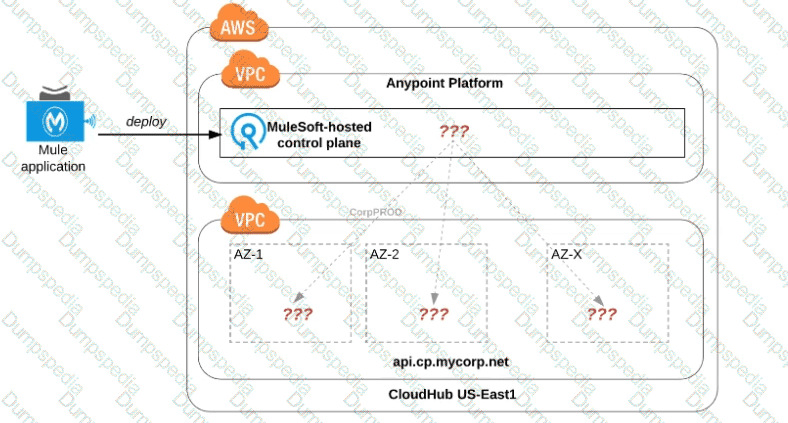
Refer to the exhibit.

An organization uses one specific CloudHub (AWS) region for all CloudHub deployments.

How are CloudHub workers assigned to availability zones (AZs) when the organization's Mule applications are deployed to CloudHub in that region?

Options:

A.

Workers belonging to a given environment are assigned to the same AZ within that region

B.

AZs are selected as part of the Mule application's deployment configuration

C.

Workers are randomly distributed across available AZs within that region

D.

An AZ is randomly selected for a Mule application, and all the Mule application's CloudHub workers are assigned to that one AZ

Buy Now
Questions 33

An organization wants to make sure only known partners can invoke the organization's APIs. To achieve this security goal, the organization wants to enforce a Client ID Enforcement policy in API Manager so that only registered partner applications can invoke the organization's APIs. In what type of API implementation does MuleSoft recommend adding an API proxy to enforce the Client ID Enforcement policy, rather than embedding the policy directly in the application's JVM?

Options:

A.

A Mule 3 application using APIkit

B.

A Mule 3 or Mule 4 application modified with custom Java code

C.

A Mule 4 application with an API specification

D.

A Non-Mule application

Buy Now
Questions 34

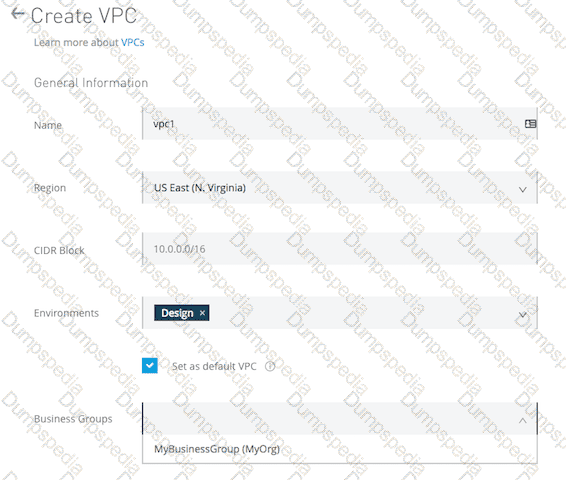
What is true about the technology architecture of Anypoint VPCs?

Options:

A.

The private IP address range of an Anypoint VPC is automatically chosen by CloudHub

B.

Traffic between Mule applications deployed to an Anypoint VPC and on-premises systems can stay within a private network

C.

Each CloudHub environment requires a separate Anypoint VPC

D.

VPC peering can be used to link the underlying AWS VPC to an on-premises (non AWS) private network

Buy Now
Questions 35

What is typically NOT a function of the APIs created within the framework called API-led connectivity?

Options:

A.

They provide an additional layer of resilience on top of the underlying backend system, thereby insulating clients from extended failure of these systems.

B.

They allow for innovation at the user Interface level by consuming the underlying assets without being aware of how data Is being extracted from backend systems.

C.

They reduce the dependency on the underlying backend systems by helping unlock data from backend systems In a reusable and consumable way.

D.

They can compose data from various sources and combine them with orchestration logic to create higher level value.

Buy Now
Questions 36

An organization has built an application network following the API-led connectivity approach recommended by MuleSoft. To protect the application network against

attacks from malicious external API clients, the organization plans to apply JSON Threat Protection policies.

To which API-led connectivity layer should the JSON Threat Protection policies most commonly be applied?

Options:

A.

All layers

B.

System layer

C.

Process layer

D.

Experience layer

Buy Now
Questions 37

Say, there is a legacy CRM system called CRM-Z which is offering below functions:

1. Customer creation

2. Amend details of an existing customer

3. Retrieve details of a customer

4. Suspend a customer

Options:

A.

Implement a system API named customerManagement which has all the functionalities wrapped in it as various operations/resources

B.

Implement different system APIs named createCustomer, amendCustomer, retrieveCustomer and suspendCustomer as they are modular and has seperation of concerns

C.

Implement different system APIs named createCustomerInCRMZ, amendCustomerInCRMZ, retrieveCustomerFromCRMZ and suspendCustomerInCRMZ as they are modular and has seperation of concerns

Buy Now
Questions 38

What do the API invocation metrics provided by Anypoint Platform provide?

Options:

A.

ROI metrics from APIs that can be directly shared with business users

B.

Measurements of the effectiveness of the application network based on the level of reuse

C.

Data on past API invocations to help identify anomalies and usage patterns across various APIs

D.

Proactive identification of likely future policy violations that exceed a given threat threshold

Buy Now
Questions 39

The asset version 2.0.0 of the Order API is successfully published in Exchange and configured in API Manager with the Autodiscovery API ID correctly linked to the

API implementation, A new GET method is added to the existing API specification, and after updates, the asset version of the Order API is 2.0.1,

What happens to the Autodiscovery API ID when the new asset version is updated in API Manager?

Options:

A.

The API ID changes, but no changes are needed to the API implementation for the new asset version in the API Autediscovery global element because the API ID is automatically updated

B.

The APL ID changes, so the API implementation must be updated with the latest API ID for the new asset version in the API Autodiscovery global element

C.

The APLID does not change, so no changes to the APT implementation are needed for the new asset version in the API Autodiscovery global element

D.

The APL ID does not change, but the API implementation must be updated in the AP] Autodiscovery global element to indicate the new asset version 2.0.4

Buy Now
Questions 40

An API implementation is deployed to CloudHub.

What conditions can be alerted on using the default Anypoint Platform functionality, where the alert conditions depend on the end-to-end request processing of the API implementation?

Options:

A.

When the API is invoked by an unrecognized API client

B.

When a particular API client invokes the API too often within a given time period

C.

When the response time of API invocations exceeds a threshold

D.

When the API receives a very high number of API invocations

Buy Now
Questions 41

What CANNOT be effectively enforced using an API policy in Anypoint Platform?

Options:

A.

Guarding against Denial of Service attacks

B.

Maintaining tamper-proof credentials between APIs

C.

Logging HTTP requests and responses

D.

Backend system overloading

Buy Now
Questions 42

An API implementation is updated. When must the RAML definition of the API also be updated?

Options:

A.

When the API implementation changes the structure of the request or response messages

B.

When the API implementation changes from interacting with a legacy backend system deployed on-premises to a modern, cloud-based (SaaS) system

C.

When the API implementation is migrated from an older to a newer version of the Mule runtime

D.

When the API implementation is optimized to improve its average response time

Buy Now
Questions 43

A customer wants to host their MuleSoft applications in CloudHub 1.0, and these applications should be available at the domain https://api.acmecorp.com.

After creating a dedicated load balancer (DLB) called acme-dib-prod, which further action must the customer take to complete the configuration?

Options:

A.

Configure the DLB with a TLS certificate for api.acmecorp.com and create an A record for api.acmecorp.com to the public IP addresses associated with their DLB

B.

Configure the DLB with a TLS certificate for api.acmecorp.com and create a CNAME record from api.acmecorp.com to acme-dib-prod.|lb.anypointdns.net

C.

Configure the DLB with a TLS certificate for acme-dib-prod.Jb.anypointdns.net and create a CNAME record from api.acmecorp:com to acme-dlb-prod.lb.anypointdns.net

D.

Configure the DLB with a TLS certificate for aplacmecorp.com and create a CNAME record from api.aomecorp.com to acme-dib-prod.ei.cloubhub.io

Buy Now
Questions 44

What best describes the Fully Qualified Domain Names (FQDNs), also known as DNS entries, created when a Mule application is deployed to the CloudHub Shared Worker Cloud?

Options:

A.

A fixed number of FQDNs are created, IRRESPECTIVE of the environment and VPC design

B.

The FQDNs are determined by the application name chosen, IRRESPECTIVE of the region

C.

The FQDNs are determined by the application name, but can be modified by an administrator after deployment

D.

The FQDNs are determined by both the application name and the Anypoint Platform organization

Buy Now
Questions 45

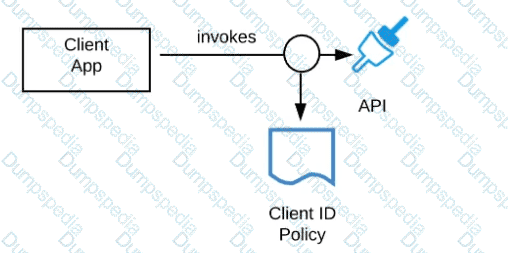
Refer to the exhibit.

A developer is building a client application to invoke an API deployed to the STAGING environment that is governed by a client ID enforcement policy.

What is required to successfully invoke the API?

Options:

A.

The client ID and secret for the Anypoint Platform account owning the API in the STAGING environment

B.

The client ID and secret for the Anypoint Platform account's STAGING environment

C.

The client ID and secret obtained from Anypoint Exchange for the API instance in the STAGING environment

D.

A valid OAuth token obtained from Anypoint Platform and its associated client ID and secret

Buy Now
Exam Code: MuleSoft-Platform-Architect-I
Exam Name: Salesforce Certified MuleSoft Platform Architect (Mule-Arch-201)
Last Update: Jan 10, 2026
Questions: 152
$57.75  $164.99
$43.75  $124.99
$36.75  $104.99
buy now MuleSoft-Platform-Architect-I