dumpspedia logo

Refer to the exhibits.
The SD-WAN zones and members configuration of two branch devices are shown.
The two branch devices are part of the same hub-and-spoke topology and connect to the same hub. The devices are configured to allow auto-discovery VPN (ADVPN). The configuration on the hub allows the initial communication between the two spokes.
When traffic flows require it, between which interfaces can the devices establish shortcuts?
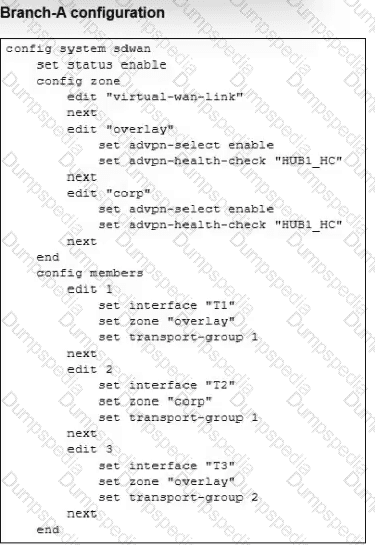
Exhibit — Branch-A SD-WAN zone and transport group
The visible recording shows the Branch-A configuration; the Branch-B configuration is not displayed in the captured video frame.
Refer to the exhibits.
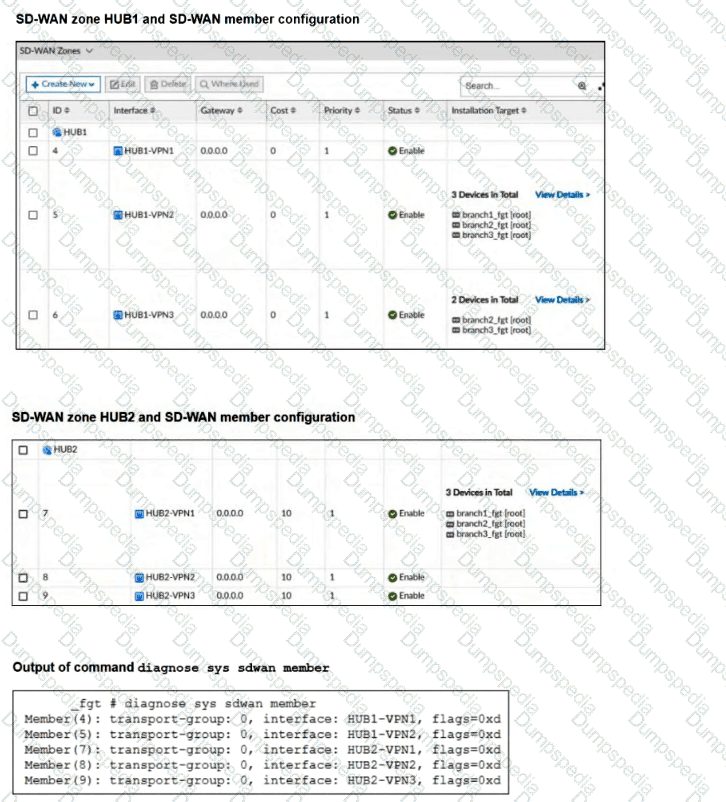
The exhibits show an SD-WAN zone HUB1 and SD-WAN member configuration from an SD-WAN template and the output of command diagnose sys sdwan member collected on a FortiGate device.
Which statement best describes what the diagnose output shows?
Refer to the exhibit, which shows an SD-WAN zone configuration on the FortiGate GUI. What can you conclude about the zone and member configuration on this device?
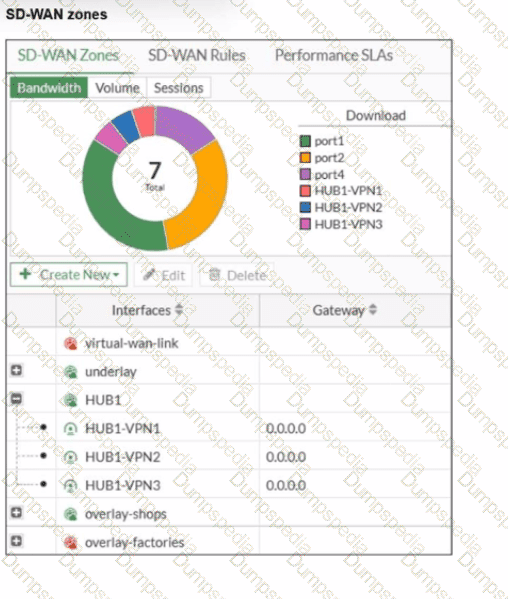
Exhibit 1
Refer to the exhibit. Which statement best describe the role of the ADVPN device in handling traffic?
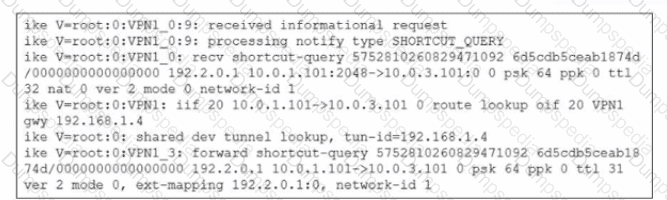
Exhibit 1
In which order does FortiGate consider the following elements during the route lookup process? Choose one answer.
A customer wants to ensure secure access for private applications for their users by replacing their VPN.
Which two SASE technologies can you use to accomplish this task? (Choose two.)
Refer to the exhibit. Which two conclusions can you draw from the output shown? (Choose two.)
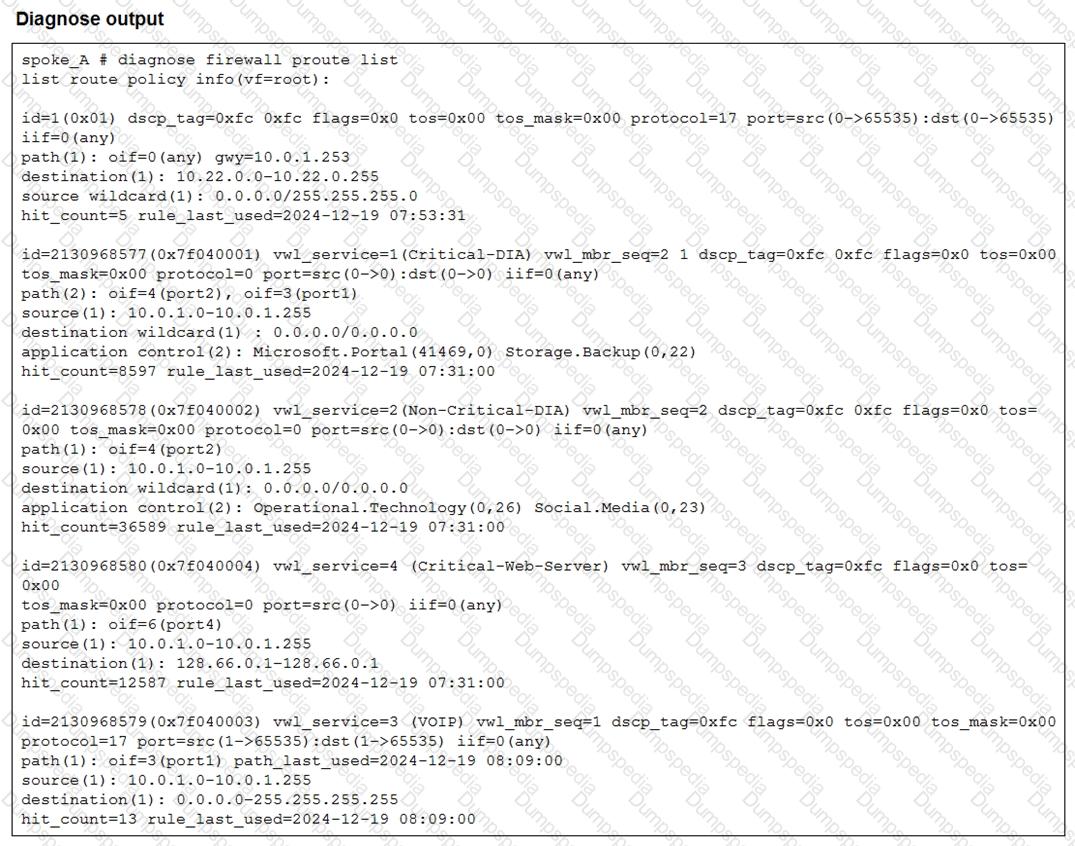
Exhibit 1
Refer to the exhibits. You connect to a device behind a branch FortiGate device and initiate a ping test. The device is part of the LAN subnet and its IP address is 10.0.1.101. Based on the exhibits, which interface uses branch 1_fgt to steer the test traffic?
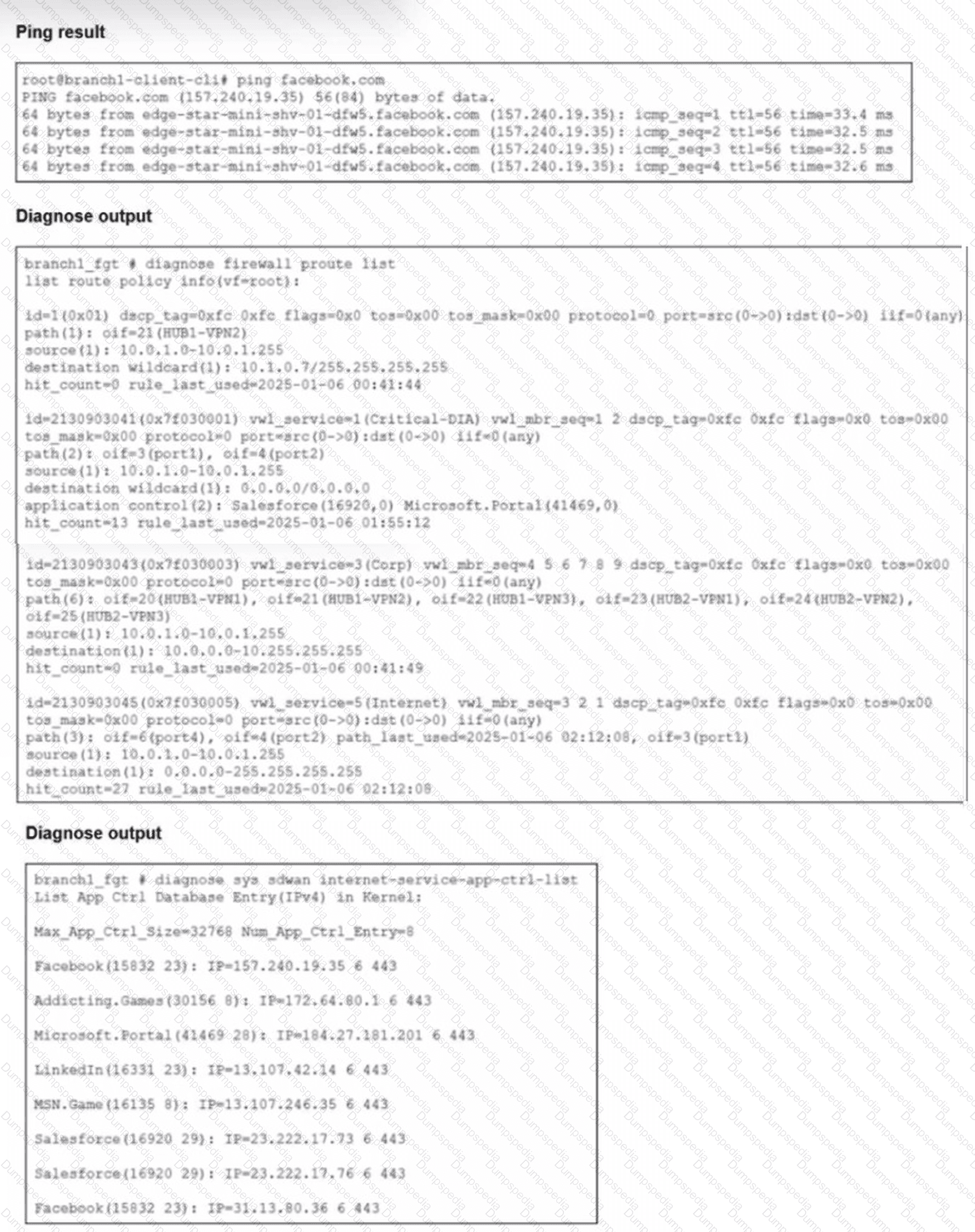
Exhibit 1
Which two statements correctly describe what happens when traffic matches the implicit SD-WAN rule? (Choose two.)
What is the benefit of branch on-ramp deployment with FortiSASE? (Choose one answer.)
You are configuring SD-WAN to load balance network traffic and you want to take into account the link quality.
Which two facts should you consider? (Choose two.)
Refer to the exhibits. You collected the output shown in the exhibits and want to know which interface TCP traffic will flow through from the user device 10.0.1.101 to the corporate file server 10.0.0.125. All SD-WAN links are stable. Which interface will FortiGate use to steer the traffic? Choose one answer.
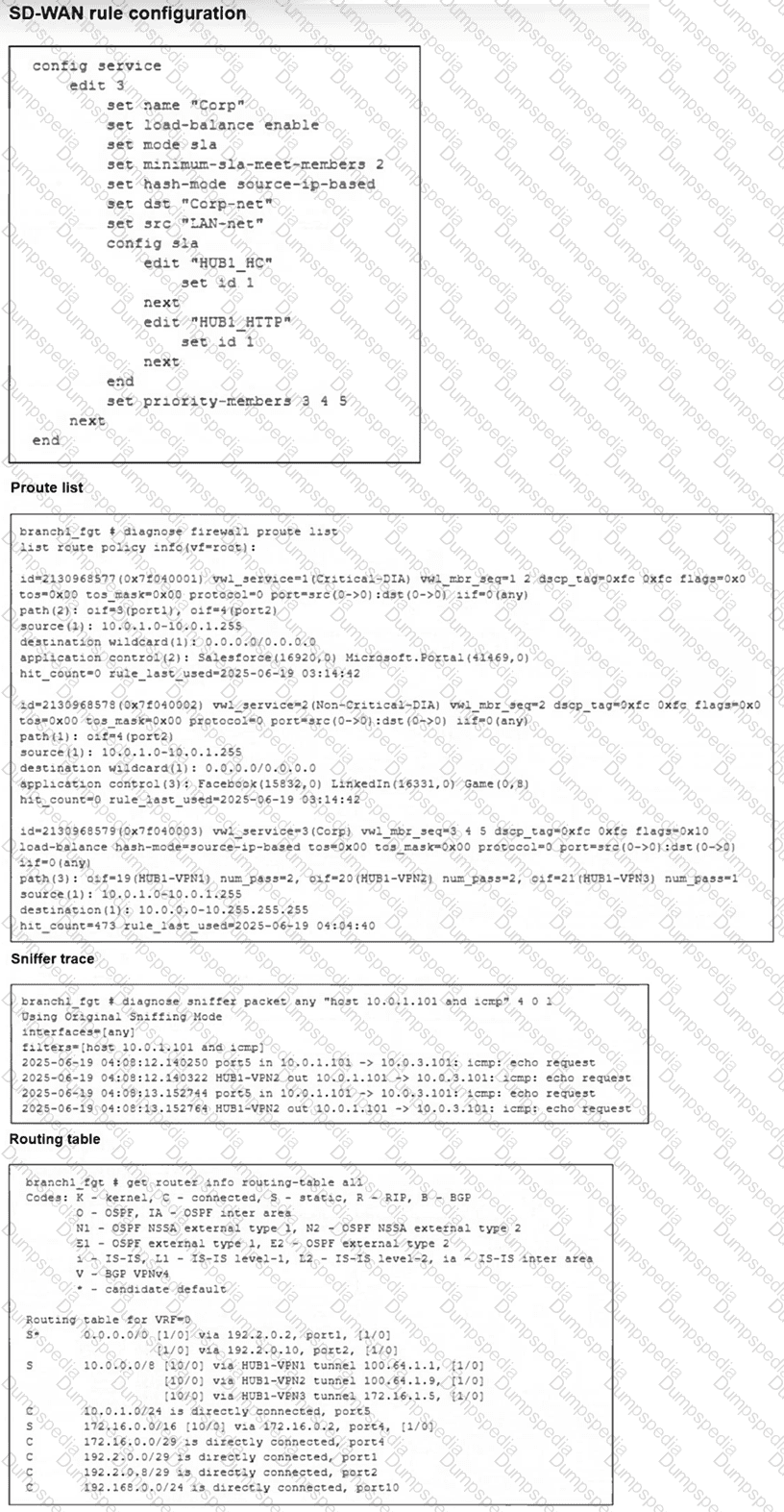
Exhibit 1
Which two features must you configure before FortiGate can steer traffic according to SD-WAN rules? Choose two answers.
Refer to the exhibit. The exhibit shows output of the command diagnose sys sdwan service4 collected on a FortiGate device. The administrator wants to know through which interface FortiGate will steer traffic from local users on subnet 10.0.1.0/255.255.255.192 and with a destination of the social media application Facebook. Based on the exhibits, which two statements are correct? (Choose two.)
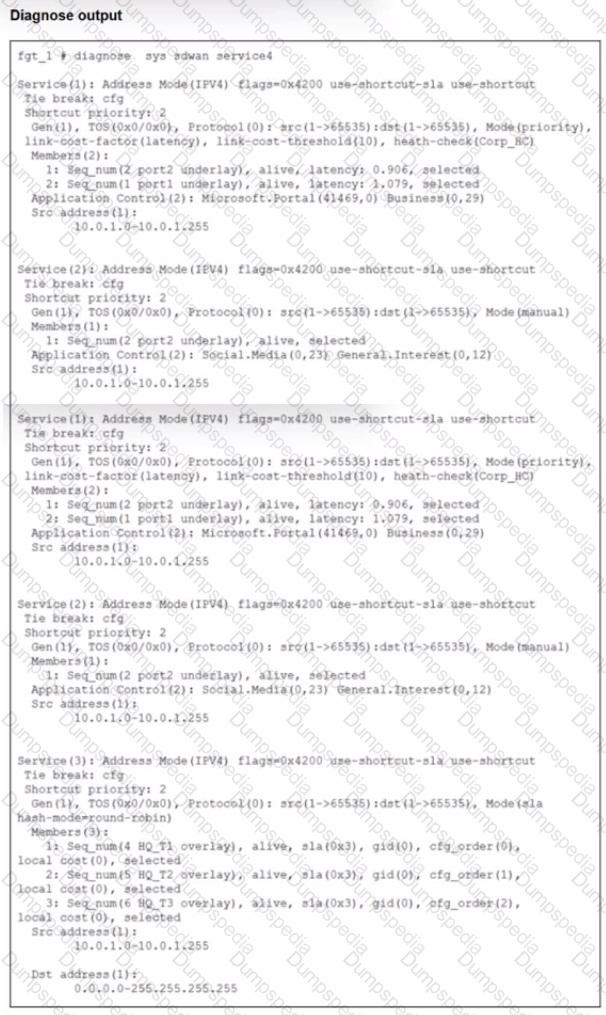
Exhibit 1
Refer to the exhibit.
Two hub-and-spoke groups are connected through redundant site-to-site IPsec VPNs between Hub 1 and Hub 2.
Which two configuration settings are required for spoke A1 to establish an auto-discovery VPN (ADVPN) shortcut with spoke B2? (Choose two.)
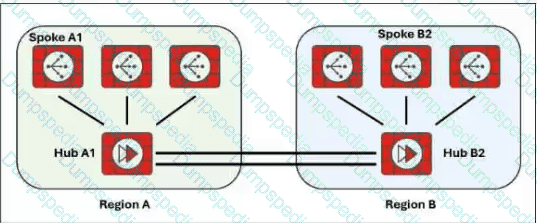
Exhibit — Hub-and-spoke ADVPN topology
Refer to the exhibit. The exhibit shows the health-check configuration on a FortiGate device used as a spoke. You notice that the hub FortiGate doesn’t prioritize the traffic as expected. Which two configuration elements should you check on the hub? (Choose two.)
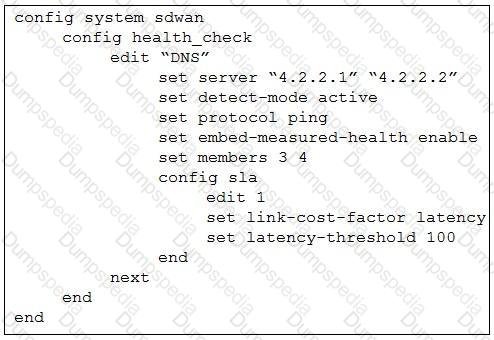
Exhibit 1
The FortiGate devices are managed by FortiManager, and are configured for direct internet access (DIA). You confirm that DIA is working as expected for each branch, and check the SD-WAN zone configuration and firewall policies shown in the exhibits. Then, you use the SD-WAN overlay template to configure the IPsec overlay tunnels. You create the associated SD-WAN rules to connect existing branches to the company hub device and apply the changes on the branches. After those changes, users complain that they lost internet access. DIA is no longer working. Based on the exhibit, which statement best describes the possible root cause of this issue?
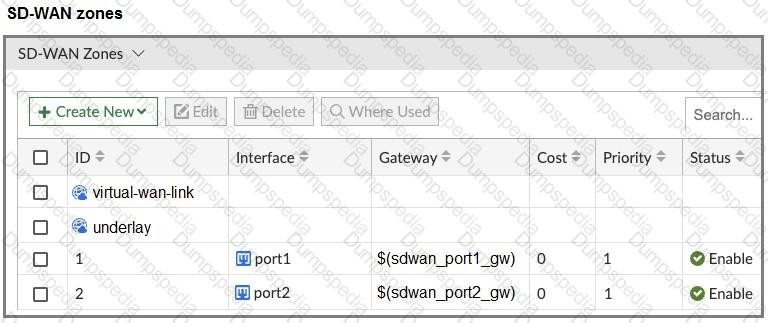
Exhibit 1

Exhibit 2
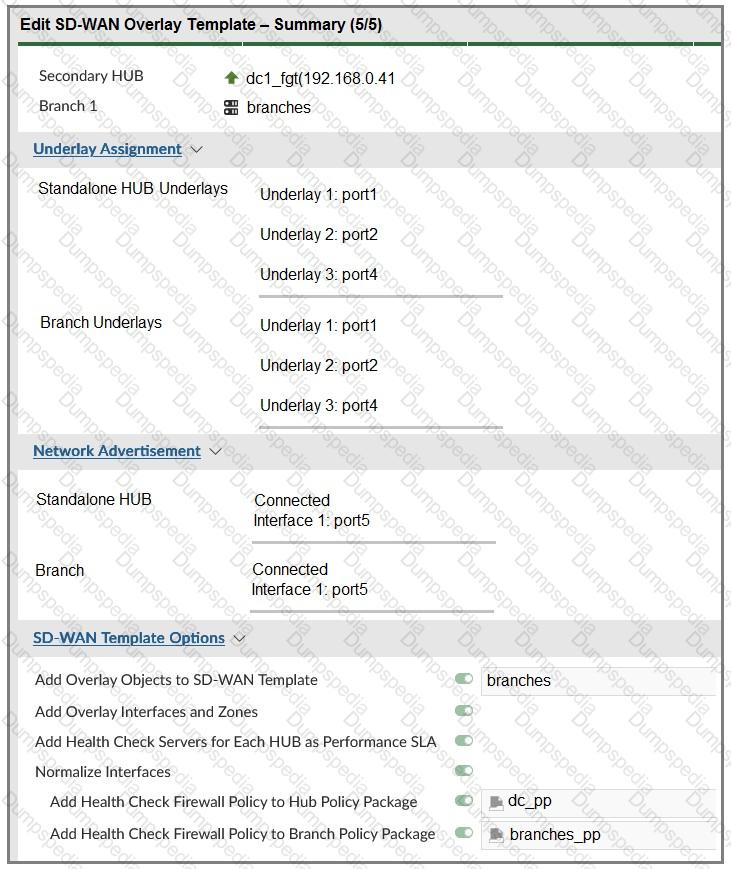
Exhibit 3
Refer to the exhibits. The exhibits show an SD-WAN event log, the member status, and the SD-WAN rule configuration. Which two conclusions can you draw from the information shown? (Choose two.)
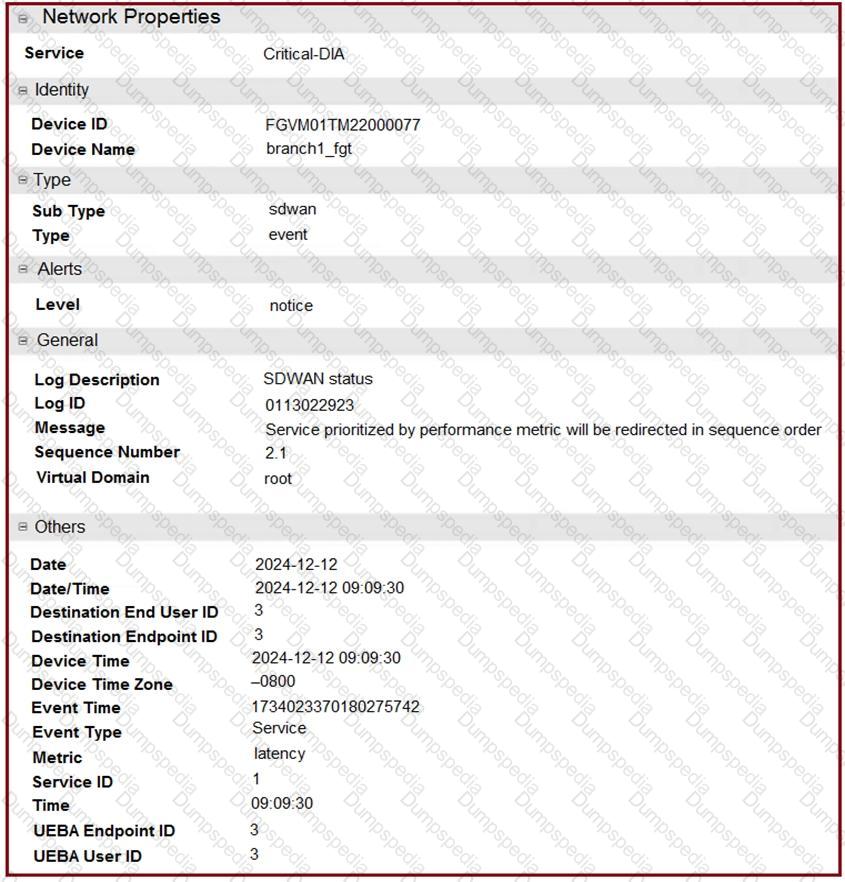
Exhibit 1
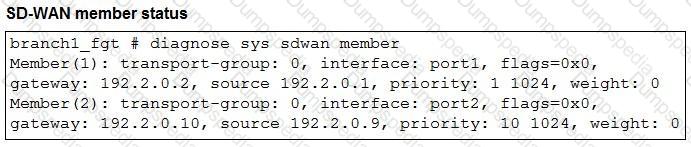
Exhibit 2
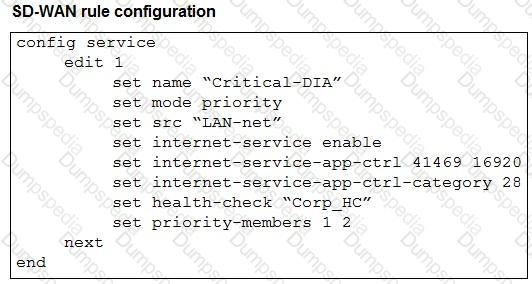
Exhibit 3
You have a FortiGate configuration with three user-defined SD-WAN zones and two members in each of these zones. One SD-WAN member is no longer in use in health checks and SD-WAN rules. You want to delete it. What happens if you delete the SD-WAN member from the FortiGate GUI?
Refer to the exhibits, which show the configuration of an SD-WAN rule and the corresponding rule status and routing table. The administrator wants to understand the expected behavior for traffic matching the SD-WAN rule. Based on the exhibits, what can the administrator expect for traffic matching the SD-WAN rule?
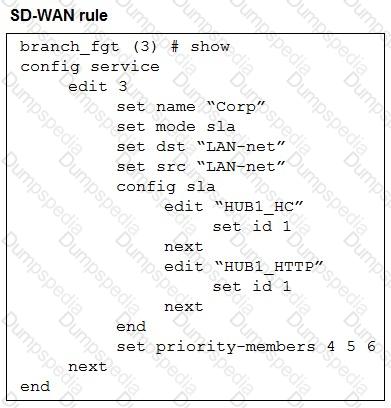
Exhibit 1
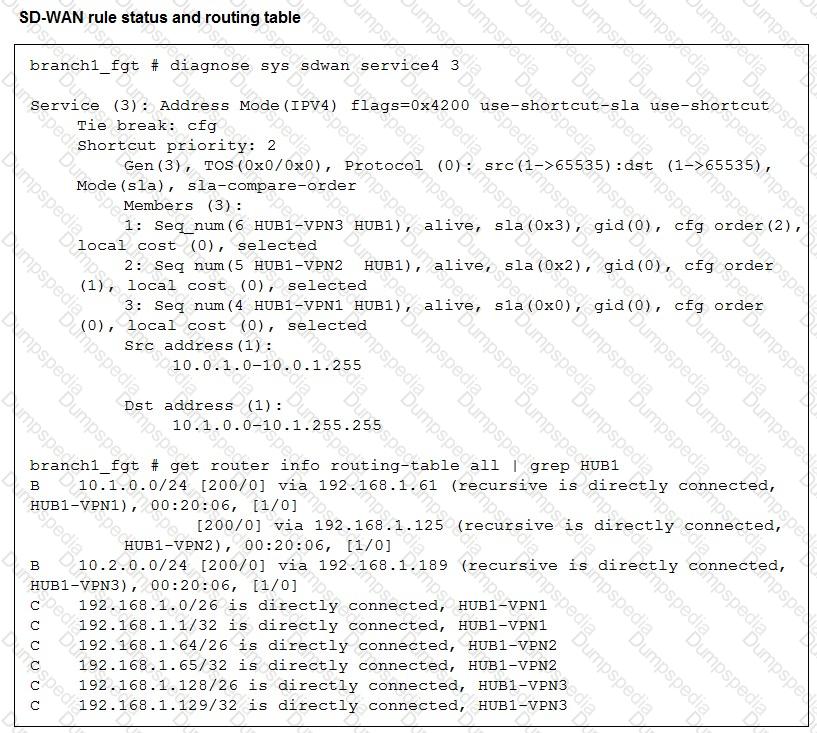
Exhibit 2
An administrator configures the performance service-level agreement (SLA) with the probe mode, Passive.
What are two observable impacts of this configuration? (Choose two.)
In the context of SD-WAN, the terms underlay and overlay are commonly used to categorize links.
Which two statements about underlay and overlay links are correct? (Choose two.)
You are planning a new SD-WAN deployment with the following criteria: - Two regions - Most of the traffic is expected to remain within its region - No requirement for inter-region ADVPN To remain within the recommended best practices, which routing protocol should you select for the overlays?
Refer to the exhibit.
Which action will FortiGate take if it detects SD-WAN members as dead?
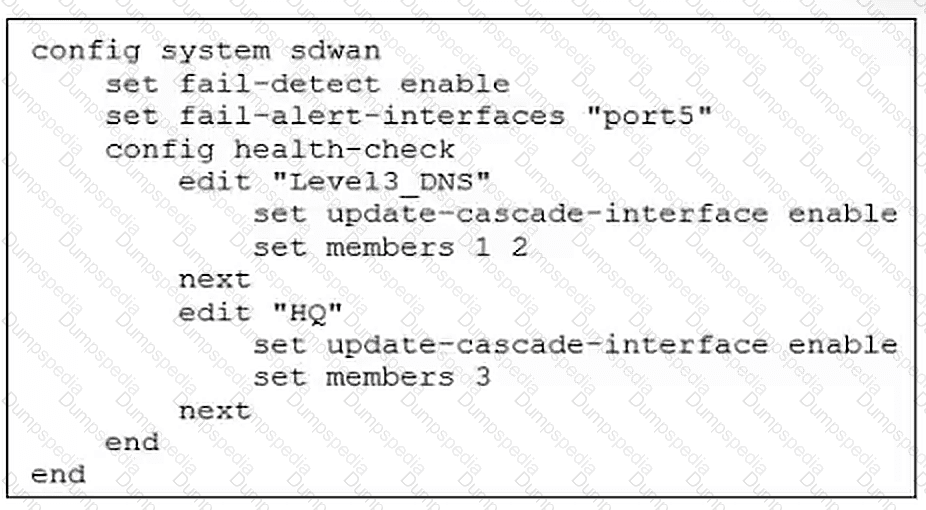
Exhibit — SD-WAN failure detection and cascade interface
You are using the FortiManager SD-WAN monitor menus to check the status of an SD-WAN topology. When you place the mouse next to branch1_fgt, you receive the output shown in the exhibit. Which two conclusions can you draw from the output shown in the exhibit? Choose two answers.
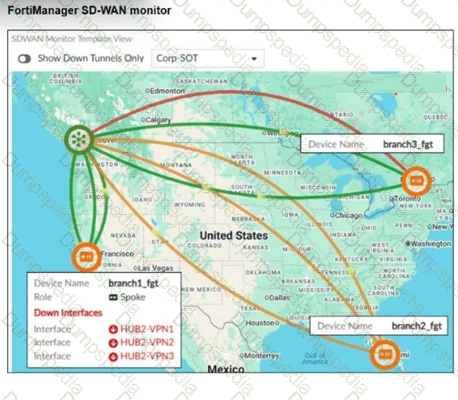
Exhibit 1
Refer to the exhibit.
An SD-WAN zone configuration on the FortiGate GUI is shown.
What can you conclude about the zone and member configuration on this device?
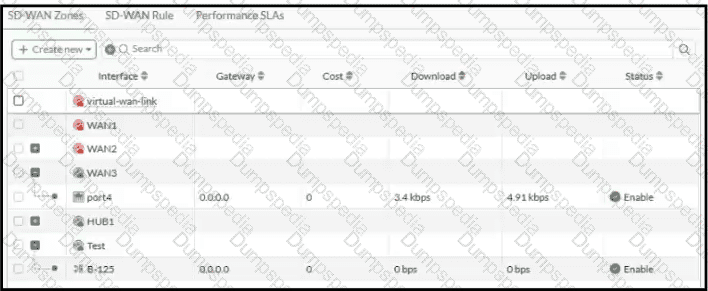
Exhibit — FortiGate SD-WAN zones
Refer to the exhibit. Which statement best describe the role of the ADVPN device in handling traffic?
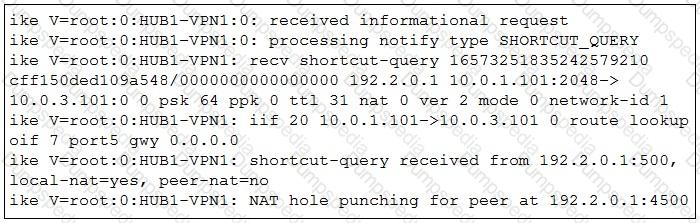
Exhibit 1
Refer to the exhibit.
Which SD-WAN rule and interface uses FortiGate to steer the traffic from the LAN subnet 10.0.1.0/24 to the corporate server 10.2.5.254?
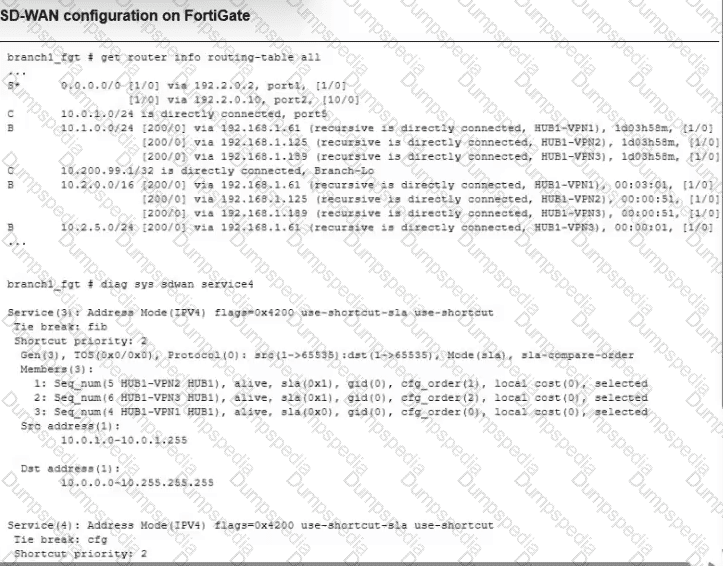
Exhibit — SD-WAN rule and routing outputs
Refer to the exhibit. The administrator configured two SD-WAN rules to load balance the traffic. Which interfaces does FortiGate use to steer the traffic from 10.0.1.124 to 10.0.0.254? Choose one answer.
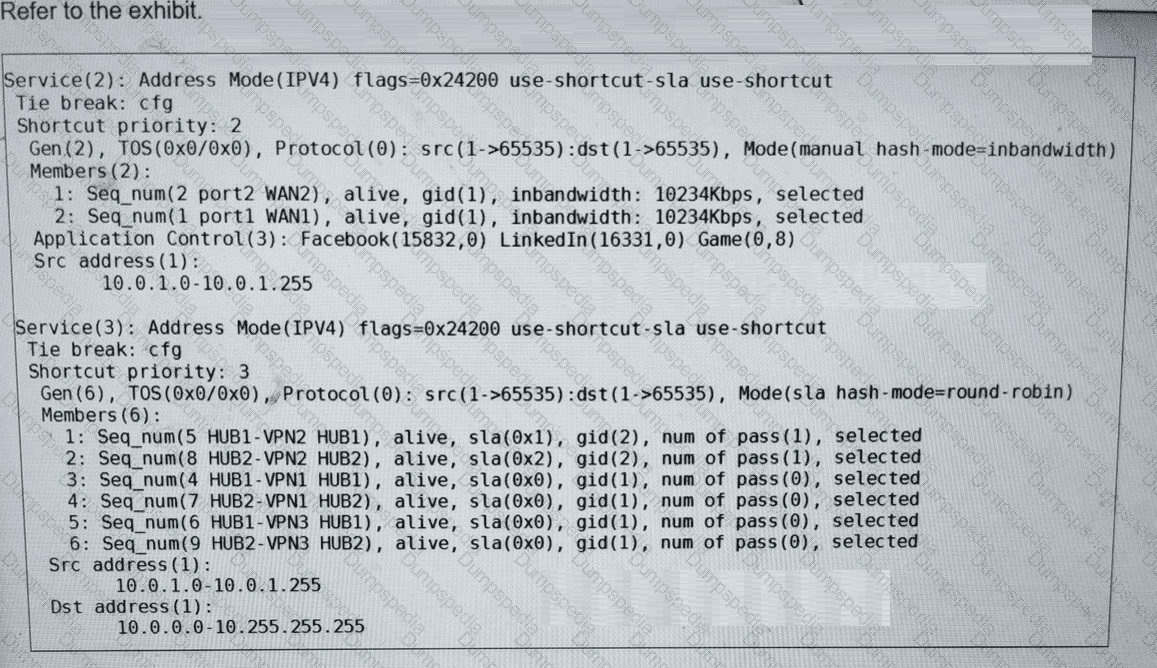
Exhibit 1

TESTED 08 Nov 2026