Spring Sale - Limited Time 65% Discount Offer - Ends in 0d 00h 00m 00s - Coupon code: 65percent

Welcome To DumpsPedia

L4M5 Sample Questions Answers

Questions 4

A garden furniture supplier currently in negotiations for a high-value contract has offered the procurement manager a visit to their site. The supplier suggests that during this visit, they can undertake the contract negotiation. What would be an appropriate response from the procurement manager?

Options:

A.

Accept the offer as this would be an ideal opportunity to see what the supplier can offer and will provide the supplier with familiarity while negotiating

B.

Accept the offer as this would save time. A supplier visit and negotiation could be done at the same time

C.

Decline the offer as it would take too much time to go and visit the supplier

D.

Decline the offer as negotiating while on a site visit will provide the supplier with an unfair advantage because they will be in a familiar environment

Buy Now
Questions 5

JCB is a large manufacturer of heavy machinery. The CPO is going to a negotiation with a Chinese supplier about procuring some major components. He is wondering about balance of power in the negotiation. Which of the following micro factors are most likely to shift the balance of power towards the buying organisation in this commercial negotiation? Select TWO that apply

Options:

A.

Buyers purchase in small volumes

B.

Suppliers are more concentrated than buyer

C.

Eruption of epidemic in supply market

D.

JCB's switching costs are low

E.

These components are highly standardised

Buy Now
Questions 6

A competitive win-lose distributive approach to a negotiation is seeking to:

Options:

A.

Foster collaboration and trust between the parties to enable joint problem solving

B.

Obtain the largest possible share of resources or benefits at the expense of the other party

C.

Maximise joint gains for both parties so that resources and benefits are equally shared

D.

Compromise and split the difference so that both parties do not get what they want

Buy Now
Questions 7

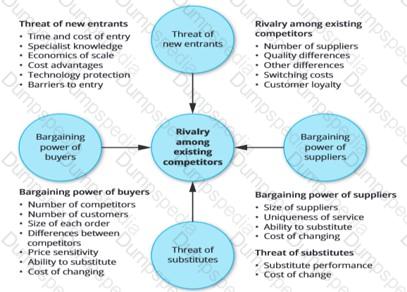
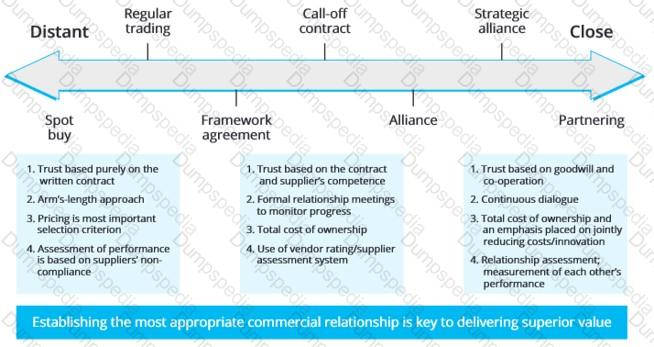
An organization should develop different relationships which are appropriate to each supplier situation. Which ONE of the following analysis methods could help to identify these?

Options:

A.

Resources and cost spectrum

B.

The relationship spectrum

C.

The color spectrum

D.

A spectrum of non-critical items

Buy Now
Questions 8

Tony is undertaking a negotiation with a strategic supplier and is frustrated by the lack of progress. He proposes using threats to get what he wants from the negotiations. Is this the correct course of action?

Options:

A.

Yes, Tony will get what he requires from the negotiations

B.

Yes, a long-term relationship is not required with the supplier

C.

No, a long-term relationship built on trust is required with the supplier

D.

No, it does not guarantee Tony will get what he requires from the negotiations

Buy Now
Questions 9

Upper Woodborough Council is a government organisation that is seeking to reduce regular expenditure on facilities management services. Which of the following charges is an example of a fixed cost, that the council could renegotiate with the facilities management contractor to achieve savings?

Options:

A.

Fuel for refuse collection services

B.

Charges for reactive maintenance activity

C.

Annual price inflation indexation

D.

Charges for monthly cleaning services

Buy Now
Questions 10

How contribution is calculated in break-even analysis?

Options:

A.

Fixed costs divided by variable costs

B.

Variable costs subtracted from price

C.

Price minus fixed costs

D.

Variable costs subtracted from fixed costs

Buy Now
Questions 11

Buyers should have the ability to analyse the costs of their purchases not only for determining their impact to their organisation’s cost but also for the purpose of reducing them during commercial negotiations to contribute to the profitability of their organisation. One way ofanalysing costs is to classify them into direct and indirect costs. Which ONE of the following is an explanation of ‘direct costs’?

Options:

A.

Costs that are only related to manufacturing firms where raw materials are directly converted into specific product units

B.

Costs of materials, labour, and other expenses that are directly identified with manufactured units of a product

C.

Costs that are connected with materials and labour, excluding expenses used directly in manufacturing products

D.

Costs of labour and expenses incurred directly whether or not the production fluctuates owing to demand or downtime

Buy Now
Questions 12

Which of the following is the purpose of using stakeholder support level scale?

Options:

A.

To identify stakeholder level of influence and interest and plot them on stakeholder map

B.

To identify stakeholder's needs and expectations

C.

To estimate the gap and the progress towards desired levels of support

D.

To identify key stakeholders

Buy Now
Questions 13

Which of the following are effective approaches when procurement professionals negotiate with monopoly suppliers?

1. Delaying payment with monopoly suppliers as long as possible to increase bargaining power

2. Setting up stronger BATNA

3. Engaging in the negotiation with a distributive approach

4. Eliminating requirements in the specification that prioritises monopoly suppliers

Options:

A.

1 and 4 only

B.

3 and 4 only

C.

2 and 3 only

D.

2 and 4 only

Buy Now
Questions 14

A negotiation process ends once the negotiating meeting has finished. Is this statement true?

Options:

A.

Yes, provided that the meeting results in a win-win for both parties

B.

Yes, because both parties have all of the emotional intelligence they need to proceed

C.

No, best practice would include a period of reflection after the meeting as part of the process

D.

No, the negotiation of terms should always continue after the meeting and until signed by the supplier only

Buy Now
Questions 15

Which of the following are examples of connected stakeholders in a private organisation? Select TWO that apply.

Options:

A.

Customers

B.

Local community

C.

Media

D.

Government

E.

Shareholders

Buy Now
Questions 16

Which of the following are stages of a win-win approach to negotiations?

    Find out where the interests of both parties align

    Design new options, where everyone gets more of what they need

    Limit the resources to a fixed number

    Insist that the agreement includes subjective regulatory standards

Options:

A.

1 and 2 only

B.

3 and 4 only

C.

2 and 3 only

D.

1 and 4 only

Buy Now
Questions 17

Which of the following are types of questions that are useful in opening and testing phases of a negotiation? Select the TWO that apply.

Options:

A.

Closed

B.

Narrow

C.

Probing

D.

Leading

E.

Open

Buy Now
Questions 18

Which type of negotiation strategy should be adopted when the relationship is important and both parties want to help each other achieve their goals?

Options:

A.

Collaborative

B.

Competitive

C.

Accommodative

D.

Avoidance

Buy Now
Questions 19

Rose is a senior buyer from a skiing equipment retailer. Rose is concerned about the current ski boot shortage and the number of invoicing problems from a key supplier. She has decided to have a video conference with Victor, CEO of the supplier. Initially, she intends to threaten Victor with contract termination unless he can improve the situation. However, she is a little wary of doing this as the switching costs are high. Eventually, she decides to seek solutions by encouraging the other party to offer their views and ideas. Rose also prepares some ideas to discuss with Victor. Which of the following is the persuasion method that Rose intends to use in the forthcoming conference?

Options:

A.

Directive (push)

B.

Persuasive reasoning (push)

C.

Collaborative (pull)

D.

Visionary (pull)

Buy Now
Questions 20

Sunita’s supplier states: “Meeting your needs is meeting my needs because we are in this together.” What type of negotiation is being undertaken?

Options:

A.

Adversarial negotiation

B.

Distributive negotiation

C.

Lose-lose negotiation

D.

Integrative negotiation

Buy Now
Questions 21

The stages of commercial negotiation involve which of the following characteristics?

Options:

A.

Preparation, proposal, bargain, leave

B.

Open, testing, bargaining, closing, revisiting

C.

Preparing, opening, bargaining, agreement, closure

D.

Opening, debating, promising, testing, disagreeing, closing

Buy Now
Questions 22

Macroeconomics can have an impact on commercial negotiations. Is this statement correct?

Options:

A.

Yes, because factors such as inflation might influence pricing decisions

B.

No, because these considerations only affect the buyer

C.

Yes, because sales volumes are a key factor in the discussions

D.

No, because these macroeconomics can be discussed and addressed with a WIN/WIN (integrative) strategy

Buy Now
Questions 23

Which of the following are examples of non-verbal negotiation? Select THREE that apply.

Options:

A.

Asking the supplier to repeat their proposal

B.

Getting messages across with facial expressions

C.

/ Speaking softly with long pauses

D.

Communicating with the other party by using gestures

E.

Explaining to the supplier about the scope of the project

F.

Using the body language

Buy Now
Questions 24

An oil refinery plant imports much of its crude oil from overseas. A procurement manager in the refinery suggests that fixing the crude oil contract price for 36 months would be beneficial for the company. Would this be a right thing to do?

Options:

A.

Yes, financial budgeting task would be a lot easier with fixed pricing arrangement

B.

No, fixed price should be only applied to contracts that last 60 months or longer

C.

No, the refinery would not be able to reap the benefits from falling commodity price and currency rates

D.

Yes, the supplier would bear the risk when the material price increased

Buy Now
Questions 25

A skilled negotiator will use a range of questioning techniques in a negotiation. If they wished to explore options with the other party without making any formal commitment, which type of question style would they use?

Options:

A.

Leading

B.

Hypothetical

C.

Reflective

D.

Multiple

Buy Now
Questions 26

Buying organisation may increase its leverage with suppliers by concentrating spend. Which of the following are most likely to be forms of supplier spend consolidation? Select THREE that apply.

Options:

A.

Forming purchasing consortia

B.

Volume consolidation across categories

C.

Volume separation

D.

Paying supplier on time

E.

Volume redistribution

F.

Simplify procurement process

Buy Now
Questions 27

Langham Industries is seeking to expand its operations globally. The CEO has asked the procurement department to engage in a macroeconomic analysis for its potential new supply chain to meet organisational objectives and outcomes. Which of the following would be a source of macroeconomic data?

Options:

A.

Competitor analysis

B.

Attending trade conferences

C.

Published market indices

D.

Online supplier forums

Buy Now
Questions 28

During a negotiation, Jose Gomez, the salesperson for a strategic supplier, states that his sales director will not approve discounts against initial purchases. However, Jose offers a 5% discount against the aftercare package, which will provide the same monetary saving. Sally Pampas requires both the product and the aftercare package and has an objective to achieve a 5% discount off the purchase price. To achieve a win-win (integrative) negotiation, Sally should:

Options:

A.

Ask Jose to apply the 5% discount against the purchase price

B.

Decline the offer and walk away from the negotiation

C.

Ask Jose to apply a discount against the price

D.

Accept the offer of a discount against the aftercare package

Buy Now
Questions 29

Which of the following is important during the proposing stage of a negotiation?

Options:

A.

Not making concessions to the other party

B.

Narrowing the range of options

C.

Attempting to close down any discussions

D.

Persuading the other party to accept your proposal

Buy Now
Questions 30

When is the best time in procurement process in which procurement should get involved so that the cost-saving opportunities are the greatest?

Options:

A.

Market consult stage

B.

Post-contract stage

C.

Specification stage

D.

Post-tender stage

Buy Now
Questions 31

Information generated through Purchase Price Cost Analysis can be useful to the purchaser, by helping to identify which of the following costs relating to the supplier? Select the THREE that apply.

Options:

A.

External costs

B.

Profit

C.

Material costs

D.

Market costs

E.

Budgeted costs

F.

Depreciation on equipment

Buy Now
Questions 32

A buyer continually states, during a negotiation, that budget constraints are impacting their ability to make concessions. What type of tactic are they using?

Options:

A.

Add-on

B.

Good cop/bad cop

C.

Broken record

D.

One more thing

Buy Now
Questions 33

Which of the following occur in the planning and preparation stage of negotiation? Select THREE.

Options:

A.

Using questions to elicit information

B.

Understanding the other party

C.

Defining the constituents

D.

Analysing the bargaining power

E.

Making as few concessions as possible

F.

Narrowing the range of solutions

Buy Now
Questions 34

Sumitomo Rubber Industries (SRI) is a Japan-based tyre manufacturer. In order to increase production, SRI is sourcing rubber from Southeast Asian firms. Which of the following micro factors are most likely to shift the balance of power to supplier? Select TWO that apply

Options:

A.

SRI's purchase amount makes significant proportion of supplier revenue

B.

Costs of changing suppliers are high

C.

Rubber from different suppliers is virtually similar

D.

SRI sets up its own rubber plantation

E.

There are no close substitutes for rubber

Buy Now
Questions 35

Hammad Alsuwaidi is a procurement professional leading a negotiation for a vehicle rental contract. Hammad has a clear goal to negotiate a two-year contract in exchange for a minimum of a 20% discount. During the negotiation, Hammad presents to the supplier the facts, figures, and justification for a 20% discount. Which of the persuasion methods below has Hammad chosen?

Options:

A.

Push

B.

Visionary

C.

Pull

D.

Collaborative

Buy Now
Questions 36

Colin Smith is preparing to negotiate for a chemical used in fertiliser. His organisation’s objective is ethical and sustainable procurement. Using the Must–Intend–Like (MIL) framework, how should Colin categorise this objective?

Options:

A.

Intend to have

B.

Likely to have

C.

Like to have

D.

Must have

Buy Now
Questions 37

A building firm has been awarded a contract to build a new office block, and the

building firm needs to separate its direct and indirect costs.

Which one of the following is a direct cost to the building of the new office block?

Options:

A.

Cost of materials

B.

Cost of legal fees

C.

Cost of insurance

D.

Cost of office space

Buy Now
Questions 38

Which of the following are ways of developing rapport when undertaking a negotiation?

Options:

A.

1 and 3 only (Engaging in assertive communication and Engaging in active listening)

B.

1 and 2 only (Engaging in assertive communication and Using probing questions)

C.

3 and 4 only (Engaging in active listening and Actively showing empathy)

D.

2 and 4 only (Using probing questions and Actively showing empathy)

Buy Now
Questions 39

IHL has been supplying to XYZ Ltd for months. XYZ Ltd procurement manager Diana realises that the IHL's input prices are dropping and this is a good time to re-negotiate the price of the contract. She invites IHL representative to XYZ headquarter to make a bargain on the current price. At the opening stage of the negotiation, Diana requests a 10% reduction in price with an increase in volume purchased.

Is Diana's action appropriate in the opening phase?

Options:

A.

Yes, because the negotiation should be done as quick as possible

B.

Yes, because Diana's proposal is a fair trade for both parties

C.

No, because Diana should state exactly the increasing quantity

D.

No, because Diana has put the markers down too soon

Buy Now
Questions 40

The National Schools Purchasing Forum (NSPF) is a procurement organisation that purchases goods and services on behalf of schools on a national scale. NSPF is close to concluding negotiations in a meeting with Hygienics For All (HFA) for the supply of consumables to school washrooms. Both parties have reached an agreeable position, and NSPF feels it is important that they conclude the negotiation at this point. What type of questions should NSPF ask HFA to achieve this?

Options:

A.

Hypothetical questions

B.

Open questions

C.

Closed questions

D.

Probing questions

Buy Now
Questions 41

A negotiation meeting commences with the supplier asking the buyer ‘How do you feel about the service you receive from us currently?’ The supplier then asks ‘What do you think about our latest products?’ followed by ‘How do we compare with other suppliers you use?’ The supplier is using which type of questions?

Options:

A.

Probing questions

B.

Closed questions

C.

Open questions

D.

Hypothetical questions

Buy Now
Questions 42

At the first stage of CIPS Procurement and Supply Cycle (Understand need), which of the following is the most important duty of procurement professional?

Options:

A.

Demand management

B.

Evaluating the interests from suppliers

C.

Undertaking 'reverse marketing'

D.

Deciding whether RFQ or ITT should be used

Buy Now
Questions 43

John Browne, a junior buyer for a corporation, is analysing the global supply market before undertaking negotiations and is wondering whether foreign exchange rates are important to factor into his research. Should John consider the foreign exchange rates?

Options:

A.

No, exchange rates only apply to the national economy

B.

No, as they only affect the bank's interest rates for loans

C.

Yes, as they can affect profit and turnover

D.

Yes, only if the organisation can handle foreign currencies in their accounts

Buy Now
Questions 44

Which of the following is the best description of direct cost?

Options:

A.

Direct costs are only variable raw materials that constitute a product

B.

Direct costs include raw materials, labour and overheads

C.

Direct costs include only raw materials and labour of making the final product

D.

Direct costs include raw materials, labour and other expenses attributable to the final product

Buy Now
Questions 45

When prices of input materials increase, supply curve shifts to the left while demand remains stable. The shift of supply will tend to cause which of the following?

Options:

A.

An increase in the equilibrium price and quantity

B.

A decrease in the equilibrium price and quantity

C.

A decrease in the equilibrium price and an increase in the equilibrium quantity

D.

An increase in the equilibrium price and a decrease in the equilibrium quantity

Buy Now
Questions 46

It may be more difficult to buy on a credit from supplier who locates in a country with a hyperinflation? Is this assumption true?

Options:

A.

No, because supplier's bank will take risks from currency fluctuation

B.

Yes, because the supplier's currency will lose its value overtime

C.

Yes, because buyer has more advantage if they make payment in their own currency

D.

No, because the higher the inflation rate, the stronger the supplier's currency

Buy Now
Questions 47

Neville is a senior procurement specialist in a automaker. He has good relationship with his team mates and other departments because of his amazing purchasing skills and kindness. Which of the following sources of power is Neville likely to possess?

Options:

A.

Reward

B.

Referent

C.

Legitimate

D.

Coercive

Buy Now
Questions 48

After studying Thomas-Kilmann conflict resolution model and considering different approaches carefully, the procurement team of XYZ Ltd. decides to adopt an avoiding approach to the upcoming negotiation with one of their suppliers. Which of the following will be the objective of XYZ procurement team in this negotiation?

Options:

A.

Yielding the supplier's point of view

B.

Postponing the issue

C.

Seeking a quick middle-ground position

D.

Confronting and trying to find a creative solution immediately

Buy Now
Questions 49

Cost and price analysis is very important for buyers when they are preparing for a negotiation with supplier. Which of the following is a benefit of knowing supplier's fixed costs?

Options:

A.

The buyer would be able to know the right volume to reach break-even point

B.

The buyer would be able to know the point at which the supplier would reject the offer

C.

With the sole understanding of supplier's fixed cost, the buyer would be able to know the volume at which supplier maximises their profit in short-run

D.

The buyer would be able to get a comprehensive picture of supplier's efficiency

Buy Now
Questions 50

A supplier’s mark-up on all products is 25%. Supplier's profit margin is...?

Options:

A.

20%

B.

30%

C.

75%

D.

15%

Buy Now
Questions 51

Which of the following stages of the CIPS Procurement Cycle are typically where commercial negotiations take place?

Contract management and improvement

Develop tender documentation

Market sector analysis

Contract award and implementation

Options:

A.

1 and 4

B.

1 and 3

C.

3 and 4

D.

2 and 3

Buy Now
Questions 52

Where there are high levels of commitment to relationships between both the buyer and supplier, this is seen as collaborative and beneficial to negotiations. Is this statement correct?

Options:

A.

Yes, characteristics include risk management and strategic planning

B.

No, this can be classified as adversarial

C.

Yes, characteristics include arm's length transactions and minimal communication

D.

No, collaboration does not require commitments from either side

Buy Now
Questions 53

To buying organisation, savings can be achieved from different saving levers or tactics. Which of the following are means that deliver savings through optimising specifications?

Options:

A.

Value engineering

B.

Part substitution

C.

Budget linkages

D.

Compare total cost of ownership

E.

Volume pooling

Buy Now
Questions 54

If a negotiation results in an offer which does not meet the buyer’s minimum requirements, which of the following could the buyer pursue?

Options:

A.

PESTLE

B.

BATNA

C.

ZOPA

D.

STEEPLE

Buy Now
Questions 55

Under EU public procurement directives, which of the following are procedures in which there is no commercial negotiation allowed?

Options:

A.

Innovation Partnerships

B.

Open Procedure

C.

Restricted Procedure

D.

Competitive Dialogue

E.

Competitive Procedure with Negotiation

Buy Now
Questions 56

Maria fears her proposed pricing may be rejected by the supplier. To mitigate this risk, she is preparing a BATNA. Is this the correct approach?

Options:

A.

Yes, negotiations can be paused to prepare a new strategy

B.

Yes, it ensures an achievable backup option that can be used

C.

No, Maria will get her desired outcome if she perseveres

D.

No, as this may provide a sub-standard alternative solution

Buy Now
Questions 57

Which characteristics are likely to feature within an integrative negotiation?

Maximising the other party’s outcome to enhance relationships

Maximising joint outcomes

Short-term focus

Pursuit of goals held jointly with other party

Options:

A.

1 and 3 only

B.

1 and 2 only

C.

2 and 4 only

D.

3 and 4 only

Buy Now
Questions 58

Using emotion as a technique of persuasion is ethical. Is this a true statement?

Options:

A.

Yes, because it may appeal to the supplier’s goodwill

B.

No, because emotions should not be involved in business agreements

C.

Yes, because use of emotion will always lead to agreement

D.

No, because it’s not the best route to enhance relationships

Buy Now
Questions 59

Two firms negotiating a contract have an adversarial relationship. What type of negotiation would you expect?

Options:

A.

Win–win negotiations

B.

Win–lose negotiations

C.

Lose–lose negotiations

D.

Collaborative negotiations

Buy Now
Questions 60

A purchasing organisation is discussing its approach to an upcoming negotiation with a key supplier over a contract for critical new services. They have decided they want to find a Win/Win (integrative) solution. Which TWO of the following would be appropriate in this scenario?

Options:

A.

Collaboration

B.

Problem solving

C.

Coercion

D.

Persuasion

E.

Transfer of risk

Buy Now
Questions 61

Different types of relationships impact on commercial negotiations. At a negotiation, which one of the following sources would help to support leverage for the buyer?

Options:

A.

Legitimate power

B.

Personality power

C.

Powerful colleagues

D.

Friends power

Buy Now
Questions 62

A procurement professional is sourcing low value items. He conducts market analysis and realise that these items can be provided by many suppliers and switching cost between suppliers is relatively low. He also assume that the relationship between buyer and supplier will be transactional rather than long-term. According to Thomas-Kilmann conflict model instrument, which of the following is the most appropriate style that the procurement professional should adopt when negotiating with these suppliers?

Options:

A.

Avoiding

B.

Compromising

C.

Competing

D.

Collaborating

Buy Now
Questions 63

Which of the following situations would increase a buyer's bargaining power?

Options:

A.

Their spend is a high proportion of a supplier’s revenue

B.

The buyer’s requirement is urgent and cannot be postponed

C.

There are many buyers in the market for the same goods or services

D.

There are few substitute products or services to the requirement

Buy Now
Questions 64

Lina Rawlins, a senior buyer, asks a supplier: “Can you tell me exactly what you are doing to ensure quality?” What type of question is this?

Options:

A.

Hypothetical

B.

Reflective

C.

Probing

D.

Leading

Buy Now
Questions 65

An adversarial style of negotiation is appropriate when the buyer has greater bargaining power. In what other situation may the buyer adopt this style?

Options:

A.

In a market full of alternative sources and substitute products

B.

In a market where buyers compete for fewer supply sources

C.

Where there is a single sourcing strategy with one supplier retained

D.

When the supplier is a monopolist and holds most of the power

Buy Now
Questions 66

A breakeven analysis uses which of the following aspects as part of the analysis?

Options:

A.

Fixed cost

B.

Buying cost minus variable cost per unit

C.

Variable cost

D.

Selling price minus variable cost per unit

Buy Now
Questions 67

Jayden works as a procurement manager for a large IT organisation. They are currently in their third round of negotiations with an increasingly frustrated software solutions provider. Ben is representing the supplier. Jayden has made eye contact in the latest meeting to confirm his understanding of each of Ben’s points. What communication technique is Jayden demonstrating?

Options:

A.

Bargaining

B.

Emotional intelligence

C.

Effective listening

D.

Asserting authority

Buy Now
Questions 68

Maria is a professional services category buyer within the National Health Service. Due to the severe financial budget cutbacks the National Health Service is facing, the procurement team has been tasked with achieving cost savings so that funding available can be spent on patient care. Maria plans to achieve savings with one of her collaborative suppliers. Which negotiation approach should she undertake?

Options:

A.

Win-Lose

B.

Lose-Lose

C.

Win-Perceived Win

D.

Win-Win

Buy Now
Questions 69

The activity of listening in a negotiation includes which of the following processes?

Hearing

Interpreting

Rapport

Influencing

Options:

A.

1 and 2 only

B.

2 and 3 only

C.

1 and 3 only

D.

2 and 4 only

Buy Now
Questions 70

Distributive approach in negotiation is typified by which of the following?

Options:

A.

Distributive approaches are inherently inferior to integrative approaches in commercial negotiation

B.

Both parties understand each other's goals

C.

Each party attempts to maximise the value obtained at other's expense

D.

Both parties share 50:50 of the 'pie'

Buy Now
Questions 71

A new manager has been appointed with responsibility for an organisation's category which has major impact on organisational cost base and there are little competitions in the supply market. They have an objective to improve supplier cost structures over time. Which of the following should they carry out first?

Options:

A.

Purchase price cost analysis

B.

Competitive rivalry analysis

C.

Volume concentration

D.

STEEPLE analysis

Buy Now
Questions 72

During which stage in the negotiation process would negotiators use tactics and exchange concessions?

Options:

A.

Bargaining

B.

Testing

C.

Proposing

D.

Closing

Buy Now
Questions 73

Which of the following are most likely to be macro factors that may influence the balance of power in commercial negotiation? Select THREE that apply.

Options:

A.

Economic growth rates

B.

Disruptive technologies

C.

Purchasing spend volume

D.

Sustainability of natural resources

E.

Intensity of competition in a industry

F.

Number of substitute products or services

Buy Now
Questions 74

Which of the following are most likely to harm trust between buyer and supplier in a commercial relationship? Select TWO that apply.

Options:

A.

Avoidance of submitting important documentations

B.

Reduced response time during contract performance

C.

Resolving some conditions that would otherwise have them competing for resources

D.

Subjective assessment of performance

E.

Exploring a disagreement to learn from each other's insights

Buy Now
Questions 75

Which of the following are sources of legitimate (personal) power? Select THREE.

Options:

A.

Position power

B.

Referent power

C.

Coercive power

D.

Direct power

E.

Assumed power

F.

Influenced power

Buy Now
Questions 76

A procurement professional is preparing for a negotiation with supplier. She is setting targets for price which her company is seeking to achieve. Which of the following acronyms can help her identify limits before engaging in the negotiation?

Options:

A.

MIL

B.

RAQSCI

C.

TIMWOOD

D.

PPCA

Buy Now
Questions 77

Which of the following can help both parties to break the vicious cycle of blame when a relationship needs repairing? Select TWO that apply.

Options:

A.

Both parties understand each other's goals

B.

Focusing on positions

C.

Conflict management skills

D.

Constant shadowing and oversights

E.

Emotional-based assessment

Buy Now
Questions 78

One difference between perfect competition and monopolistic competition is that...?

Options:

A.

In perfect competition, firms produce slightly differentiated products

B.

A perfectly competitive industry has fewer firms.

C.

Monopolistic competition has no barriers to entry

D.

Firms in monopolistic competition face a downward-sloping demand curve

Buy Now
Questions 79

For a commercial negotiation to be effective, the organisation has to identify resources required for negotiation. Which one of the following could help?

Options:

A.

Involve a larger team than the other party

B.

Involve an appropriate cross-functional team

C.

Involve a team of only senior managers

D.

Involve a location-based team only

Buy Now
Questions 80

Which TWO strategies are recognised for achieving a win–lose outcome?

Making the other party lower its resistance point

Making the other party believe this settlement is the best it can achieve

Employing empathy to gain mutual understanding

Using compromise and creativity tactics

Options:

A.

1 and 2 only

B.

3 and 4 only

C.

1 and 3 only

D.

2 and 4 only

Buy Now
Questions 81

When considering a new supply source for a product, a procurement professional will review the suppliers' quotations before a supplier negotiation. Which of the following is a direct cost associated with the product within a potential supplier's quotation?

Options:

A.

Metal used in the product

B.

Insurance for production machinery

C.

Rent for the supplier's premises

D.

Wages for the supplier's sales department

Buy Now
Questions 82

A negotiation is coming to the end. Both parties haven't had any official commitments. Right before leaving the room, the buyer strongly disagrees with supplier's set up prices and requests a discount. The supplier doesn't reply but nods and smiles. Can the buyer consider these actions as an acceptance?

Options:

A.

Yes, because smiling shows supplier's readiness in signing the deal off

B.

No, because nodding and smiling are etiquette of polite rejection

C.

No, because nodding and smiling are not clear signs of neither acceptance nor rejection

D.

Yes, because negotiator should rely on non-verbal communications only

Buy Now
Questions 83

Effective listening is important in integrative negotiations. Is this statement correct?

Options:

A.

Yes, as it allows issues to be shared and understood between all parties

B.

Yes, as it means the supplier’s attempts at negotiation can be stopped quickly with reasoning

C.

No, as what the other party has to say is not important

D.

No, as effective listening is important only in a distributive negotiation

Buy Now
Questions 84

A supplier can produce a product for $160. The supplier sells the product to their client for $240, making a profit before tax of $80 on the transaction.

What is the mark-up profit percentage earned by the supplier on this transaction?

Options:

A.

67%

B.

159%

C.

35%

D.

50%

Buy Now
Questions 85

According to Fiona Dent and Mike Brent, which of the following are characteristics of Push approach? Select TWO that apply.

Options:

A.

Inspirational

B.

Persuasion

C.

Collaborative

D.

Seeking commitment

E.

Directive

Buy Now
Questions 86

A supplier has offered international football tickets to the procurement manager while they are in the middle of a contract negotiation. What should the procurement manager do?

Options:

A.

Accept the offer of the tickets as this will enhance the relationship between both parties

B.

Accept the offer as this will not affect the relationship with the supplier

C.

Reject the offer as this may be seen as a conflict of interest during the negotiation

D.

Reject the offer as the procurement manager will have to repay the gesture

Buy Now
Questions 87

A procurement expert has been asked to ensure they consider emotional intelligence in their negotiation strategy. They have agreed to this and have started planning their approach. Which of the following describes emotional intelligence?

Options:

A.

An individual's ability to gain leverage by persuading the other party to agree to their terms

B.

An individual's ability to fully understand another party's cost drivers and profit margins

C.

An individual's ability to understand their own feelings and those of other people

D.

An individual's ability to place themselves in a position of authority during a negotiation

Buy Now
Questions 88

Which of the following constitutes a key element to developing high-trust supplier relationships?

Options:

A.

Contract management

B.

Supplier audits

C.

Delivering on commitments

D.

Information gathering

Buy Now
Questions 89

Which of the following is potentially a major source of conflict?

Options:

A.

Power imbalance

B.

Information gathering

C.

Shared goals and values

D.

Teamwork

Buy Now
Questions 90

A purchasing manager is having a negotiation with a supplier to extend the duration of the contract. In order to persuade the supplier to cut the cost by 10%, she promises to shorten the payment period from

45 days to 30 days for each delivery. The supplier's representative does not agree the offer and clearly states that his proposed price is already lower than the market price. The purchasing manager has

used which type of power?

Options:

A.

Reward

B.

Expertise

C.

Coercive

D.

Informational

Buy Now
Questions 91

A procurement manager considers using an integrative negotiation approach with shortlisted suppliers. Which factor favours such an approach?

Options:

A.

There is an absence of common or joint goals between the parties

B.

The parties do not trust each other’s integrity

C.

Parties have a stronger motivation to work together than separately

D.

The parties understand the process but are unwilling to exchange data

Buy Now
Questions 92

Which of the following is NOT a barrier to entry in a monopolized market?

Options:

A.

The costs of production make a single producer more efficient than a large number of producers

B.

A single firm is very large

C.

The government gives a single firm the exclusive right to produce some good

D.

A key resource is owned by a single firm

Buy Now
Questions 93

Which of the following is considered a weakness of a ‘dealer’ style negotiator?

Options:

A.

May shift position quickly

B.

May be too assertive

C.

Focuses on the facts and not the people

D.

Very precise

Buy Now
Questions 94

What are the potential sources of conflict between buyer and supplier? Select TWO.

Options:

A.

Scheduling agreed supplier delivery dates

B.

Unequal sharing of gains, risks and costs with the supplier

C.

Persistent late payment of the supplier’s invoices

D.

Planning scheduled visits to the supplier site

E.

Requesting early supplier involvement

Buy Now
Questions 95

Jessica Taylor, a senior buyer, is asked to create a written performance report after her latest negotiation. Which of the following should she include? Select THREE.

Options:

A.

A detailed pricing structure

B.

A comparison of actual versus set objectives

C.

A checklist of points learned for the future

D.

Travel expenses to attend the meeting

E.

Other suppliers that could have been used

F.

Evaluation of the negotiator’s performance

Buy Now
Questions 96

A building firm has been awarded a contract to construct an office block. Which is a direct cost?

Options:

A.

Cost of materials

B.

Cost of legal fees

C.

Cost of insurance

D.

Cost of office space

Buy Now
Questions 97

Which of the following are internal factors when a supplier is making its pricing decision?

Options:

A.

1 and 2 only (Price elasticity of demand and Environmental legislation)

B.

1 and 4 only (Price elasticity of demand and The stage in the product life cycle)

C.

2 and 3 only (Environmental legislation and Risk management)

D.

3 and 4 only (Risk management and The stage in the product life cycle)

Buy Now
Questions 98

Which of the following is a challenge when calculating absorption costing?

Options:

A.

Attributing a fair amount of overhead to each unit of production

B.

Attributing fair cost drivers and cost pools to each unit of production

C.

Understanding the profit element as a percentage of cost

D.

Understanding the profit element as a percentage of selling price

Buy Now
Questions 99

Which of the following are tools that help procurement visualise cost breakdowns of products and services purchased from supplier?

1. Spend candlesticks

2. Spend tree

3. Aggregate expenditure model

4. Spend waterfall

Options:

A.

2 and 4 only

B.

3 and 4 only

C.

1 and 2 only

D.

1 and 3 only

Buy Now
Questions 100

A procurement professional is dissatisfied with how a recent negotiation was concluded. What could they do to improve their negotiation approach?

Seek feedback from the supplier on their recent performance

Prepare for all negotiations with a WIN/LOSE (distributive) approach

Involve lots of people in future negotiations

Undertake reflective practice after each negotiation

Options:

A.

1 and 3

B.

2 and 3

C.

1 and 4

D.

3 and 4

Buy Now
Questions 101

A procurement manager is preparing for a negotiation with an important supplier. He plans to withhold some crucial information so that his company gains the upper hand in the negotiation. Is this correct when considering using integrative approach to the negotiation?

Options:

A.

No, this approach requires honest and open discussion

B.

Yes, the supplier must know what buyer wants and how to provide that even when the buyer is silent on these matters

C.

Yes, the buying organisation must maximise its gain, even at the detriment of the other party

D.

No, holding back information will prompt the supplier gain higher negotiation power

Buy Now
Questions 102

Which of the following is a source of information on microeconomic factors?

Options:

A.

Analysts published in the mainstream and financial media

B.

Data published by the financial markets and commodity markets and exchanges

C.

The marketing and corporate communications of suppliers

D.

Published economic indices such as the Retail Price Index (RPI)

Buy Now
Questions 103

Which of the following is most likely a consequence of falling interest rate?

Options:

A.

Increase aggregate demand

B.

Decrease investment

C.

Increase savings

D.

Decrease consumption

Buy Now
Questions 104

Which of the following are most likely to be direct costs of a steel manufacturer? Select THREE that apply.

Options:

A.

Cleaning services

B.

Coal

C.

Senior management salary

D.

Insurance for production lines

E.

Scrap metal

F.

Hourly production wages

Buy Now
Questions 105

Colin Smith is preparing for a negotiation with a supplier that provides a chemical for grass fertiliser. Colin has been given an action to secure a commercial deal that achieves his organisation's objective of 'ethical and sustainable procurement.' As part of his negotiation plan, Colin is using the ‘must, intend, like (MIL)’ framework to prepare for the negotiation. Colin would categorise his organisation's objective within the negotiation plan as ...

Options:

A.

Intend to have

B.

Like to have

C.

Must have

D.

Likely to have

Buy Now
Questions 106

SBL provides contract bathroom furniture and fittings for a wide variety of domestic and commercial clients. To some suppliers, SBL spend claims a large portion of their revenue. But SBL is famous for imposing draconian obligations on these suppliers. Which of the following is most likely to be overarching objective of these suppliers to SBL?

Options:

A.

Charge a higher price to compensate for all the pain SBL has put

B.

Win and keep business with SBL at any costs, even without profits

C.

Drop the business with SBL immediately

D.

Hold on and keep SBL happy but make sure that the business is profitable

Buy Now
Questions 107

Professional buyer is planning for the next negotiation of a simple one-off contract. This negotiation is typified by which of the following? Select TWO that apply.

Options:

A.

Continuous dialogue with supplier

B.

Total cost of ownership is the most important criterion

C.

Vendor ratings will be used

D.

Arm's-length approach

E.

Pricing is the most important criterion

Buy Now
Questions 108

Which of the following would describe a push approach to influencing?

Exerting power or authority

Extensive use of open questioning

The party being influenced is fully aware of the process occurring

The party being influenced may not be aware of the process happening

Options:

A.

1 and 2 only

B.

3 and 4 only

C.

1 and 3 only

D.

2 and 4 only

Buy Now
Questions 109

Katie is preparing a negotiation with a strategic supplier. Through deep market analysis, she realises that her company and the supplier have equal bargaining power. Via regular communication, Katie knows that both parties are arguing on amount of liquidated damages and neither party shall concede all of their requirements but some are negotiable. Katie and her counterpart from supplying company still desire a long-term relationship and hope that the meeting between them will be a solution for current situation. Which of the following is the most appropriate approach that Katie should adopt to achieve the above outcome?

Options:

A.

Avoiding approach

B.

Competing approach

C.

Compromising approach

D.

Accommodating approach

Buy Now
Questions 110

Should a buyer use closed questions in a negotiation?

Options:

A.

Yes, because closed questions help to reconfirm certain facts

B.

Yes, because they urge the supplier to provide more :

C.

No, the buyer should maximise the use of open questions

D.

No, supplier will consider closed questions as provocation

Buy Now
Questions 111

Which of the following is an attribute of a distributive negotiation approach?

Options:

A.

Focus on problem solving

B.

Identifying common ground

C.

Achieving personal success

D.

Creative problem-solving

Buy Now
Questions 112

The bargaining power of buyers is likely to be high in relation to suppliers in which of the following situations?

Options:

A.

The buyer spend is a low proportion of the supplier's revenue

B.

The buyer does not have the option to make as an alternative to buy

C.

The buyer demand is urgent and cannot be postponed

D.

The buyer is large in size relative to the supplier

Buy Now
Questions 113

From the principled point of view about negotiation environment, which of the following is a true statement?

Options:

A.

Advantage gained from uncomfortable negotiation environment is likely to last long after the negotiation

B.

The room layout can be seen as a source of tactical advantage

C.

Home advantage should not be exploited to win a temporary advantage

D.

There is no ideal negotiation environment in real life

Buy Now
Questions 114

How can having a best alternative to a negotiated agreement (BATNA) support the buyer in a negotiation? Select THREE options that apply.

Options:

A.

It helps to be more assertive in a negotiation

B.

It reduces the likelihood of accepting a poor agreement

C.

It guarantees a win-win outcome

D.

It produces an unacceptable outcome

E.

It extends the length of the negotiation period

F.

It helps to identify the point at which the buyer should walk away

Buy Now
Questions 115

A negotiation meeting between a buyer and supplier has taken several hours. Both parties believe the negotiation is starting to reach a close. Before the supplier takes steps to make their closing statements, they are most likely to be doing which of the following?

Options:

A.

Watching for verbal and visual buying signals

B.

Establishing connections and building rapport

C.

Gathering information and data

D.

Raising last-minute objections

Buy Now
Questions 116

A break-even analysis uses which aspects as part of the calculation?

Fixed cost

Buying cost minus variable cost per unit

Variable cost

Selling price minus variable cost per unit

Options:

A.

1 and 4 only

B.

3 and 4 only

C.

2 and 3 only

D.

2 and 4 only

Buy Now
Questions 117

Which of the following is active listening?

Options:

A.

Encouraging the other party to do all the talking

B.

Agreeing with what the other party has to say

C.

Summarising what has been said

D.

Ignoring what the other party has to say

Buy Now
Questions 118

Ben Dunne is a procurement manager and is responsible for a contract that supplies translation services to his organisation. Ben has the authorisation to extend the contract for a further two years, but has aimed for a further 2% discount. Ben is aware that the supplier's previous performance has been inconsistent, but during the negotiation Ben asks the supplier to present their performance to date on this contract. Which stage of the negotiation cycle is this?

Options:

A.

Preparation

B.

Bargaining

C.

Agreement

D.

Testing

Buy Now
Exam Code: L4M5
Exam Name: Commercial Negotiation
Last Update: Feb 27, 2026
Questions: 395
$57.75  $164.99
$43.75  $124.99
$36.75  $104.99
buy now L4M5