dumpspedia logo

Refer to the exhibit, which shows the SD-WAN rule status and configuration.
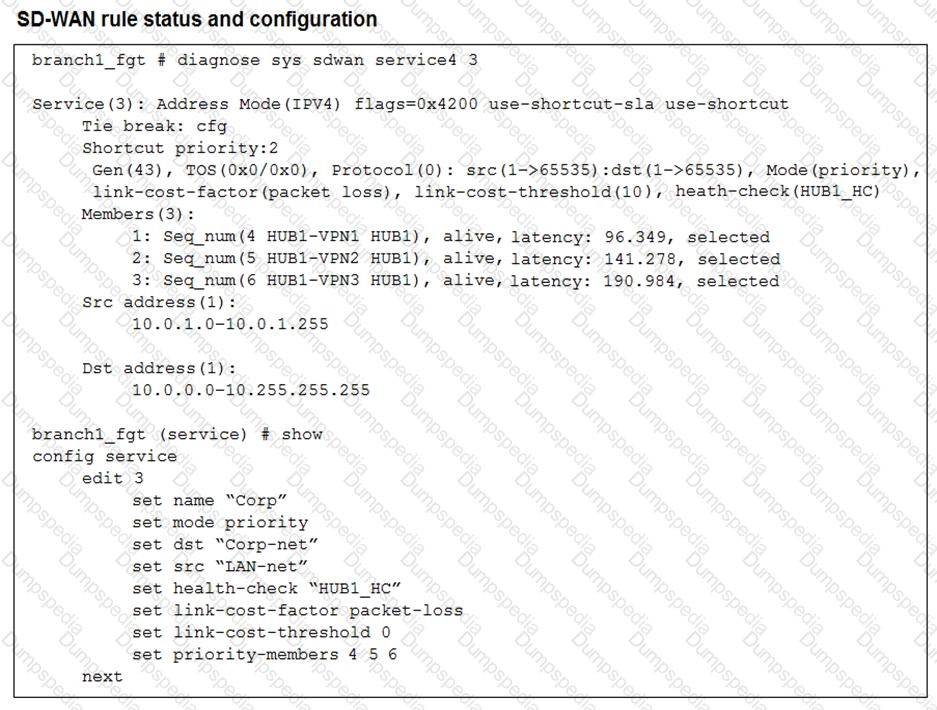
Based on the exhibit, which change in the measured latency will first make HUB1-VPN3 the new preferred member?
You configured an SD-WAN rule with the best quality strategy and selected the predefined health check, Default_FortiGuard, to check the link performances against FortiGuard servers.
For the quality criteria, you selected Custom-profile-1.
Which factors does FortiGate use, and in which order. to determine the link that it should use to steer the traffic?
Refer to the exhibits.
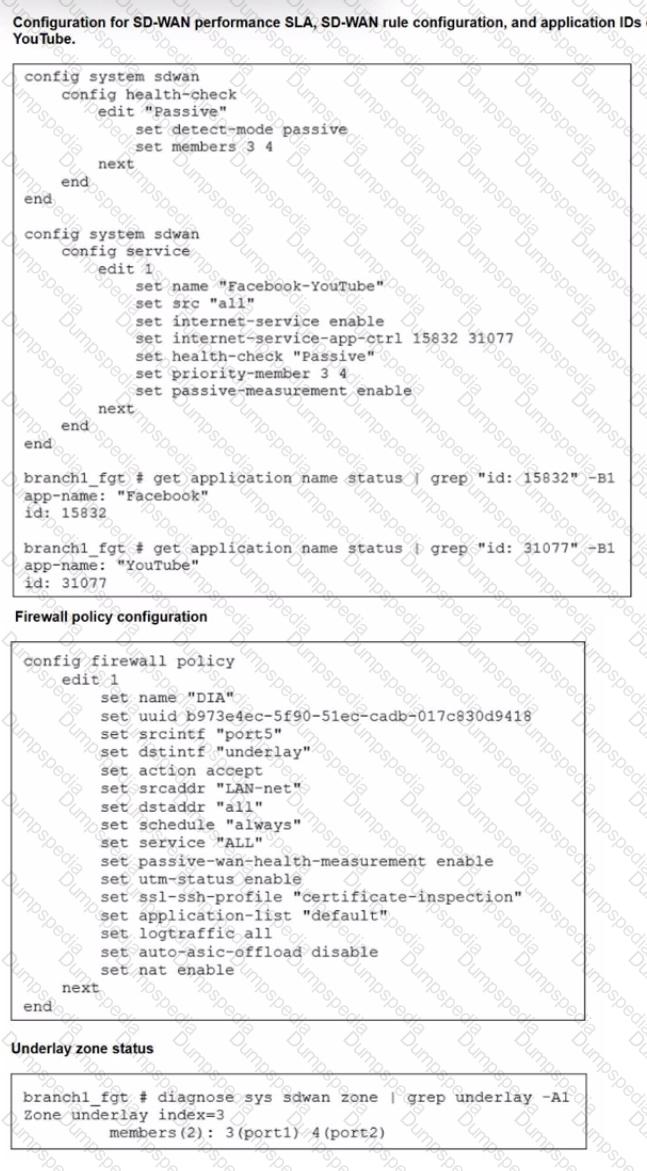
The exhibits show the configuration for SD-WAN performance. SD-WAN rule, the application IDs of Facebook and YouTube along with the firewall policy configuration and the underlay zone status.
Which two statements are true about the health and performance of SD-WAN members 3 and 4? (Choose two.)
Refer to the exhibit.
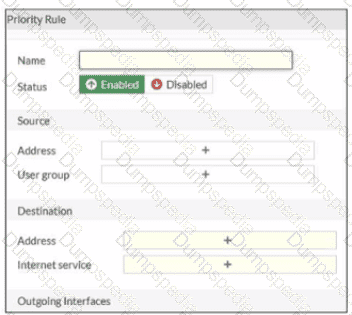
An administrator configures SD-WAN rules for a DIA setup using the FortiGate GUI. The page to configure the source and destination part of the rule looks as shown in the exhibit. The GUI page shows no option to configure an application as the destination of the SD-WAN rule Why?
Refer to the exhibit.
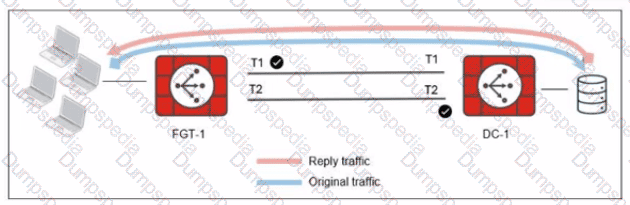
The administrator analyzed the traffic between a branch FortiGate and the server located in the data center, and noticed the behavior shown in the diagram.
When the LAN clients located behind FGT1 establish a session to a server behind DC-1, the administrator observes that, on DC-1, the reply traffic is routed overT2. even though T1 is the preferred member in
the matching SD-WAN rule.
What can the administrator do to instruct DC-1 to route the reply traffic through the member with the best performance?
(Refer to the exhibit.
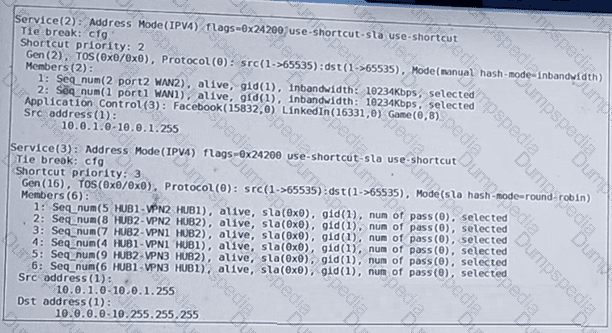
The administrator configured two SD-WAN rules to load balance traffic.
Which interfaces does FortiGate use to steer the traffic from 10.0.1.124 to 10.0.0.254 ? Choose one answer.)
Refer to the exhibits.
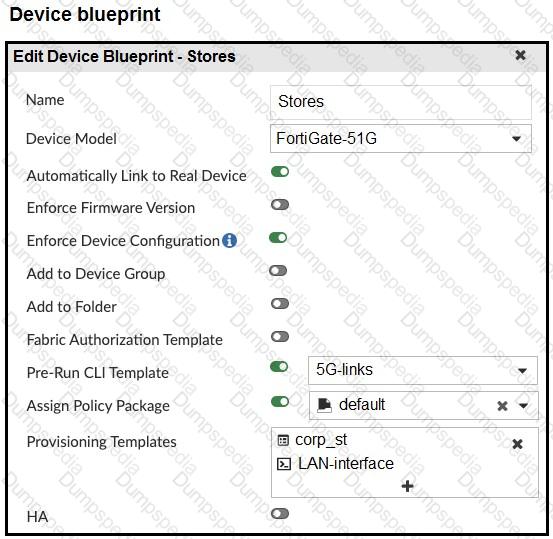
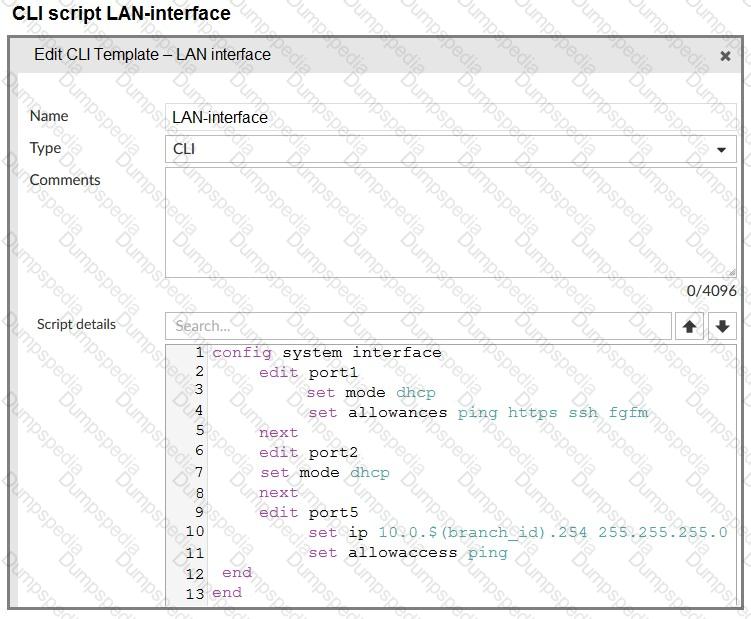
The administrator configured a device blueprint and CLI scripts as shown in the exhibits, to prepare for onboarding FortiGate devices in the company’s stores. Later, a technician prepares a FortiGate 51G with a basic configuration and connects it to the network. The basic configuration contains the port1 configuration and the minimal configuration required to allow the device to connect to FortiManager.
After the device first connects to FortiManager, FortiManager updates the device configuration.
Based on the exhibits, which actions does FortiManager perform?
Refer to the exhibit that shows a diagnose output on FortiGate.
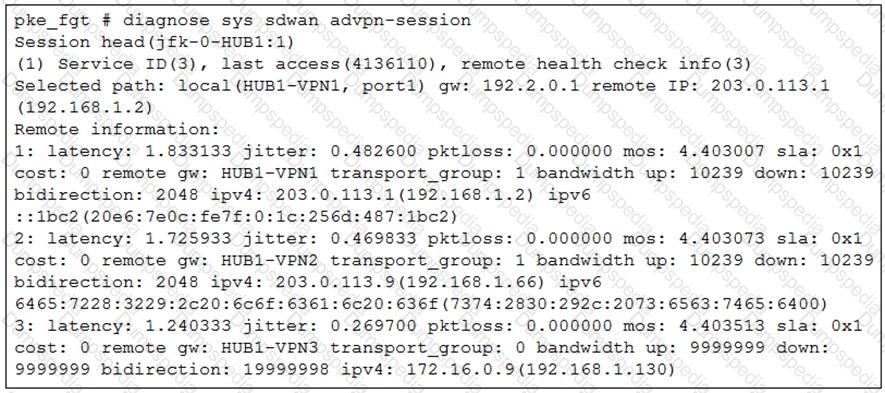
Based on the output shown in the exhibit, what can you say about the device role and how it handles health checks?
(Refer to the exhibit.
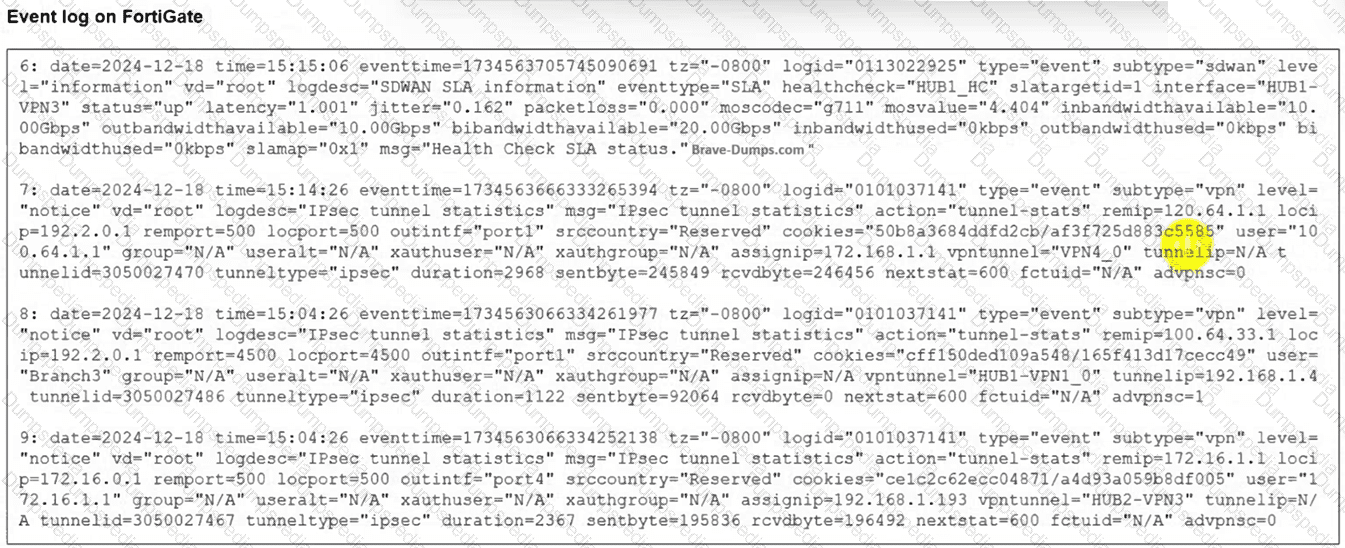
The event log on a FortiGate device is shown.
Based on the output shown in the exhibit, what can you conclude about the tunnels on this device? (Choose one answer))
The SD-WAN overlay template helps to prepare SD-WAN deployments. To complete the tasks performed by the SD-WAN overlay template, the administrator must perform some post-run tasks. What are two mandatory post-run tasks that must be performed? (Choose two.)
Refer to the exhibit.
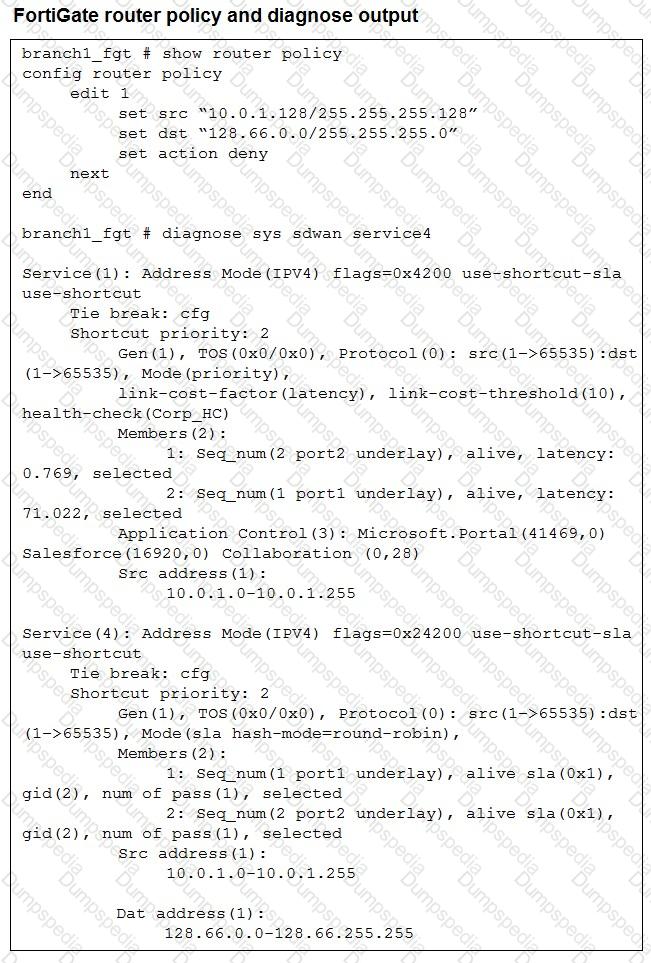
How does FortiGate handle the traffic with the source IP 10.0.1.130 and the destination IP 128.66.0 125?
(Refer to the exhibits. You collected the output shown in the exhibits and want to know which interface TCP traffic will flow through from the user device 10.0.1.101 to the corporate file server 10.0.0.125 . All SD-WAN links are stable.
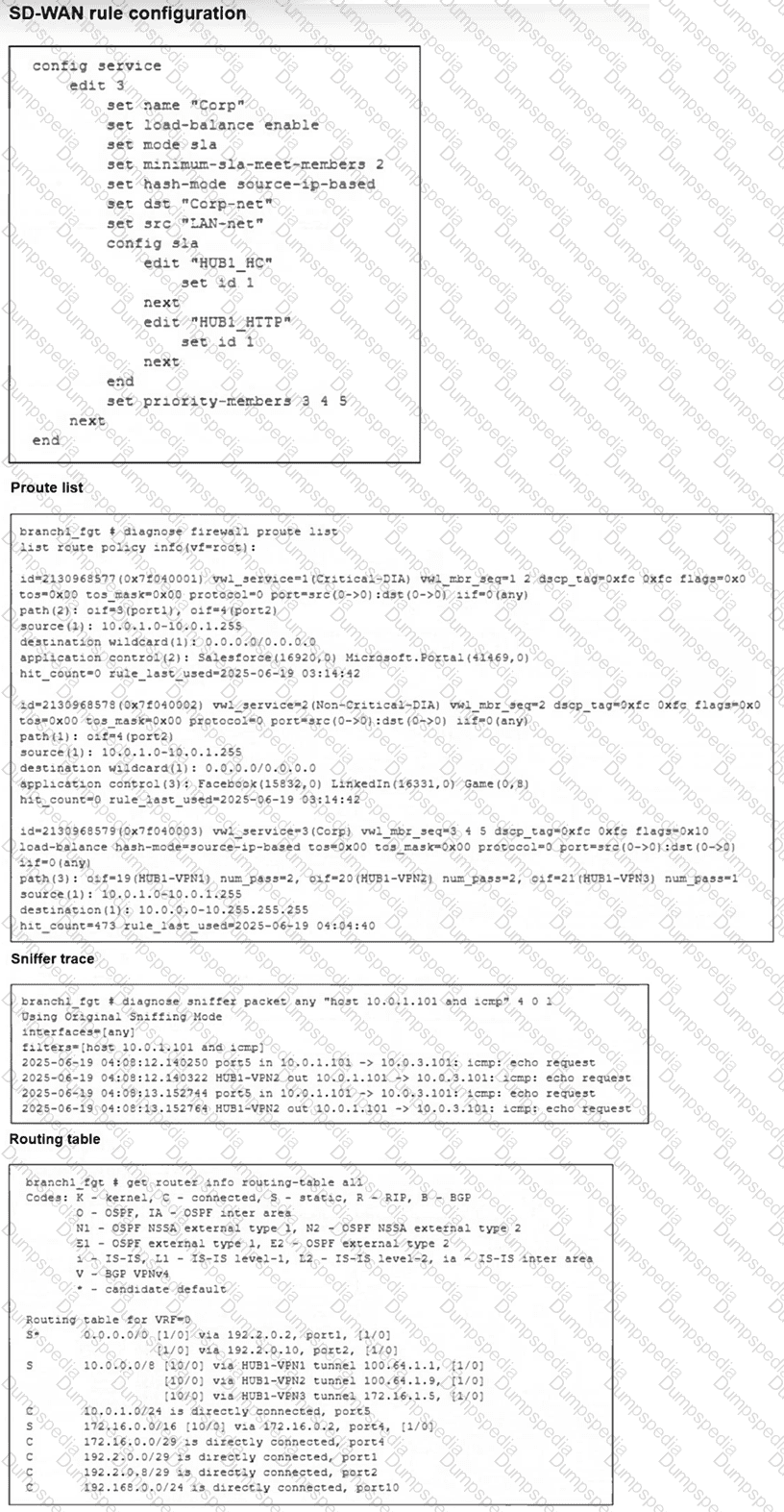
Which interface will FortiGate use to steer the traffic? Choose one answer.)
You manage an SD-WAN topology. You will soon deploy 50 new branches.
Which three tasks can you do in advance to simplify this deployment? (Choose three.)
(You want to configure two static routes: one that references an SD-WAN zone and a second one that references an SD-WAN member that belongs to that zone.
Which statement about this scenario is true? Choose one answer.)
(Refer to the exhibit. You noticed that one SD-WAN member went down and you immediately collected the session output shown in the exhibit. What can you conclude from this output? Choose one answer.)
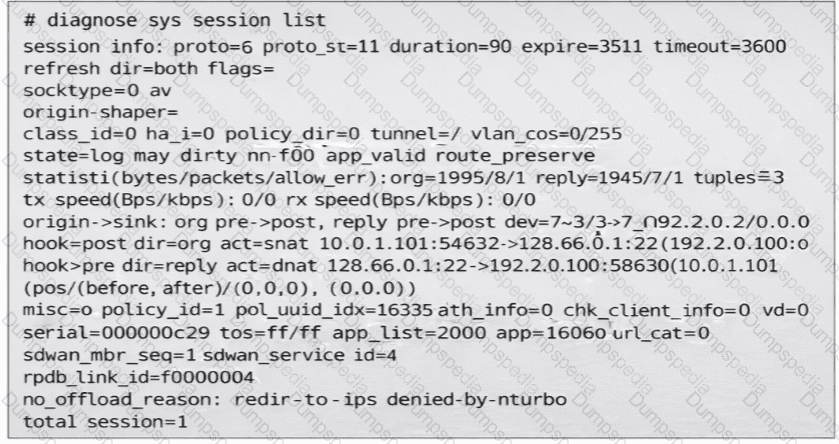
(Refer to the exhibits.
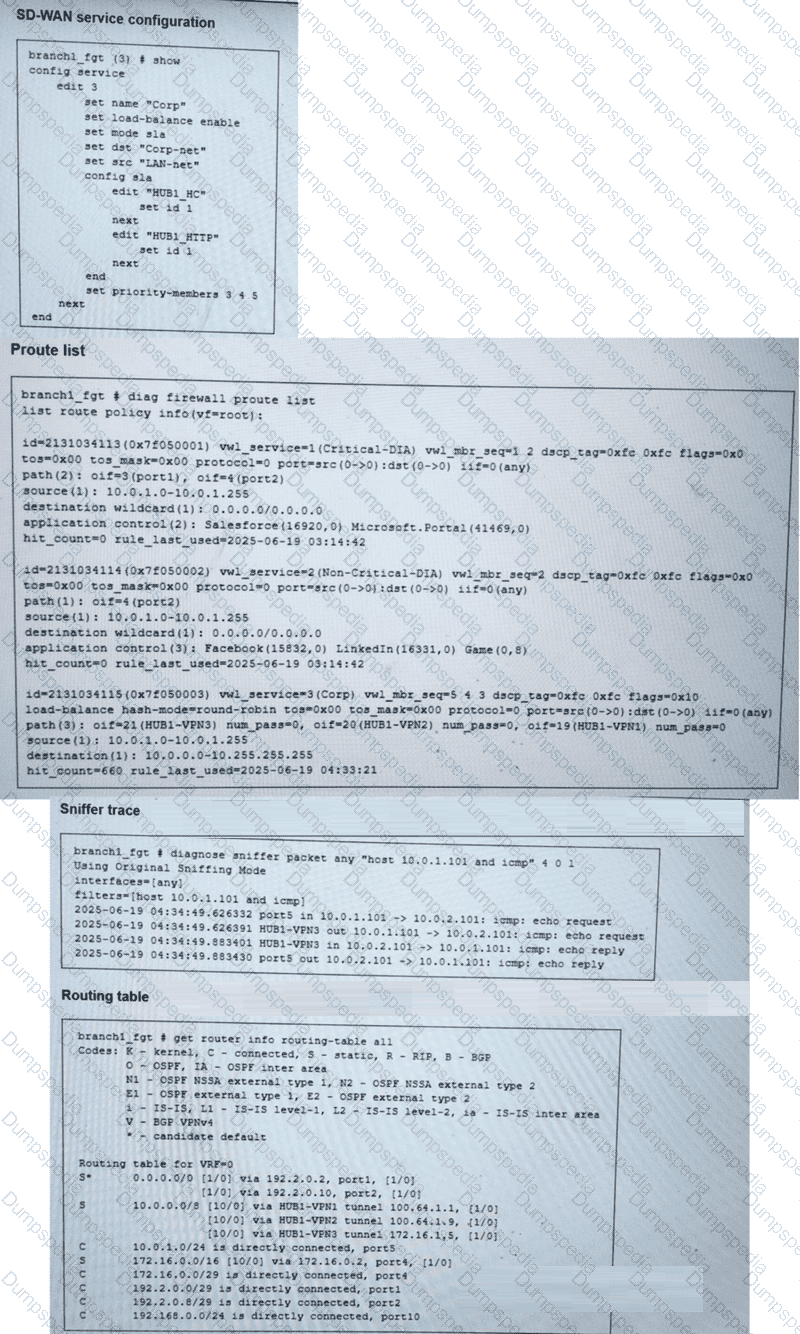
You collected the output shown in the exhibits and want to know which interface HTTP traffic will flow through from the user device 10.0.1.101 to the corporate web server 10.0.0.126 . All SD-WAN links are stable.
Which interface will FortiGate use to steer the traffic? Choose one answer.)
Refer to the exhibits.
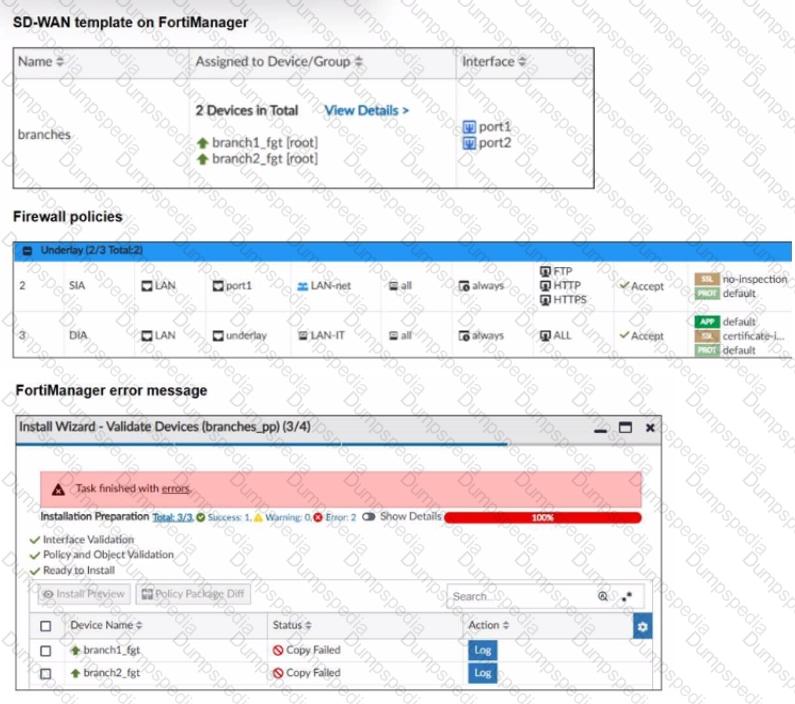
You use FortiManager to manage the branch devices and configure the SD-WAN template. You have configured direct internet access (DIA) for the IT department users. Now. you must configure secure internet access (SIA) for all local LAN users and have set the firewall policies as shown in the second exhibit.
Then, when you use the install wizard to install the configuration and the policy package on the branch devices, FortiManager reports an error as shown in the third exhibit.
Which statement describes why FortiManager could not install the configuration on the branches?
Refer to the exhibits.
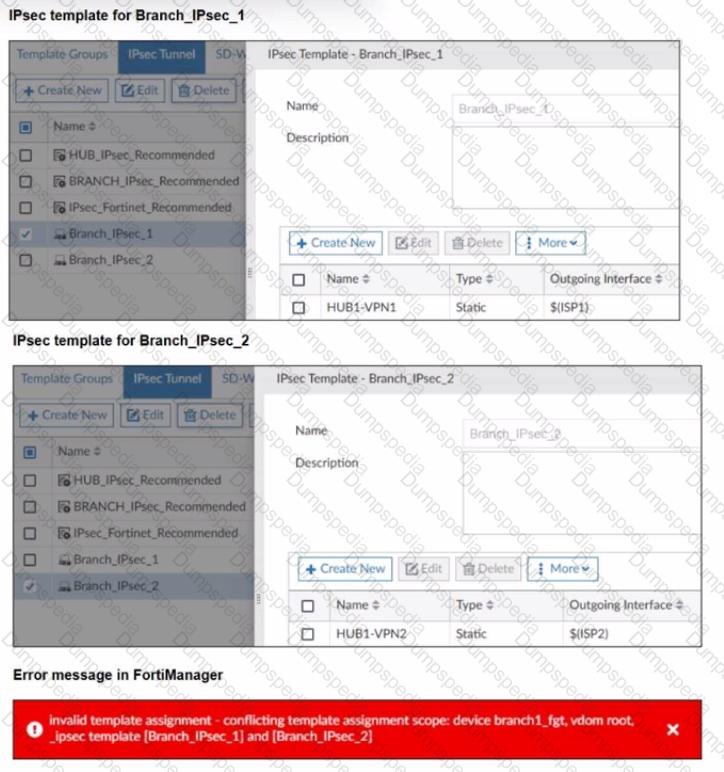
The exhibits show two IPsec templates to define Branch IPsec 1 and Branch_IPsec_2. Each template defines a VPN tunnel. The error message that FortiManager displayed when the administrator tried to assign the second template to the FortiGate device is also shown.
Which statement best describes the cause of the issue?
Refer to the exhibit.
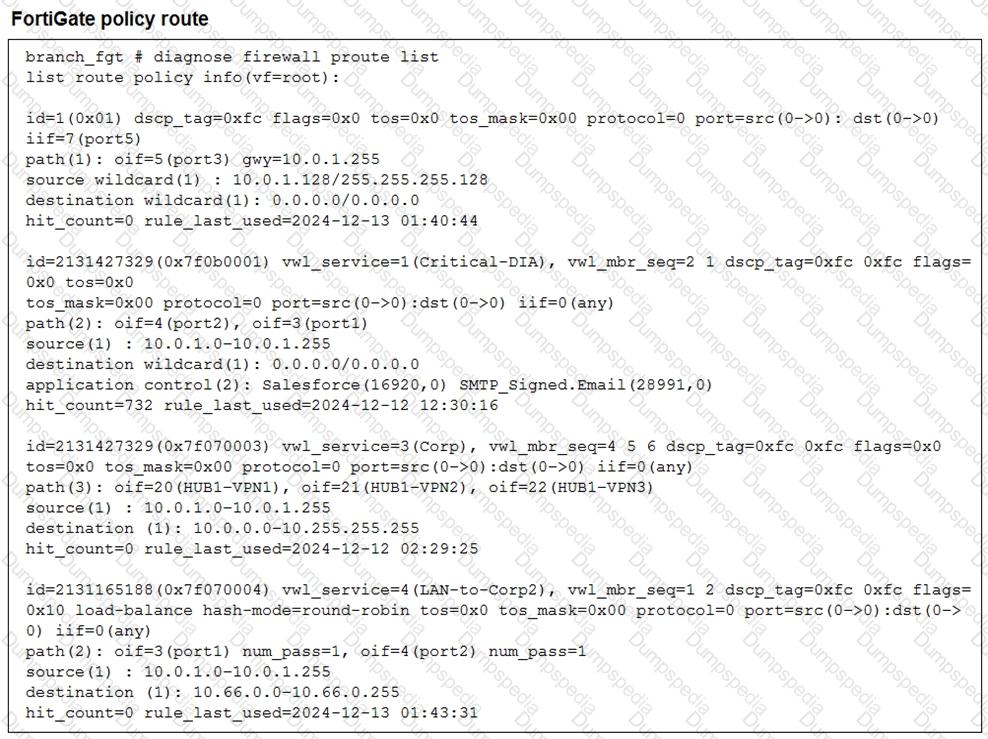
What conclusions can you draw about the traffic received by FortiGate originating from the source LAN device 10.0.1.133 and destined for the company’s SMTP mail server at 10.66.0.125?
To secure your enterprise network traffic, which step does FortiGate perform first, when handling the first packets of a session? (Choose one answer)
Refer to the exhibits.
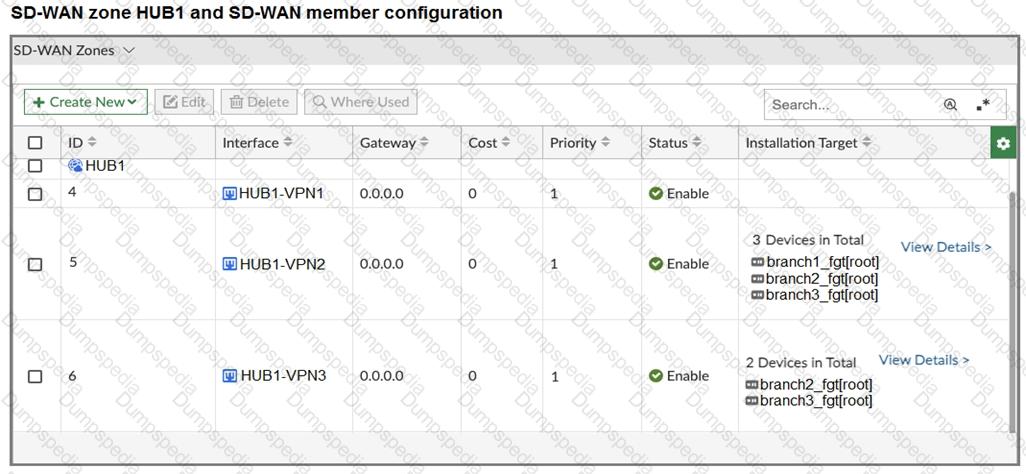
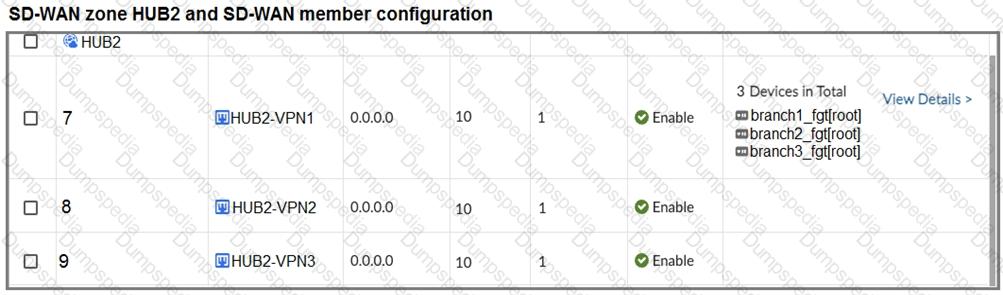
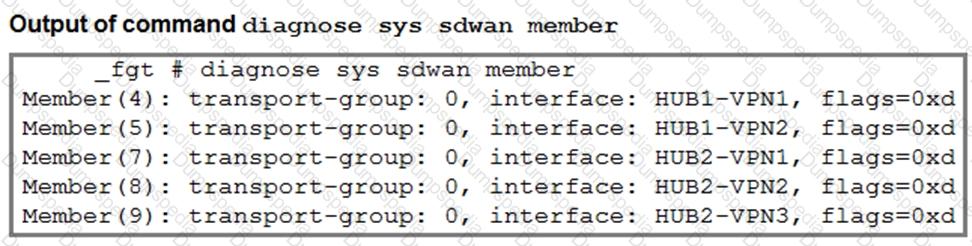
The first exhibit shows the SD-WAN zone HUB1 and SD-WAN member configuration from an SD-WAN template, and the second exhibit shows the output of command diagnose sys sdwan member collected on a FortiGate device.
Which statement best describes what the diagnose output shows?
Refer to the exhibit.
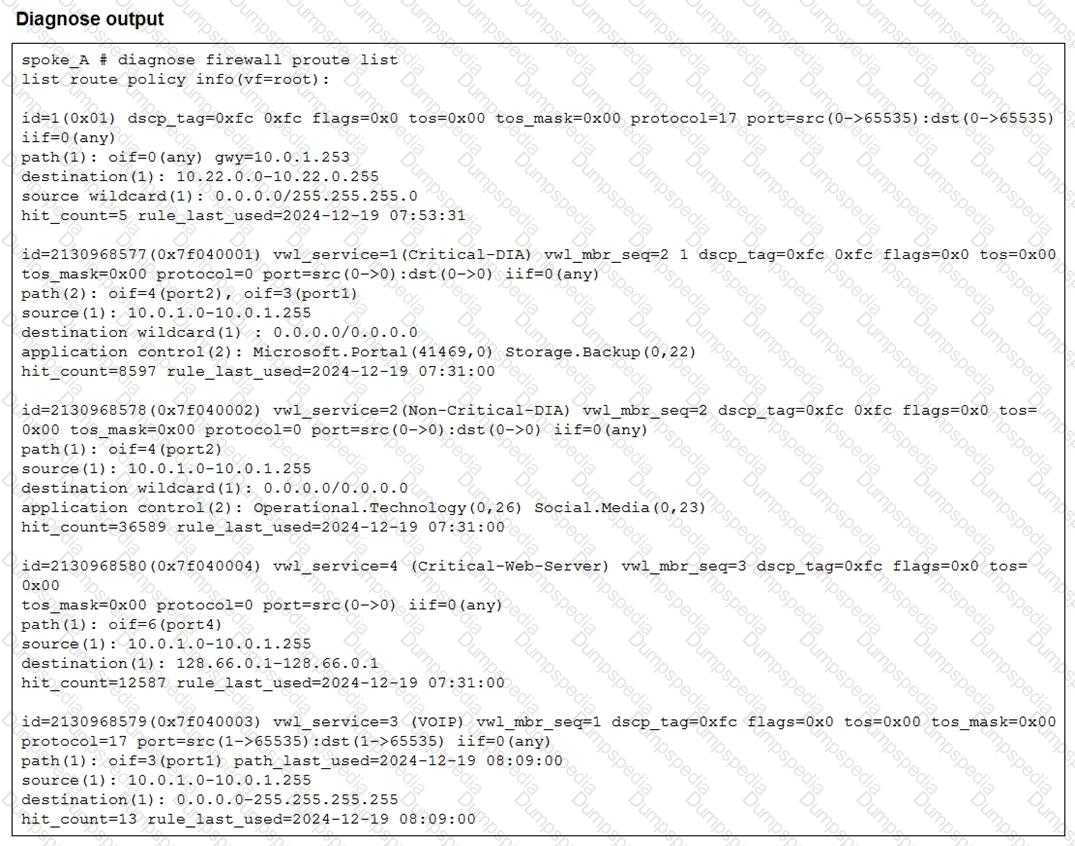
Which two conclusions can you draw from the output shown? (Choose two.)
When you use the command diagnose sys session list, how do you identify the sessions that correspond to traffic steered according to SD-WAN rules?
Exhibit.
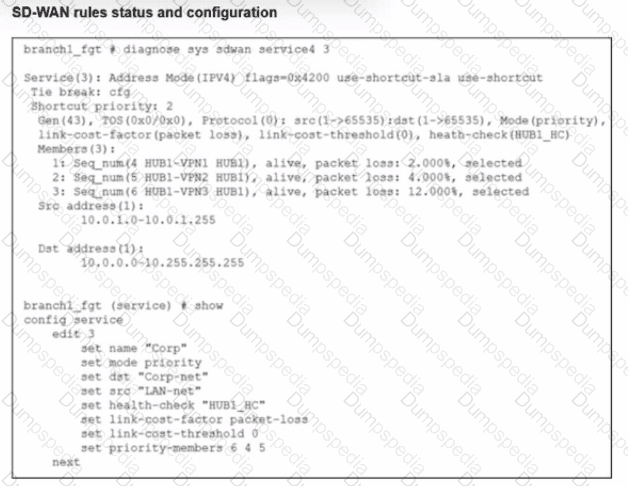
Refer to the exhibit, which shows the SD-WAN rule status and configuration.
Based on the exhibit, which change in the measured packet loss will make HUB1-VPN3 the new preferred member?
You are tasked with configuring ADVPN 2.0 on an SD-WAN topology already configured for ADVPN. What should you do to implement ADVPN 2.0 in this scenario?

TESTED 28 Sep 2026